The authentic Cuban-style rice: the recipe that is not what you think
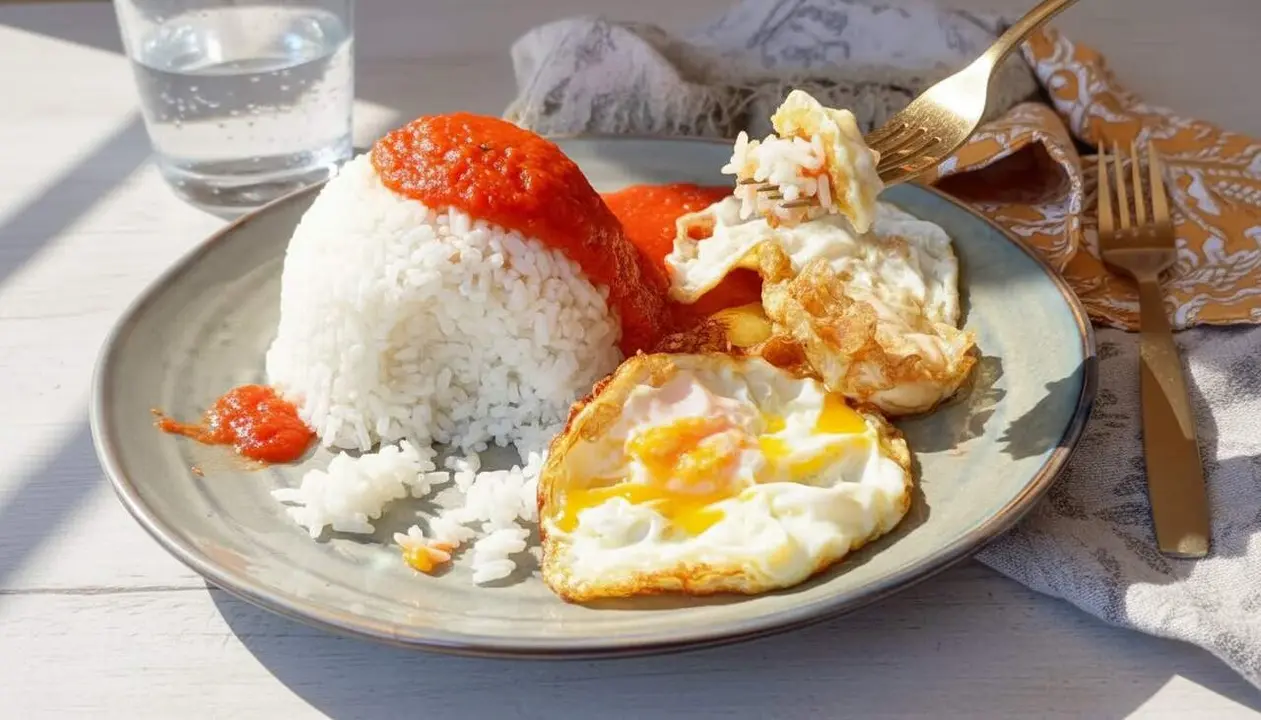

For many generations of Spaniards, arroz a la cubana is a childhood classic, the school cafeteria dish you celebrated because it had no vegetables and the tomato that covered everything was pure glory. But, what if I told you the name might not match reality?
You just need to ask someone born in Cuba to find out that this dish is not really known there. The recipe we imagine as "Cuban" is rather an invention that has traveled and adapted, especially from the Canary Islands, where it is said to have originated.
The authentic arroz a la cubana and its roots
Cuban cuisine is the result of nearly five centuries of gastronomic mixing. Spaniards, Africans, and Chinese immigrants brought flavors that created the Cuban creole cuisine. Rice, along with beans, is essential in any meal on the island, with emblematic dishes like congrí or "moros y cristianos."
Among these ingredients, the picadillo stands out, a minced meat stew that accompanies the rice and resembles more closely the concept of arroz a la cubana. Here, the dish also includes fried plantain — but a very specific plantain.
The ground meat that makes the difference
Picadillo is a flavorful stew made with ground meat, tomato, onion, and spices that give it a unique touch. This meat is the protagonist that transforms the dish into something more than just rice with tomato and fried egg, the Spanish classic.
Although in many Spanish versions the rice is served plain, picadillo adds a point of flavor and texture that confirms the authentic arroz a la cubana is more complex and rich.
Canary Islands, the cradle of the recipe
The recipe we know has become very popular in Spain, but it is believed to have originated in the Canary Islands. There, the combination of rice, fried egg, and tomato sauce began to take shape before moving to the mainland.
This adaptation has been so strong that it has created its own identity, but one that diverges from Cuban culinary tradition. By the way, if you are interested in knowing more details about the technique of cooking authentic rice, it’s worth taking a look.
The frying plantain: the ingredient that makes the difference
One of the most common mistakes we make in Spain is using the sweet Canary plantain, which is what we find in supermarkets, for frying. In Cuba, this plantain, known as "plátano de mano," is eaten raw or in smoothies, but never fried.
What is used for frying is the plátano macho, larger, firmer, and with much less sugar. This can be green — for making tostones or mariquitas — or ripe, sliced, fried, and salted. This touch is key so the dish does not have the sticky and sweet flavor that the plantain we all know here imparts.
Tostones and mariquitas: the Caribbean tradition
Tostones are fried and smashed slices of green plantain, crispy and salted, which are not very well known by this name in Spain but are an essential part of Cuban gastronomy.
Mariquitas are the equivalent of popcorn or potato chips, also made with plátano macho, providing an excellent contrast with the rice and meat.
The confusion of the sweet plantain
Frying the sweet Canary plantain gives a very different result, a texture and flavor that does not fit with Cuban tradition and is often confused with authentic arroz a la cubana. This difference is one of the points that surprises the most when analyzing the dish from a more genuine perspective.
If you are interested in getting to know rice and its techniques better, this article can be very useful.
The name and its cultural identity
Despite everything, there is no need to give up the name "arroz a la cubana." It is already part of Spanish gastronomic culture, and disputing it might be a lost battle.
It is advisable to try the authentic recipe, with picadillo and plátano macho, accompanied by a fresh tomato and avocado salad. And if there is leftover picadillo, it is an excellent ally to show off your tupperware at work the next day.
A dish with history and travels
The history of arroz a la cubana is full of adaptations and influences that reflect the cultural complexity of Caribbean and Spanish cuisine. Since the 19th century, when Samuel Hazard described a breakfast in Cuba with fried egg and tomato, until today, the dish has evolved.
This evolution has created a classic that, although not faithful to the Cuban origin, is a symbol of popular cuisine in Spain and the Canary Islands.
Why keep enjoying it?
The name may be misleading, but the pleasure of arroz a la cubana is real. Whether you prepare it with picadillo and plátano macho or with the simpler version, the dish remains a tribute to the combination of rice, tomato, and fried egg that awakens so many memories.
The reality is that this dish, with its tomato sauce that covers everything and the ground meat that gives it body, continues to be one of the most beloved classics, with its own identity and unmistakable flavor.