Salou plants 848 vines to save ancestral grapes and restore the Camp de Tarragona
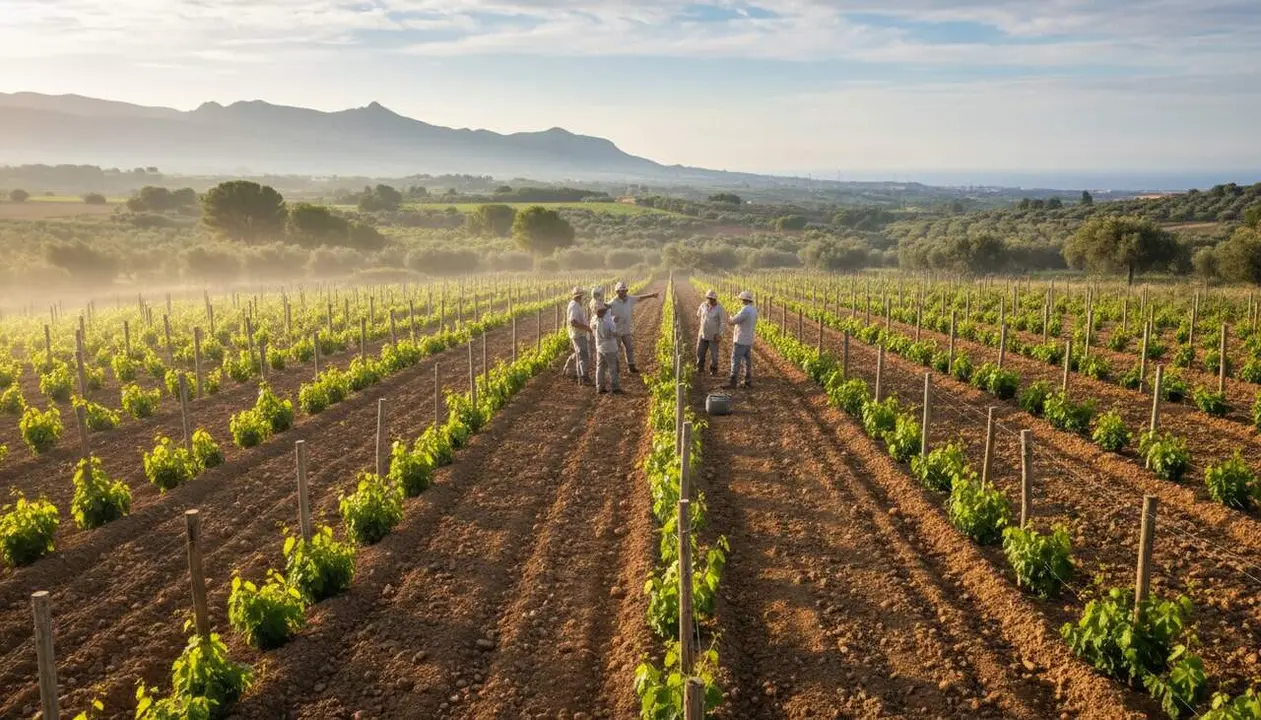

848 new vines planted in Salou to recover grape varieties that had almost disappeared from the Camp de Tarragona. A project that not only renews vineyards but also seeks to preserve agricultural memory and boost local wine tourism.
The initiative, which began in 2024, continues growing in the Pla de Maset park, where a thousand experimental plants have already been achieved. Official sources confirm that this second phase strengthens the commitment to the black variety pàmpol girat and an ancestral white, the escanyagos.
Project recovery details
The planted varieties and their importance
The municipal project has planted 848 new vines: 348 of pàmpol girat, the key black variety of the project, and 500 of escanyagos, an ancestral white implanted for the first time in Pla de Maset. This raises the experimental vineyard to nearly 1000 vines, with a balanced distribution of about 500 plants of each variety.
Objectives and local impact
This initiative seeks to preserve grape varieties that have been lost due to agricultural abandonment and urban impact. Salou wants to turn this space into a benchmark for agricultural memory, rural landscape, and wine tourism, a sector with growing potential in the area.
Project context and evolution
Origin and initial phase
The project started in 2024 with the implantation of the first experimental vineyards. This second phase expands the number of vines with specific varieties representing the ancestral agricultural heritage of Camp de Tarragona.
Collaborations and implications
The initiative has municipal support and is designed to connect local producers with the community, offering added value to the region through activities related to wine and grape culture.
Project projections and monitoring
Impact on the landscape and wine tourism
With the thousand vines already planted, the project aims to revitalize the agricultural landscape and offer a unique tourist experience that highlights the ancestral grape varieties, little known but with great cultural value.
Monitoring and future of the experimental vineyard
Municipal technicians and sector experts work on monitoring the health of the vineyards and disseminating the results to ensure the continuity and success of the project in the long term.
A vineyard that not only grows in number but becomes a living witness of a story that was almost erased. The memory of Camp de Tarragona, planted vine by vine.
Source Editorial | ACN