Why has the DGT left the V16 beacon stuck and no one buys it?
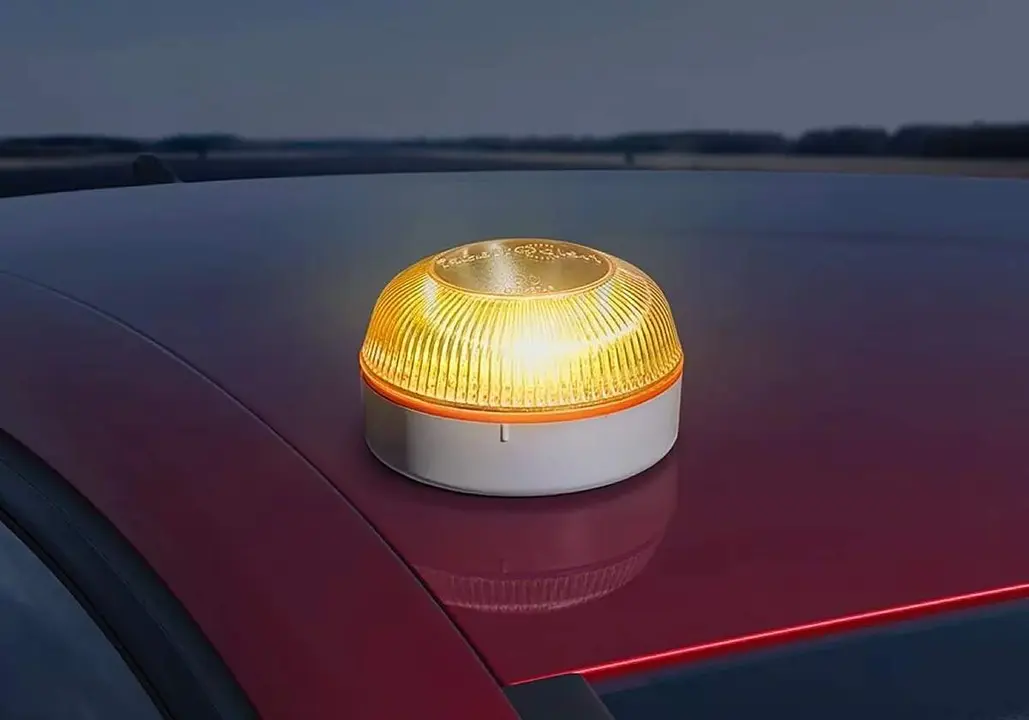

The V16 beacon was introduced almost four years ago as the definitive solution to prevent drivers from getting out to place emergency triangles. This device was supposed to improve safety with technology that networked all active beacons, alerting other drivers to dangerous situations. But in reality, less than 50% of vehicles already have one, despite it being mandatory since January 1, 2025.
This low adoption is not only due to driver resistance but also to institutional confusion that has left the V16 beacon practically forgotten, with an uncertain future.
The V16 beacon: a project that has sunk
Why does this matter to the reader? Because it directly affects their safety and their wallet. The V16 beacon has become a true fiasco, and this situation not only causes confusion but also significant financial losses.
Why hasn’t the rollout worked?
The first problems came from contradictory messages that the DGT and the Ministry of the Interior have sent to drivers. Pere Navarro, director of the DGT, and Fernando Grande-Marlaska, Minister of the Interior, publicly assured that there would be no fines for not carrying the beacon, a message many understood as definitive.
This has created an environment of widespread indifference that has harmed adoption. Furthermore, sectors such as the Civil Guard and firefighters have expressed doubts about the usefulness of the device, especially because it is not visible during the day and does not guarantee the driver’s safety just by staying inside the vehicle.
What do drivers think?
The majority of drivers don’t even know the beacon is mandatory. Those who carry it often do not trust its effectiveness. Many consider that staying inside the car after an emergency, relying solely on the beacon, is not safe at all.
Some wonder if it wouldn’t be better to go back to the good old triangles, despite being an older and less technological system.
The economic cost of the V16 beacon
The economic aspect matters because, unlike other things, here we talk about money that has been invested and could now be lost. Manufacturers, who made significant investments to produce the beacons, face warehouses full and sales that have vanished.
What consequences does this have for companies?
One of the main Spanish manufacturing companies has had to enter pre-bankruptcy proceedings. Industry sources confirm that for months not a single V16 beacon has been sold. The outlook is bleak, and lawsuits are already being considered to claim the return of the investment.
Retailers are also discouraged because warehouses are full and no increase in demand is expected, not even with the promotional announcements from the DGT before summer.
Will drivers get their money back?
There is no guarantee that users who bought the V16 beacon will recover their money. The legal dispute being prepared could prolong the problem. But what does seem clear is that the project is broken and trust has been completely lost.
What alternatives and solutions can be expected?
Why should this matter? Because drivers need to know whether they should keep carrying the beacon or if triangles and reflective vests will return.
Will the DGT promote the beacon this summer?
Pere Navarro recently announced a push for the V16 beacon with the arrival of summer, but by mid-June no concrete action has been seen. This silence breeds more distrust than security.
Experts and Civil Protection unions recommend following traditional safety measures, such as getting out of the vehicle and moving away from danger, rather than relying solely on the beacon.
What do experts and courts say?
The V16 beacon is currently being challenged before Spanish and European courts, which could lead to its annulment or significant changes in the regulations.
Experts warn that without clear regulations and an effective communication campaign, the beacon will serve no purpose other than gathering dust in glove compartments.
The reality is that the V16 beacon could end up being another example of how bureaucracy and poor management can wreck a project that promised to improve road safety.
Drivers, manufacturers, and even emergency services await a definitive decision to shed light on so much darkness.
Meanwhile, the V16 beacon remains mired, and the question is whether anyone will know how to profit from it or if it will end up as just another cost on the list of institutional blunders.
🎯 Lost license points: 0 (so far)
📅 Mandatory since: January 1, 2025
🏛️ Responsible authority: Directorate-General for Traffic (DGT)
Drivers remain confused, and manufacturers, overwhelmed. The V16 beacon has gone from being the star promise in road safety to a problem without an apparent solution.
The DGT knows time is running out, but it seems it still hasn’t found a way to face this shipwreck.
What is clear is that carrying or not carrying the V16 beacon is no longer just a legal issue but a mess full of doubts and reproaches, where everyone loses.
For now, the V16 beacon is more a headache than a solution. And on the road, that can be more dangerous than carrying nothing.
Now then, who will pay the real price for this mess? The drivers, the manufacturers, or the DGT itself?
We will need to watch the next steps closely because, for the moment, the situation is a real tangle.
We’ll see whether the V16 beacon ends up remembered as a failed project or if someone manages to turn things around before it’s too late.
Meanwhile, it’s best to stick to traditional caution and not rely solely on technology that, for now, just doesn’t work.
Because the road shows no mercy, and the V16 beacon is more lost than a speed camera on the N-340 on a summer Sunday.
We’ll keep you informed.
Frequently Asked Questions
- What exactly is the V16 beacon and why is it mandatory?
- The V16 beacon is an emergency device that replaces triangles and alerts other drivers of an incident. It has been mandatory in Spain since January 1, 2025.
- Why are there no fines yet for not carrying the V16 beacon?
- The DGT has issued temporary communications that have caused confusion, and currently, fines are not applied while the legal situation is clarified.
- What will manufacturers do with unsold beacons?
- Some companies are in pre-bankruptcy and are considering lawsuits to recover the investments made, but the future is uncertain.