The US installs 1 MW chargers, but Europe has the better key

An ordinary day on the AP-7: while drivers complain about traffic jams, electric charging technology is advancing at full speed. But what happens when the infrastructure accelerates much faster than the cars? This is exactly what is happening right now in the United States.
But in Europe, the story seems different: not only is the network being installed, but vehicles are also adapting to make the most of the new power. And that, friends, makes all the difference.
The American race: chargers up to 1 MW without cars to match
A deployment faster than vehicle technology
In the United States, companies like ChargePoint, ABB, Kempower, and Alpitronic are deploying chargers from 600 kW up to 1.2 MW. Brutal power promising charges in minutes, almost as fast as stopping to refuel gasoline. But here lies the problem: almost no electric car on the market can take advantage of more than 400 kW, according to Seth Cutler, CEO of the Ionna network. The infrastructure exists, but the vehicles are not ready for it.
The power paradox
It’s like buying a four-lane highway only to end up driving on a dirt road. The feeling of having a charger yelling "give me energy," while the car responds "calm down, I just want a sip," is in the air. This disconnect means the investment in mega chargers is about to explode without a real return.
Europe: synchronizing networks and cars to make it truly useful
The European model is more like the Chinese one
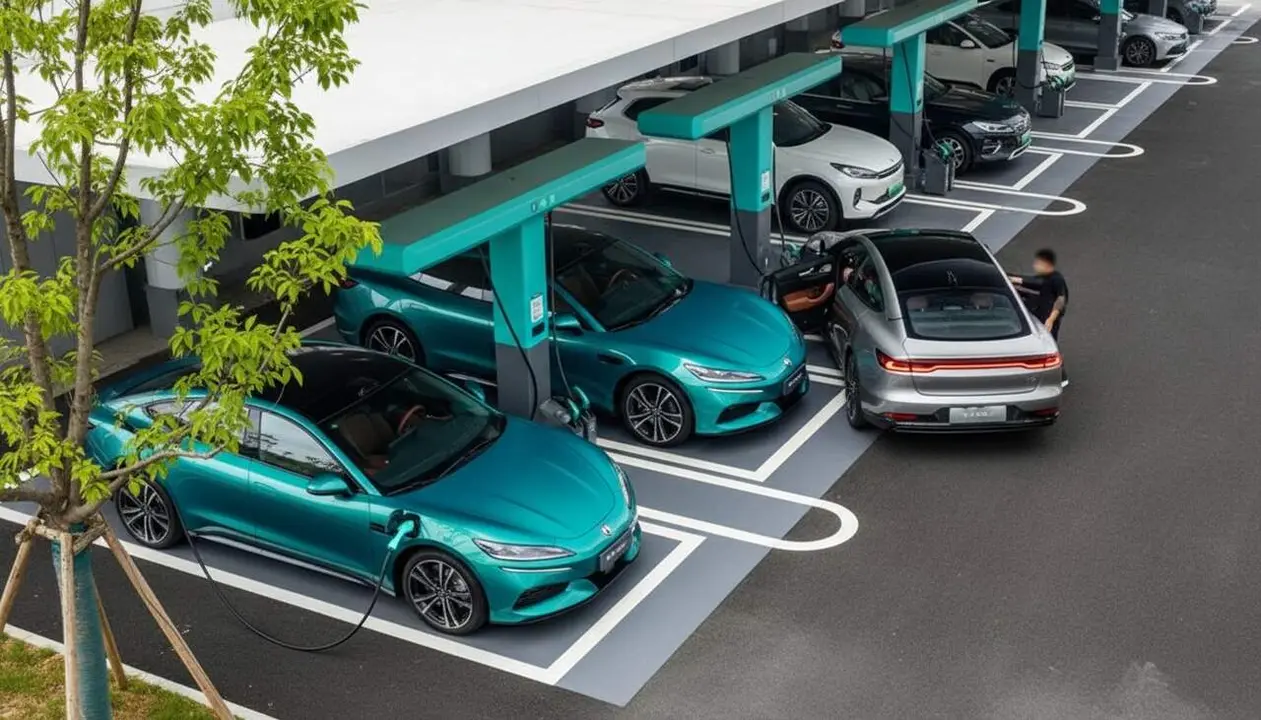
Europe has opted for a different strategy. Networks like IONITY have already started deploying chargers up to 600 kW based on Alpitronic HYC1000 technology. France is the first stage, and the rest of Europe will follow very soon. But here cars capable of taking advantage of this power do appear, with brands like BYD, Mercedes-Benz, BMW, and the Chinese Denza (from the BYD group) leading this new generation of vehicles with 800 to 1,000-volt electric architectures.
Charging at high speed without congestion
Moreover, these stations solve a classic problem: congestion. The dynamic balancing system intelligently distributes power among vehicles. So, while a small car settles for 50 kW, a latest-generation model can suck more than 350 kW without the rest of the network suffering. This completely changes the travel experience, where huge batteries are no longer needed to avoid eternal waits at stops.
The Spanish case: record ultrafast chargers, but with problems
Too many charging points turned off
Spain wants to join the party, but not everything is rosy. According to the latest ANFAC Electromobility Barometer, one in four charging points remains out of service. This failure is a result of administrative slowness and lack of interoperability. A ticking time bomb that slows Spanish potential.
The future of electric trucks and MCS power
But the quality of the operating network is making a huge leap. In just the first quarter of 2026, 309 chargers over 250 kW have been inaugurated, almost half of those installed throughout 2025. Particularly relevant is the deployment of the MCS (Megawatt Charging System) for electric trucks, which aims for a trailer to recover range in just 45 minutes, the driver’s mandatory rest time. This revolution is not science fiction, but a reality that Europe leads.
The electric car race is no longer about battery size but about the capacity to fill it quickly. And the reality is that, for the first time, Europe is well positioned to win this battle.