Seat Toledo turns 35 years old: the sedan that changed history
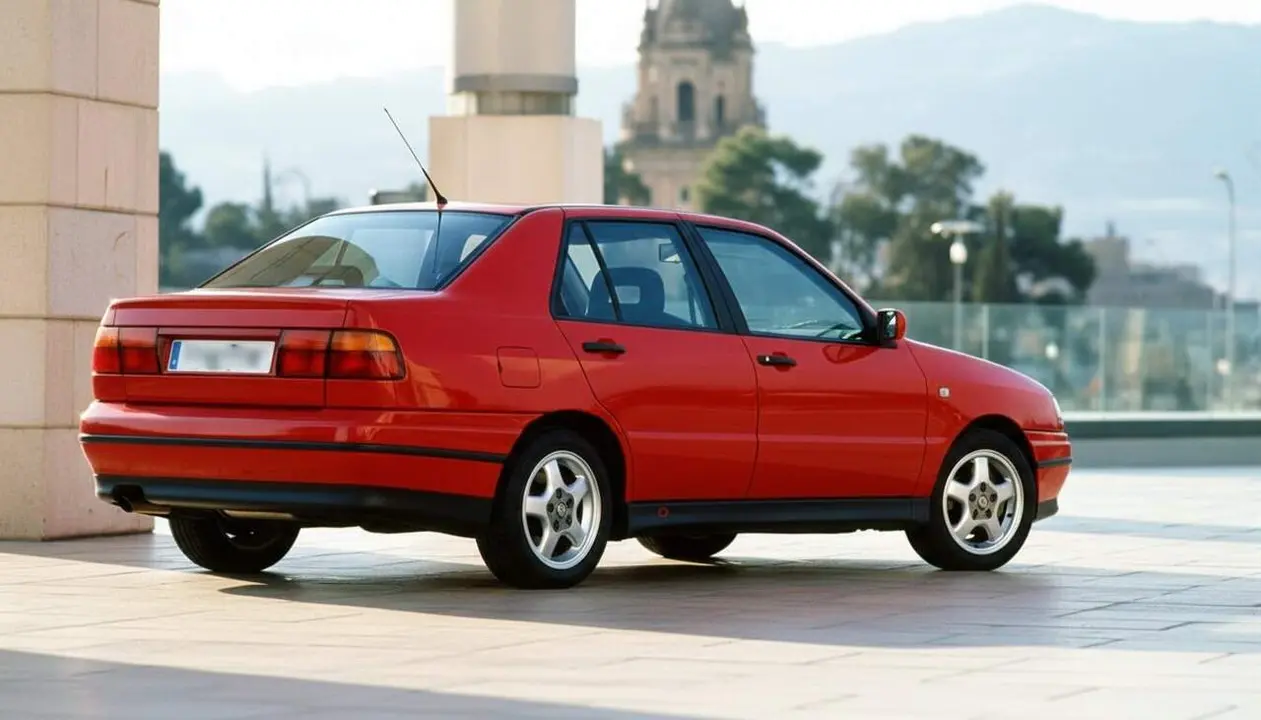

Do you remember that first Seat Toledo? That model had an unmistakable label of the 90s: compact sedan, clean lines, and a record trunk for the time. But what makes this car special is not just its architecture, but the alliance between SEAT and Volkswagen, which had controlled the brand since 1990, and the master touch of designer Giorgetto Giugiaro.
A car that was not only manufactured in Martorell but also marked the beginning of a new era for SEAT: more German engineering, but with the same Mediterranean soul as always. That said, the Toledo never had the luck of having a successor that maintained its pure and straightforward spirit.
The first-generation Seat Toledo: more than just a car
At the time of its launch, the Seat Toledo was the natural response to the Seat Málaga, but with a design that did not go unnoticed. 4.32 meters long, 1.66 wide, and a 2.47-meter wheelbase, measurements that today make you think of a Seat León. Despite its size, the trunk had 550 liters, almost double when you folded down the rear seats.
The star engine was the 2.0 with 115 HP, a bit modest but refined enough to bring the GT 16V model to life. It was a sedan with classic suspensions (front McPherson and semi-independent rear) and a five-speed manual gearbox that made the car more fun than the numbers might suggest.
Versions and trims: a menu for all
The range was broad, with six gas and diesel engine options, and four trims to choose from: CL, GL, GLX, and GT. The idea was to offer diversity for an audience that still valued the family car but did not want to give up a sporty touch or comfort.
Giugiaro’s design: classic with character
The Toledo’s design was not only functional but had personality. The squared shapes and balanced profile made it easily recognizable, and it still generates nostalgia among lovers of 90s models. It was not a car that intended to be radical, but neither just a simple run-of-the-mill vehicle.
The electric Seat Toledo: an Olympic experiment
A year after its presentation, SEAT made an unexpected move. At the 1992 Barcelona Olympic Games, regulations required a zero-emission vehicle to open the marathon, and who better than the Toledo to take on the challenge?
The Martorell Technical Center transformed a Toledo GLX into a 100% electric car with a 22 HP direct current motor. It started slowly, with acceleration from 0 to 50 km/h in 12 seconds, and the lead battery weighed more than 500 kilos, which forced reinforcement of the suspensions and brakes.
The technical difficulties
With a top speed of 100 km/h, the experiment was not a racing car, but it was a clear statement of intent. The charging port was located on the front, an unconventional decision, and overall, this electric Toledo was more a technological project than a commercial model.
A single unit for history
Only one unit was manufactured, officially registered, which now rests in SEAT’s A122 warehouse in the Zona Franca. It is a living memory of a time when innovation began to find its place in the Catalan automotive industry.
The legend of the Seat Toledo and its legacy
Until 2019, the Seat Toledo remained available, reaching the fourth generation with a design led by Alejandro Mesonero-Romanos, before he moved on to Dacia and Alfa Romeo. The lineage ended, but its spirit is unmistakable and still lives in the imagination of fans.
The Toledo was a combination of Italian design, German technology, and Catalan passion, a formula that no one has been able to replicate until now. The reality is that, after 35 years, there is no model that has replaced it with the same authenticity.
Its impact on SEAT
It marked the beginning of a new stage for SEAT within the Volkswagen group, and its success helped consolidate the brand as a European reference. It was the sedan that took SEAT beyond the popular segment, with a touch of prestige and technical solidity.
The future without Toledo
With the market shifting towards SUVs and electric models, the space formerly occupied by the Toledo remains empty. But the nostalgia persists, and maybe one day SEAT will recover that name for a model that, who knows, might combine tradition and modernity.
The Seat Toledo is not just a car; it is a piece of the history of automotive in Catalonia and Spain. Its anniversary reminds us that some creations deserve more than simple oblivion.