
New DGT red lane on the A-2: key points to understand how it works from today
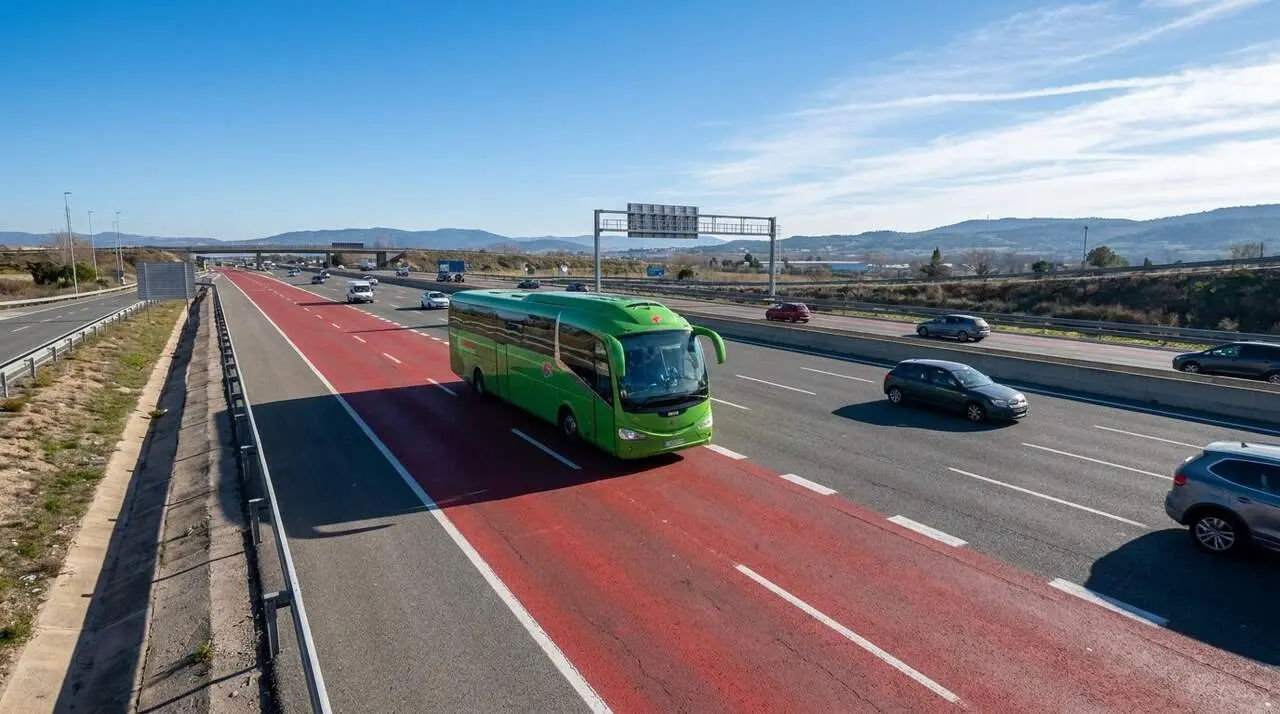

The Directorate General of Traffic (DGT) has launched a new red lane on the A-2 highway that will change the way people travel between Madrid and Alcalá de Henares. This initiative aims to adapt the existing infrastructure to traffic needs with a flexible and technological model.
If you live or work in Madrid, you have probably encountered daily traffic jams. But this new system wants to prioritize public transport and vehicles with more than one occupant, an intelligent way to reduce congestion without major construction.
How the new DGT red lane on the A-2 works
To understand why this affects you, consider that the A-2 is one of the most congested routes connecting Madrid with its outskirts. The red lane is reserved during peak hours for buses, motorcycles, emergency vehicles, and cars with more than one occupant, all controlled with cutting-edge technology.
This measure is implemented on a 19.2 km stretch, although it is currently only active up to Torrejón de Ardoz. The goal is to improve mobility flow and curb individual car use, which dominates most trips.
Which vehicles can use the red lane and when?
The lane is active during peak hours: from 7 to 9 a.m. in both directions and from 3 to 5 p.m. outbound from Madrid. Only vehicles with two or more occupants, motorcycles, public transport, and emergency vehicles can circulate. The rest of the time, it is a regular lane.
How is correct use of this lane controlled?
The DGT has deployed a system of cameras and sensors that read license plates and verify vehicle occupancy. This enforces strict compliance with the rules, with automatic fines for offenders. There is also a distinction for “zero emissions” vehicles, which can only use the lane with more than one occupant or when signage allows it.
What is the real purpose of this special lane?
If you wonder why all this fuss, the answer is clear: to reduce travel time and encourage more people to share cars or use public transport. It is estimated that about 15,000 daily travelers can benefit, potentially saving 25% on travel times.
Improving flow also helps reduce polluting emissions, a key issue for Madrid and its surroundings. The red lane is an example of how existing infrastructure can be reused to make it smarter and more sustainable.
What precautions should drivers take?
It is essential to pay close attention to signage: illuminated panels, colored beacons, and road markings indicate when and where access is allowed. Sensors may have difficulty with tinted windows, so control accuracy is a challenge. Also, entry and exit points are defined and must be strictly observed.
What will happen after the trial?
The trial period runs until the first week of September. The results will determine if the system expands to other access routes to Madrid. The DGT’s main interest is to implement a model that does not require large investments and helps improve urban mobility.
Impact and expectations of the new red lane
For regular A-2 drivers, this change poses a challenge to adapt to a new way of driving. The system seeks to prioritize shared use and public transport, a goal that shapes Madrid’s traffic future.
It is important to highlight that the DGT wanted to avoid massive investments by reusing existing lanes, facilitating faster and more economical implementation. If successful, the model could be replicated in other critical areas across the territory.
How will daily mobility be affected?
Experts estimate that a 25% reduction in travel time will mean fewer hours lost in traffic jams. This not only saves time but also reduces frustration and pollution in a heavily congested area.
What are the main technical challenges?
Controlling vehicle occupancy with sensors is not easy, especially with tinted windows or in very dense traffic moments. Coordination of signage and schedules is key for the system to work smoothly and avoid confusion.
The reality is that this red lane is an ambitious experiment that could mark a before and after in Madrid’s traffic management, always with an eye on more sustainable and efficient mobility.
All this, with the DGT at the wheel of this project that bets on combining technology and common sense to improve life behind the wheel and beyond.
The new red lane formula is an intelligent bet that can transform how people move in Madrid and its surroundings. With strict controls and clear regulations, the DGT wants more people to leave their car alone and opt to share trips or use public transport. The September trial will be decisive to see if this initiative is consolidated.
Frequently Asked Questions
- Which vehicles can use the red lane on the A-2?
- Buses, motorcycles, emergency vehicles, and cars with two or more occupants can use it during the indicated peak hours.
- When is the red lane on the A-2 active?
- The lane operates from 7 to 9 a.m. in both directions and from 3 to 5 p.m. outbound from Madrid.
- How does the DGT ensure compliance with the red lane regulations?
- By means of cameras and sensors that detect license plates and vehicle occupancy, with automatic fines for those who do not follow the rules.