
Arrested for selling a fake Ferrari
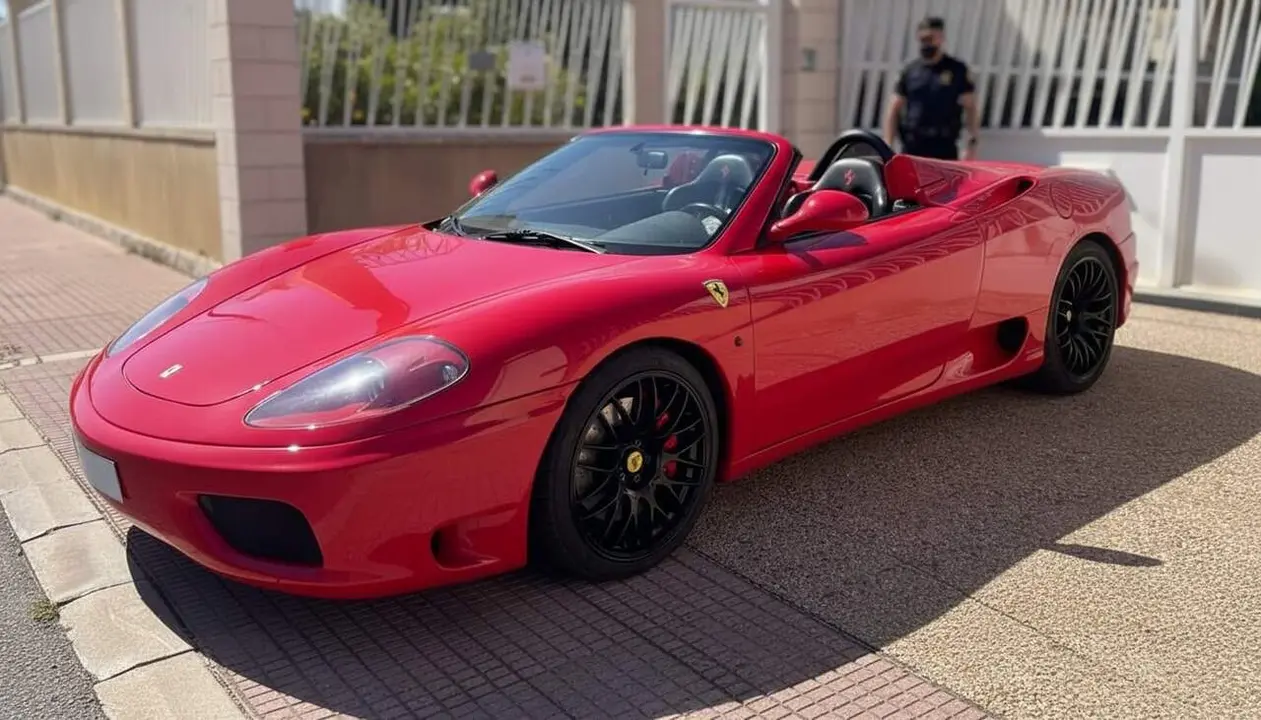

Imagine finding a Ferrari 360 Spider at a price that even makes you suspicious, and you don’t know much about cars. That’s exactly what happened in Elche, where an online ad set off all the alarms for experts and, above all, the police.
The Murcia national police quickly got to work when they detected that this very cheap Ferrari was not what it seemed. But instead of an Italian sports car, what lay beneath the bodywork was a replica made with fiberglass and materials that wouldn’t pass the vehicle inspection for anything.
The case of the fake Ferrari: how they detected the fraud
The car and its suspicious ad
The Cybercrime unit agents came across an ad for a vehicle that imitated the Ferrari 360 Spider model. The price, far below market value, already set off all alarms. Because, if a real Ferrari sells for astronomical figures, what could this be?
After some investigation, they verified that the car had nothing to do with Ferrari, but was built on the chassis of another brand, with a fiberglass structure and other low-cost materials. But the most striking thing: it illegally reproduced the logos and original design lines of the Italian house.
The police intervention at El Altet
The vehicle was located in the El Altet area and immediately seized. And here’s the best part: despite having documentation that seemed legal and compliant with traffic regulations, the police concluded that the use of Ferrari’s identifying elements was a criminal offense.
The detainee faces charges for violation of industrial property rights, a case that highlights police controls over these well-organized scams in the second-hand market.
How replicas work and why they are dangerous
Materials and design deceptions
Replicas like this not only deceive the buyer but can also be a danger to road safety. Building a car with fiberglass and non-approved elements, while passing it off as a Ferrari, is playing with fire.
Furthermore, the illegal use of symbols and brand names that have recognized industrial value is a fraud penalized by law. In this case, the police were clear: you cannot play with industrial property with impunity.
The second-hand market and police surveillance
The second-hand car sector is a terrain full of shadows, where replicas and counterfeits try to sneak in. That’s why authorities like the Murcia Police Headquarters maintain firm and active control to cut these practices off at the root.
According to police sources, online detection of suspicious ads is key to intervene before the fraud affects more people.
The legal consequences and the message to buyers
Charges against the detainee
The owner of the fake Ferrari in Elche faces charges for a crime against industrial property. This not only implies financial penalties but also the possibility of losing driving license points or other penalties depending on the severity.
Investigators have made it clear that these types of acts will not go unnoticed and that any attempt to pass off fake parts as originals will be prosecuted.
Tips to avoid falling for similar frauds
- Do not trust prices that are too low for luxury or sports models.
- Verify documentation and conduct real ownership checks before buying.
- Be wary of online-only ads without the possibility of seeing the vehicle in person.
- Turn to professionals who can certify authenticity before signing any agreement.
The police have shown that, even if the replica is very well made, there are always details that reveal its falseness. And that they are watching to detect them.
The reality is that the sale of a fake Ferrari 360 Spider built on another vehicle in Elche not only ended with an arrest but also serves as a warning to anyone thinking they can slip a replica into the market. Maybe the Ferrari isn’t as sporty as it seems, but justice certainly runs fast.