Manual or automatic change: which is more reliable and lasts longer?
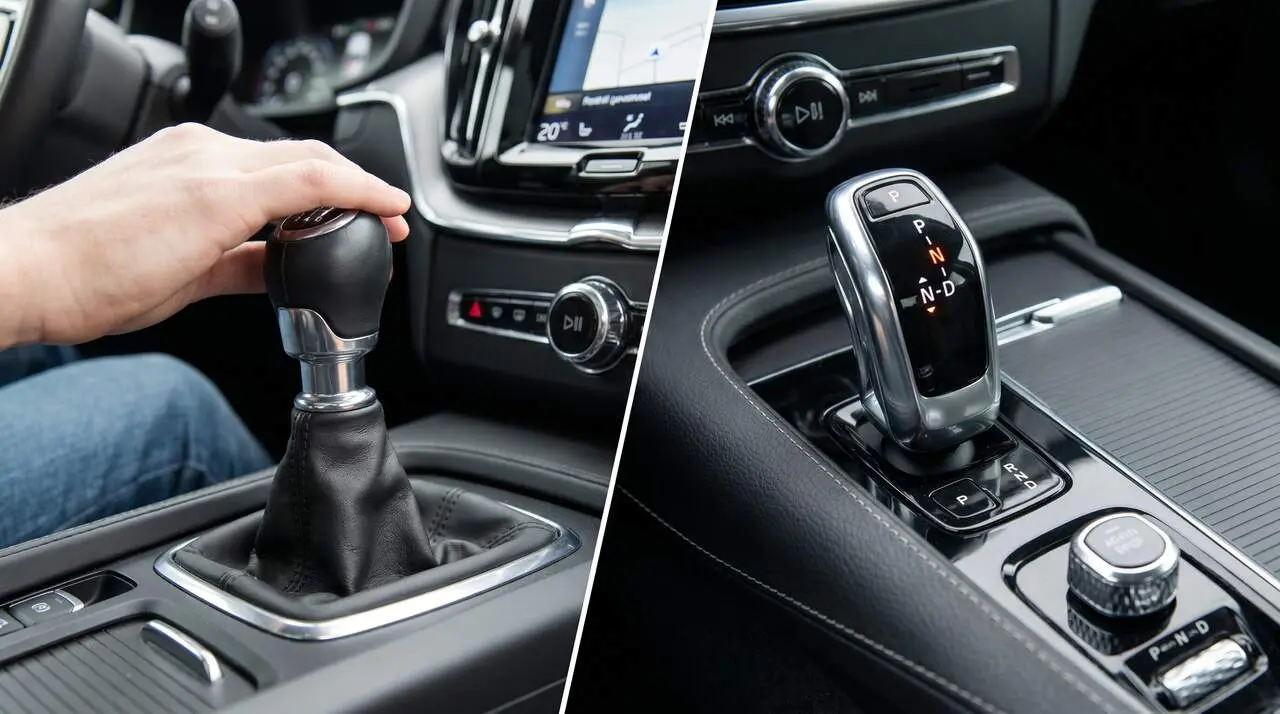

Choosing between a manual or automatic transmission is not just a matter of comfort or preference. Reliability and longevity in good condition are factors that can make a difference when choosing a car and avoiding headaches at the repair shop.
But, really, which type of transmission withstands the test of time better and costs less in maintenance? This is a question many drivers ask themselves, and the answer is not always as clear as it seems.
Reliability according to motor experts
Why does it matter to know which transmission is more reliable? Because maintaining a car with fewer mechanical problems means spending less and saving time, which for many is gold. Thus, reliability is not just a technical fact, but a key element to avoid disappointments and costly repairs.
How does mechanical complexity influence?
Manual transmissions are simple in their mechanics, with fewer components that can fail. This makes them easier to maintain and, in general, more reliable in the long run. However, every time you shift gears there is inherent mechanical wear, and driver errors can accelerate this wear.
Automatics, a more complex but perfected world
Automatic transmissions have a more complex and delicate mechanics. However, modern versions have improved a lot and the difference in reliability with manuals has been closing to surprising levels. But the key lies in maintenance and the specific design of the transmission.
Which transmission is better according to the driver’s profile?
The key question is: what type of driver describes you best? Understanding this can help you choose the transmission that will give you the fewest problems while keeping the car in good condition longer.
Why is the manual transmission for experts?
The manual transmission depends heavily on the driver. If you know how to shift correctly and avoid bad habits like keeping the clutch pressed or touching the gear lever unnecessarily, you will have a very durable system. But if not, the wear will be fast and expensive.
What is the reliability of the automatic transmission based on?
Automatics are ideal for drivers who know how to perform rigorous vehicle maintenance. If not cared for, very costly failures can appear because they have more parts and delicate components.
Practical comparison of reliability and maintenance
| Aspect | Manual transmission | Automatic transmission |
|---|---|---|
| Mechanical complexity | Simpler | More complex |
| Maintenance | Less costly | Requires strict care |
| Overall reliability | Very reliable if used well | Very reliable with good maintenance |
| Useful life | Can be very long | Depends heavily on maintenance |
| Repair costs | Less costly | Can be very high |
The reality is that there is no absolute winner. The manual transmission lasts more years if the driver is expert and takes care of the vehicle, while the automatic can be just as reliable if rigorous and constant maintenance is performed. What never works is neglecting the car, regardless of the type.
So, look in the mirror: if you are a driver who doesn’t want complications and doesn’t want to think too much about shifting, the automatic can give you peace of mind as long as you take care of the car. But if you like to feel the car and have a steady hand, the manual offers a reliability that can last for years with correct habits.
In the end, the decision is not just mechanical, but a combo between the car and its driver.
Frequently Asked Questions
- Which transmission requires less maintenance?
- Generally, the manual transmission requires less maintenance because it is mechanically simpler.
- Are automatic transmissions more expensive to repair?
- Yes, automatic transmission repairs can be much more costly if proper maintenance is not performed.
- How can I extend the useful life of a manual transmission?
- Avoid bad habits like keeping the clutch pressed and not resting your hand on the gear lever.