5,700 km without refueling: a Finn sails to Ibiza with a solar yacht
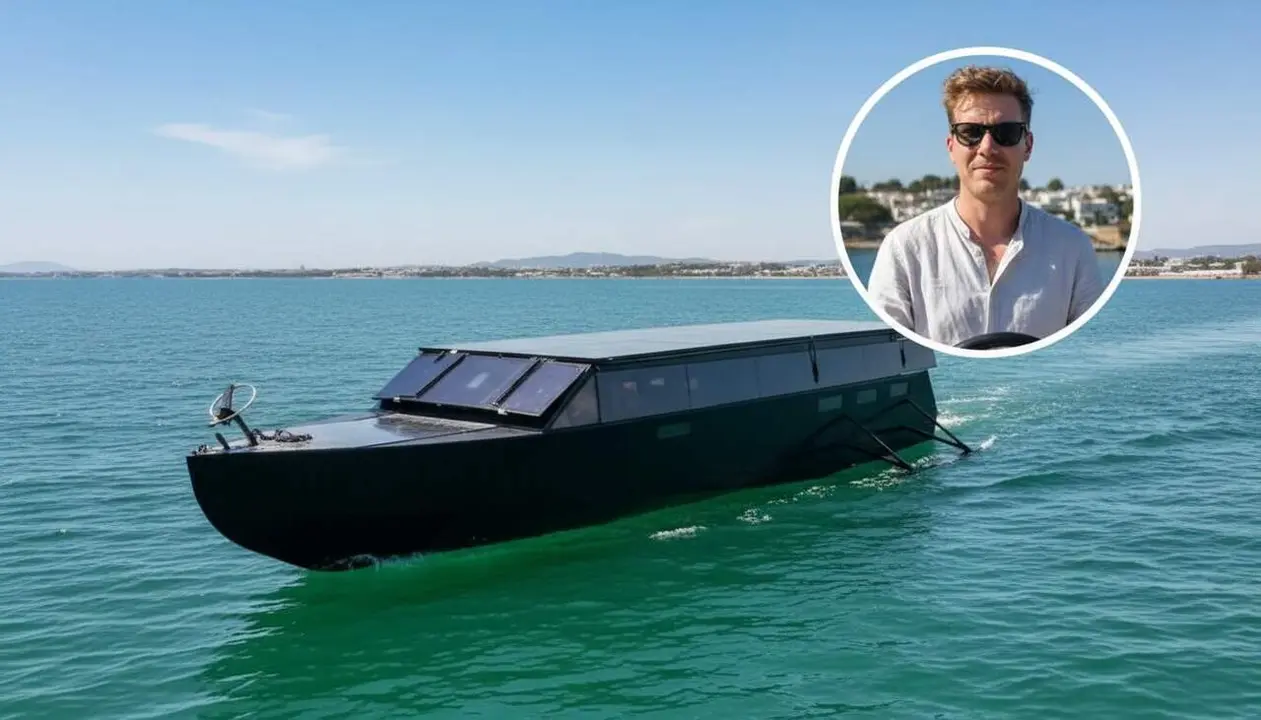

Lukas Sjöman, Finnish inventor and content creator, has achieved a feat that combines technology, patience, and plenty of sun. His solar yacht, named Helios 11, has covered 5,700 km from Finland to Ibiza without refueling a drop of fuel.
But it is not only about the distance, but the method: a vessel that depends exclusively on solar energy and batteries to move. This journey calls into question the need for fossil fuels in recreational and professional navigation.
The solar boat Helios 11: how does it work?
What makes the Helios 11 special is its energy system. The boat is equipped with a set of solar panels that provide around 6 kW of power. This energy is captured during the day and stored in 48-volt batteries, allowing the boat to keep sailing at night without the need for a combustion engine.
In addition, it has an electric motor powered by these batteries and an auxiliary sail that is used when solar capture is low or to save battery energy. This combination makes its autonomy depend almost exclusively on the sun.
⛽ Combined consumption: 0 l/100 km (solar)
💶 Estimated build price: not specified
🏁 Daily range: 270 km with sun, 70 km in bad weather
Why does this solar boat matter in Catalonia and the Balearic Islands?
Sustainable navigation is especially relevant in areas like the Balearic Islands, where tourism and environmental protection are priorities. A boat that can cover long distances without generating emissions can revolutionize local maritime mobility.
It also represents an interesting challenge for the Catalan nautical industry, used to competing in traditional sectors where fuel consumption is still the norm. Moreover, Sjöman’s experience serves as a reference for future renewable energy projects applied to the sea.
What obstacles did Lukas Sjöman encounter during his journey?
The route, which started in winter, was no walk in the park. The main challenge was the low sunlight in northern Europe, which forced reducing speed or using the auxiliary sail.
He also experienced unexpected problems like the theft of the auxiliary boat in Spain, which he had to rebuild on the move. These anecdotes show that despite the technology, navigation still relies on improvising and adapting.
From Finland to Ibiza: Helios 11’s route
Which countries and routes did the solar boat cross?
The journey began in Finland and continued through Sweden, Denmark, Germany, and France, passing through canals and rivers before reaching the Mediterranean and finally Ibiza.
This route is not only long but involves various types of navigation, from inland waters to open sea, testing the boat’s versatility.
How does this feat affect the perception of ecological maritime transport?
The fact that a solar boat can cover such a great distance without gasoline makes one rethink the dependence on oil in recreational and commercial navigation. This experience can accelerate investment and innovation in sustainable boats.
Sjöman’s project has attracted the attention of experts who believe this technology could have a direct impact on reducing nautical emissions in the Mediterranean and other seas.
The future and challenges of solar boats
What is Lukas Sjöman’s next project?
After arriving in Ibiza, Lukas plans to build a larger solar catamaran, with a power of 40 kW, to be able to face open ocean navigation.
This initiative shows that the Helios 11 project is only the beginning of a new stage in sustainable navigation, with more powerful vessels adapted for long routes.
What technical and logistical challenges must be overcome?
Solar boats still have to solve problems like limited sunlight at high latitudes, energy storage capacity, and resistance to adverse weather conditions.
But the path is already open and Sjöman’s test is a clear example that with creativity and patience it is possible to advance toward a greener maritime future.
The reality is that Helios 11’s journey has shown that sustainable navigation is possible and that the future can be much greener and more technological than we imagine.
This Finnish man’s feat inspires rethinking maritime mobility from a more ecological and innovative perspective, with the sun as the main fuel.
Frequently Asked Questions
- How exactly does the Helios 11’s energy system work?
- It uses solar panels that generate 6 kW of power, stored in 48-volt batteries that power an electric motor and allow sailing without refueling.
- How far can the boat travel in one day with sun?
- Up to 270 km daily under optimal sunny conditions, and about 70 km on bad weather days.
- What did Lukas do when his auxiliary boat was stolen?
- He built a new improvised auxiliary boat to continue the journey to Ibiza.