JetZero Z4: 4 aisles and a radical design that could change aviation from 2030 onward
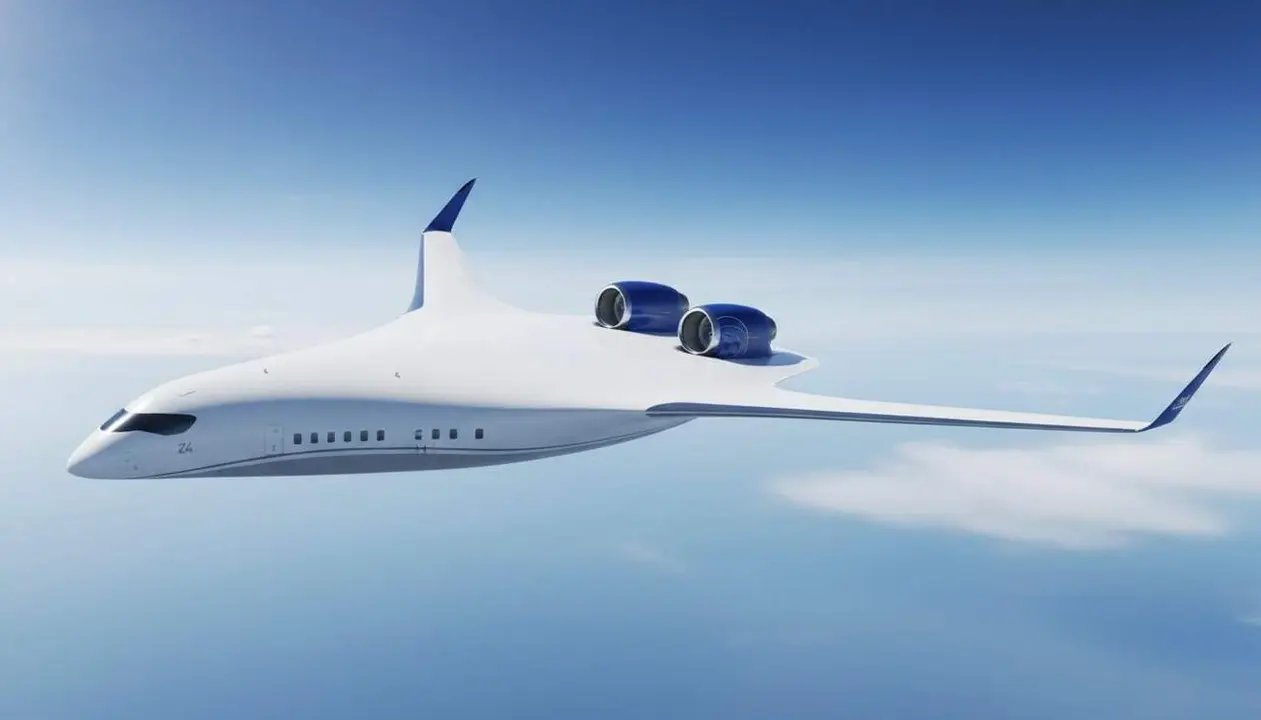

The JetZero Z4 revolutionizes aviation with a design that breaks traditional molds and promises to reduce consumption and costs. This North American project opts for a wider cabin, four aisles, and a configuration that eliminates conventional windows.
Despite this innovative design, certification and pending tests will determine if the Z4 can fly commercially starting in the next decade, after a wait filled with skepticism and expectations.
The disruptive fuselage design and new architecture
Why is the wide fuselage key for the Catalan passenger?
The Z4 abandons the classic tubular fuselage for a profile that resembles a manta ray, much wider and flatter. This means the cabin is radically different: passengers enjoy four wide aisles, separate spaces to wait for the restroom, and individual luggage compartments per seat.
For anyone who has suffered queues and narrow rows on the N-340 or no space to move at IKEA, this change represents a noticeable improvement in comfort and organization. Additionally, the glazed opening on the roof provides natural light, a touch that breaks with the typical darkness inside a plane.
How does JetZero integrate known technology into a different design?
Benjamin Katz, an expert on the project, highlights that despite the exterior break, almost all components are from existing aircraft. The engines and controls have prior FAA approvals, so the main innovation lies in how they are integrated within the blended wing.
This wing is not a historical novelty, but JetZero revives it to improve aerodynamics and reduce consumption. An advantage that could make the Z4 more economical and sustainable than current commercial airplanes, an aspect that is especially interesting in a context where sustainability weighs heavily in airline and passenger decisions.
Technical challenges and the key date for its arrival
What doubts does the new layout raise?
The design of four aisles and the seating position near the wings raise concerns. Some criticisms warn that passengers closest to the wing could experience stronger gravitational forces during turns, an issue that still needs validation.
Moreover, safety in evacuation with this configuration is under scrutiny, since traditional layouts have been designed with more classic aisles and rows.
When will the Z4 be able to fly and what hopes are there?
According to The Wall Street Journal, the first flight of a full-scale prototype is scheduled for late 2027, with possible entry into commercial service in the early 2030s. JetZero, however, avoids specifying dates to not create false expectations.
This bid comes after the American large aircraft industry has retreated, leaving Boeing as the only major national manufacturer. JetZero wants to break this dynamic and regain market competition.
Financial support and industrial viability of the project
What role does financing play in the future of the Z4?
The project has received a significant boost with a preliminary agreement for a loan of up to $3 billion from the Export-Import Bank of the United States, which will allow building the first Z4 factory.
This financial support is key to moving forward, as without physical infrastructure there can be no flight or commercialization.
Which business allies back JetZero?
The project counts on the support of about twenty prominent airlines such as Delta Air Lines, Alaska Airlines, and United Airlines. This provides a solid business base that can facilitate demand and acceptance of the new model.
Despite this, the entire viability of the Z4 depends on the new architecture meeting certification and commercial operation requirements, a huge technical and regulatory challenge that will determine the project's future.
The reality is that JetZero Z4 presents itself as a very ambitious project, aiming to transform how we understand commercial airplanes, especially for an audience that demands more space, better experience, and sustainability. But, as always in aviation, theory and practice can take very different paths.
Therefore, closely following the tests and certification will be key for any enthusiast or professional in the sector who wants to anticipate what flying the airplane of the future will be like.
Frequently Asked Questions
- What makes the JetZero Z4 design special?
- The Z4 has a wide, flat fuselage with four aisles, no conventional windows, and a blended wing that promises to reduce consumption and improve interior space.
- When is the Z4 expected to enter commercial service?
- The prototype is expected to fly by late 2027 and commercial service entry is projected for the early 2030s, although no concrete dates exist yet.
- What technical challenges does the project need to overcome?
- It must demonstrate safety in evacuations with four aisles and validate that passengers near the wings will not suffer excessive gravitational forces during flight.