3 lessons that Buell Leviathan just learned at Bonneville after trying 250 mph
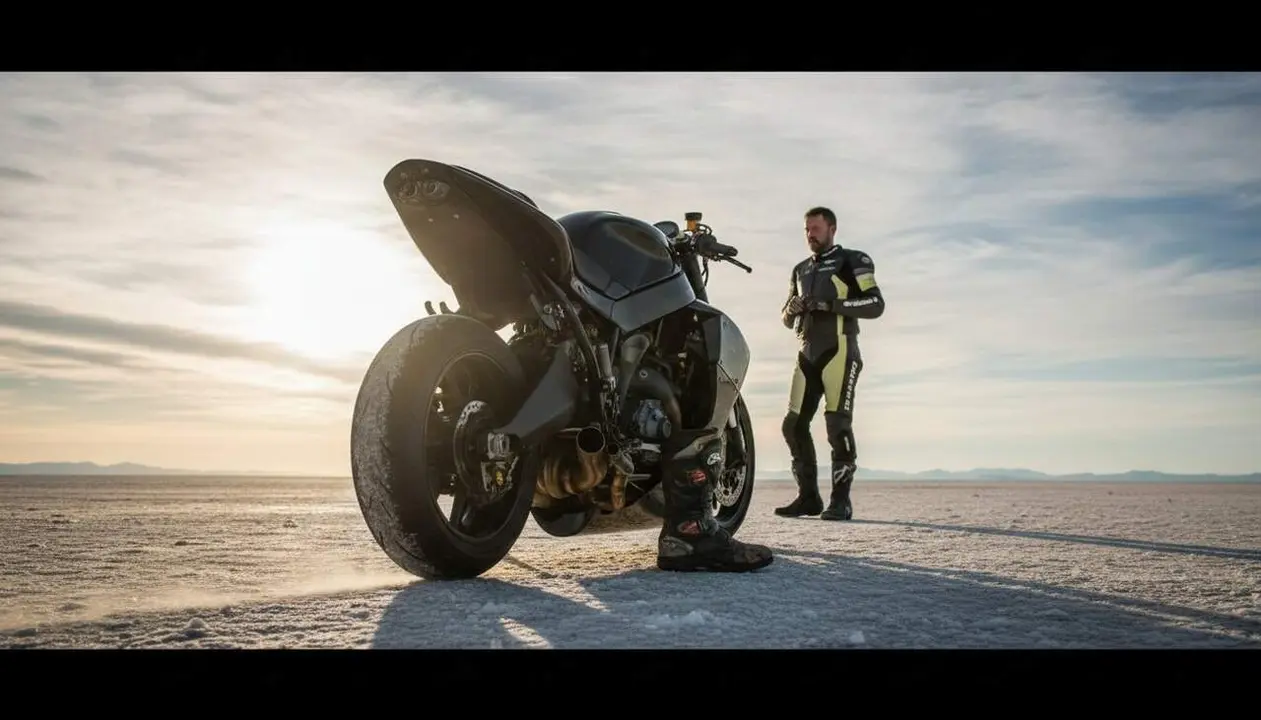

The Buell Leviathan landed at Bonneville with the goal of 402 km/h and over 401 HP at the wheel. The team and rider took the first steps of an ambitious project under extreme salt conditions and variable temperatures.
The challenge was clear: transform a 1,190 cc platform into a record machine. The team had technical budgets and phases to validate, but the salt flat surface and lack of experience in real conditions put a lot of pressure on the plan.
Buell Leviathan at Bonneville: the debut and the first lesson
⛽ Combined consumption: Not available
💶 Starting price: Not available
🏁 0–100 km/h: Not available
What does it matter for the reader? Because if you go on the road (or dream of records), knowing how a 401.4 HP project fails in practice saves you content — and maybe money. The Buell Leviathan turned Bonneville Speed Week into a live test bench: it exposed the difference between measured power and useful power on salt.
What happened during Speed Week?
Short answer: the bike didn’t reach the final goal and the rider encountered traction problems that conditioned all the runs. This first phase served to validate the development plan and prioritize mechanical changes.
First technical analysis
The Buell’s preparation brought a 1,190 cc V-Twin with forced induction and an official record of **401.4 HP** at the wheel. But on the salt, the power remains on paper. The roughness and humidity of the salt flat can turn grip into a lottery. This is relevant for any team wanting to bring a street bike to the speed track.
Mechanics and physics: Why 401 HP are not enough
Why does this affect you? Whether you are a technician, rider, or simply a curious motorcyclist, understanding the difference between power and delivered power is the key to not just believing in dyno numbers. The Buell Leviathan showed that physics and terrain rule.
Why did the rear wheel suffer?
Short answer: the displacement on the salt causes loss of grip and tire slip, especially when the gear ratio accelerates the wheel’s rotation beyond the bike’s actual progress.
Mechanical limitations
With third gear engaged, the behavior already became demanding, and in fourth, the wheel reached an equivalent speed of over **320 km/h** while the bike was moving much slower. This means efficiency losses and a rider struggling to maintain control at speeds above **280 km/h**. A combination of factors: tires, calibration, transmission, and surface.
| Indicator | Value |
|---|---|
| Announced goal | 402 km/h |
| Best record at Speed Week | 287.3 km/h |
| Announced mechanical margin | 483 km/h (hub limits) |
Way forward: What the team has learned and what they can do
Why do we care about the project’s future? Because the story doesn’t end with the first run. The team has valuable information obtained under extreme conditions — and that determines the development priorities: traction, geometry, and specific preparation for salt.
What changes are priorities?
Short answer: improve traction control on low-adhesion surfaces, adapt the transmission, and review tire compounds and profile for salt.
Development plan and rider experience
The Buell approached Project Leviathan as progressive development and not a finished line. Bill Melvin, CEO of Buell, gave Jacob Stark the freedom to iterate on the 1190 platform. Stark, the project’s rider, had to overcome licensing phases and accumulate learning kilometers in an unforgiving environment: the surface changes texture from one lane to another and the feeling at the handlebars is completely alien to a conventional road.
The practical lesson: good dyno numbers are the first step. Knowing how to bring them to the terrain is the expensive and slow part.
What can we expect now?
The project will continue. The team has already identified weak points: power management at the wheel, gear calibration, and structural adaptations. According to the records published during Speed Week, progression went from 210.2 km/h in an initial phase to the final **287.3 km/h** — signs there is room for improvement and that the 402 km/h target is not a fantasy, but a goal that will require many iterations.
The Buell Leviathan turned Speed Week into a classroom: power, traction, and adaptation to salt are the pending subjects. The reality is that the bike, rider, and team have gained valuable experience — and already know where to spend workshop hours. If you are curious about mechanics, the **Buell**, the **Leviathan**, and the **Bonneville** test still have chapters to write.
Frequently Asked Questions
- What was the maximum speed reached by the Buell Leviathan at Bonneville?
- The best mark recorded during Speed Week was 287.3 km/h. This data was made public in the event’s records.
- Why didn’t it reach the announced 402 km/h?
- Because of the combination of loss of grip on the salt, traction problems, and the need for adaptations to the transmission and tires; the project is in development phase.
- What role does Jacob Stark have in the project?
- Jacob Stark is the designated rider and had to progressively obtain licenses for high-speed categories; his experience at Bonneville is a key part of the development.