How fever and cold multiply the risk of contagious diseases
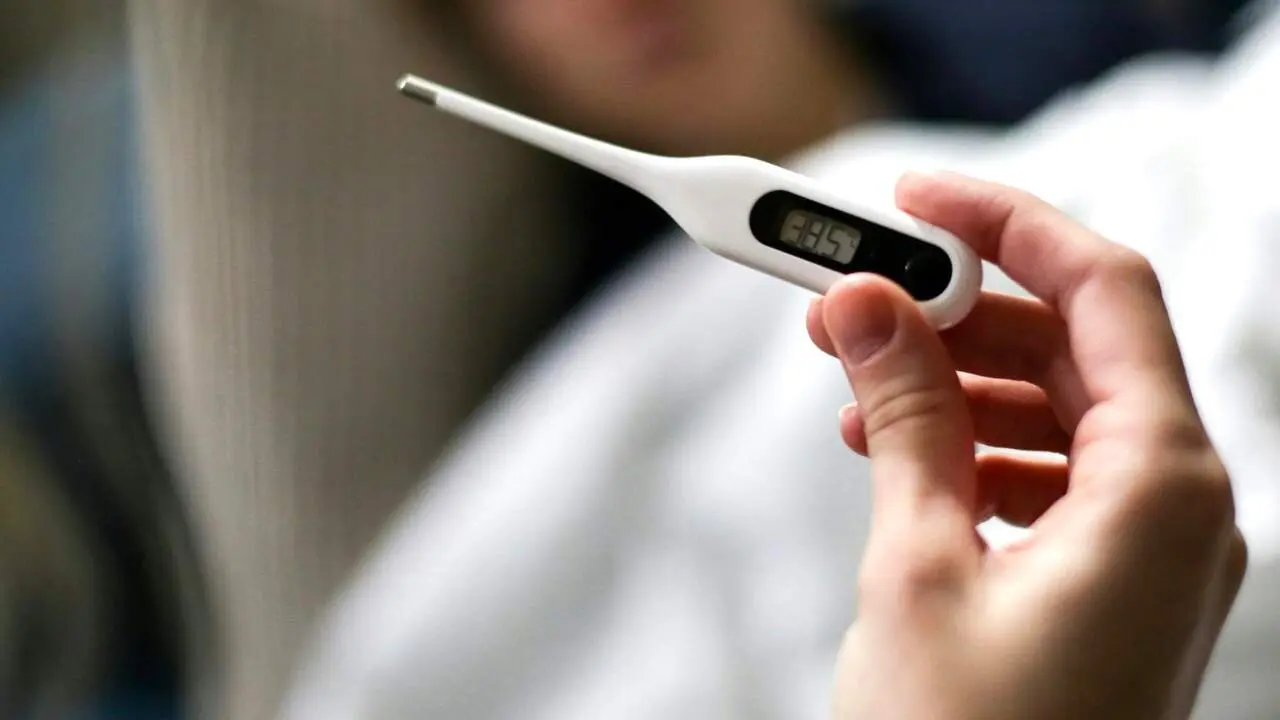

The clouds of particles we expel when coughing or sneezing travel farther when there is a large temperature contrast. This makes the transmission of respiratory diseases such as the flu or COVID-19 easier in cold environments, especially if the person has a fever.
A team of researchers from Rovira i Virgili University has confirmed that the difference between body temperature and ambient temperature determines how this particle cloud disperses, with experimental data that could change the way we protect ourselves inside sensitive spaces in Tarragona and surrounding areas.
The role of temperature in the dispersion of respiratory aerosols
A simulator to understand transmission
When we cough or sneeze, our body expels microscopic particles capable of carrying viruses and bacteria. These aerosols are vectors of respiratory diseases, but their trajectory in the air is not easy to analyze.
URV researchers modified a simulator to heat the exhaled air to 37 °C and recreated controlled conditions inside a climate chamber at the Catalonia Energy Research Institute (IREC). They studied how aerosols behave at 27 °C, 17 °C, and 7 °C, combining different exhalation intensities and the involvement of the nose in the air outlet.
The effects of thermal contrast
The result? The greater the difference between the temperature of the expelled air and that of the environment, the more cohesive and farther the particle cloud is. This means that in a cold environment and with a person who has a fever, the risk of spreading contagious aerosols clearly increases.
The buoyancy forces generated by the temperature contrast alter the trajectory and maintain high concentrations for longer, which may facilitate these microorganisms reaching farther within indoor spaces.
The influence of the respiratory system and the environment
The nose, a key factor in dispersion
The research also confirms that the geometry of the respiratory system remains crucial. When air partially exits through the nose, the particle cloud spreads less horizontally but more vertically. In contrast, if the exhalation is only through the mouth, the cloud advances more in a straight line and may reach farther.
This interaction modifies dispersion patterns and further complicates risk prediction in enclosed spaces.
Additional variables to consider
Despite the progress, the actual behavior of aerosols also depends on other factors such as humidity, ventilation, and the persistence of suspended particles, which still require specific investigation, especially to adapt protocols to the reality of public and healthcare spaces in Tarragona.
It is important not to forget that URV has created a unique simulator that allows reproducing these conditions in a stable and repeatable way, providing valuable data to improve models and prevention measures.
Applications for safety in Tarragona and its province
Indoor spaces with high risk
The results of this study are especially relevant for schools, hospitals, laboratories, and public transport in Tarragona, where the risk of airborne contagion is higher. Knowing that temperature difference affects dispersion can help design better ventilation systems and safety protocols.
For example, adjusting the ambient temperature or better controlling air conditioning can reduce the concentration of infectious particles in enclosed areas.
Accessible protocols and prevention
The research highlights the need to consider body and environmental temperature to avoid outbreaks of respiratory diseases, especially during cold periods or winter, when people with fever are in cold environments.
In Tarragona, this information could be key to improving measures within the healthcare system and public transport, as well as for managing educational spaces, preventing a simple sneeze from becoming an amplified risk.
Temperature not only makes us cover up more, but also modifies the distance the virus can travel.
All in all, one more proof that prevention must proceed with eyes wide open, especially when cold and fever come together in the same space.
Source of the article: Rovira i Virgili University