Three injured in a nitric acid accident at the URV laboratories in Tarragona
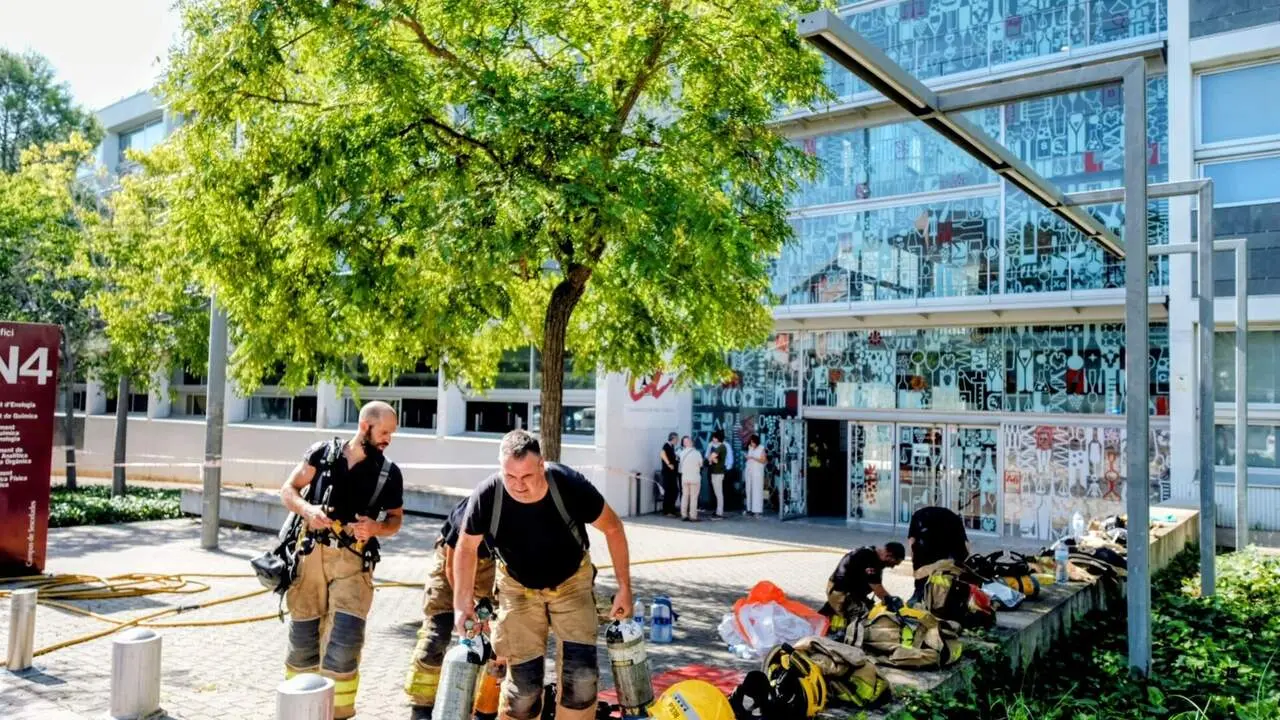

Three URV technicians were injured in a nitric acid accident in Tarragona, but they are stable and out of danger. The incident occurred this morning in a teaching laboratory of the Faculties of Chemistry and Enology, while they were preparing materials to start the course.
The situation was controlled after the workers themselves activated the emergency protocol, called 112, and used the safety showers. The Firefighters cleaned and decontaminated the area, while the three technicians were treated at Joan XXIII and Santa Tecla hospitals.
What happened in the URV laboratory?
How did the nitric acid accident occur?
For readers in Tarragona, the main fact is clear: the accident affected a URV teaching laboratory and left three workers injured, with no students present at that moment. There was no emergency due to a contaminant cloud, according to information provided by the university.
The three members of the Technical, Management, and Administration and Services Staff were transferring nitric acid from a large five-liter bottle to smaller one-liter bottles. During this operation, one of the bottles fell to the floor.
The handling of this product is done with special pumps and inside a fume hood. This equipment has a glass that protects the body of the person working with the acid, who also wore the corresponding personal protective equipment.
According to Rovira i Virgili University, the transfer was being done following the planned safety measures and the workers immediately reacted by activating the established protocol for these cases.
How many injured are there and what is their condition?
The three technicians suffered injuries related to the action of the acid, but they are stable and out of danger. After calling 112, they immediately showered and left the laboratory on their own feet.
The health services attended to them at Joan XXIII and Santa Tecla hospitals in Tarragona. The source does not specify the exact type of injuries nor the time spent, so any added detail would be passing rumor as information. And that, in a chemical accident, is not exactly a good idea.
Fàtima Sabench, Vice-Rector of Infrastructure and Relations with Health Institutions, explained that the handling had been done following all safety rules. She also emphasized that, besides the three technicians, there were no students in the laboratory when the accident occurred.
How was the situation controlled?
Why were the emergency showers decisive?
The answer is particularly relevant to anyone who works or studies in a laboratory environment: the technicians activated the emergency showers immediately and this action allowed the contaminant to be diluted with the water itself.
Joan Carvajal and Manuel Suárez, deans of the Faculties of Chemistry and Enology, detailed that this immediate action reduced the scope of the subsequent intervention. The workers were able to leave the space walking after washing themselves with the safety showers.
The sequence was, therefore, very specific:
- Call to 112.
- Immediate activation of the emergency showers.
- The three technicians left on their own feet.
- Care at Joan XXIII and Santa Tecla hospitals.
- Cleaning and decontamination of the laboratory by the Firefighters.
The speed of these first steps dictated what happened afterward. The Firefighters’ operation was not focused on rescuing trapped people, but on cleaning and decontaminating the affected area. A small difference on paper, but enormous when the product involved is corrosive.
What work did the Firefighters do?
The Generalitat Firefighters worked on cleaning the area and decontaminating the laboratory. The intervention took place after the nitric acid fell onto the floor and the workers activated the emergency showers.
Carvajal and Suárez explained that the water from the showers diluted the contaminant. This allowed the emergency teams to limit their task to the affected area, without the university reporting the presence of a chemical cloud.
The available information does not describe any impact on other spaces of the Faculty of Chemistry and the Faculty of Enology. It also does not indicate any presence of students in the laboratory during the accident. What is confirmed is that the three workers were the only people present at that time.
What is known about the product they were handling?
Did the nitric acid cause a chemical cloud?
According to information provided by the deans, no emergency was activated due to a chemical contamination cloud. The product involved was nitric acid, a commonly used acid in the laboratory and chemical industry.
Joan Carvajal explained that the nitric acid did not imply other specific dangers in this case beyond the burns caused by the acid itself. This clarification helps to understand why the response focused on decontaminating the space and attending to the three workers.
In other words: the accident was serious enough to cause three injuries and mobilize emergency services, but it did not lead to the scenario of a chemical cloud that would require activation of such an emergency. The product’s name sounds alarming; the protocol, here, did its job.
Were there students in the laboratory?
No. At the time of the accident, only the three technicians preparing laboratory material to start the course were present, according to URV.
Fàtima Sabench noted that the workers acted according to safety rules. The laboratory had a fume hood with protective glass, special pumps for handling the product, personal protective equipment, and emergency showers.
These elements did not prevent a bottle from falling, but they are part of the response that was activated afterward. The information published by the university allows reconstructing the accident without adding causes that have not been communicated: a one-liter bottle fell during the transfer of nitric acid, three technicians were injured, and the area was cleaned and decontaminated.
The reality is that the accident leaves three workers attended to and an emergency intervention concentrated in the URV teaching laboratory in Tarragona. The three technicians are stable and out of danger, while the emergency showers were decisive in diluting the contaminant and the Firefighters completed the cleaning and decontamination of the space. The case reminds us, without unnecessary dramatization, how crucial it is for protocols and safety equipment to work when a bottle falls to the floor.
Frequently Asked Questions
- How many injured did the URV laboratory accident cause?
- The accident caused three injured. They are technicians from URV’s Technical, Management, and Administration and Services Staff, and they are stable and out of danger.
- Where were the injured workers treated?
- The three technicians were treated at Joan XXIII and Santa Tecla hospitals in Tarragona after leaving the laboratory on their own feet.
- What product caused the accident?
- The workers were transferring nitric acid from a five-liter bottle to one-liter bottles when one of these fell to the floor.
- Were there students in the laboratory?
- No. URV reported that at that moment only the three technicians preparing materials to start the course were present.
- Why was no emergency activated for a chemical cloud?
- URV officials explained that the nitric acid did not involve other specific dangers in this case beyond burns from the acid’s action. The Firefighters cleaned and decontaminated the space.
Sources consulted
- Rovira i Virgili University – Information about the accident in the teaching laboratory
Article source: Rovira i Virgili University