Recover 848 ancestral vines to reactivate the vineyard in Salou and Tarragona
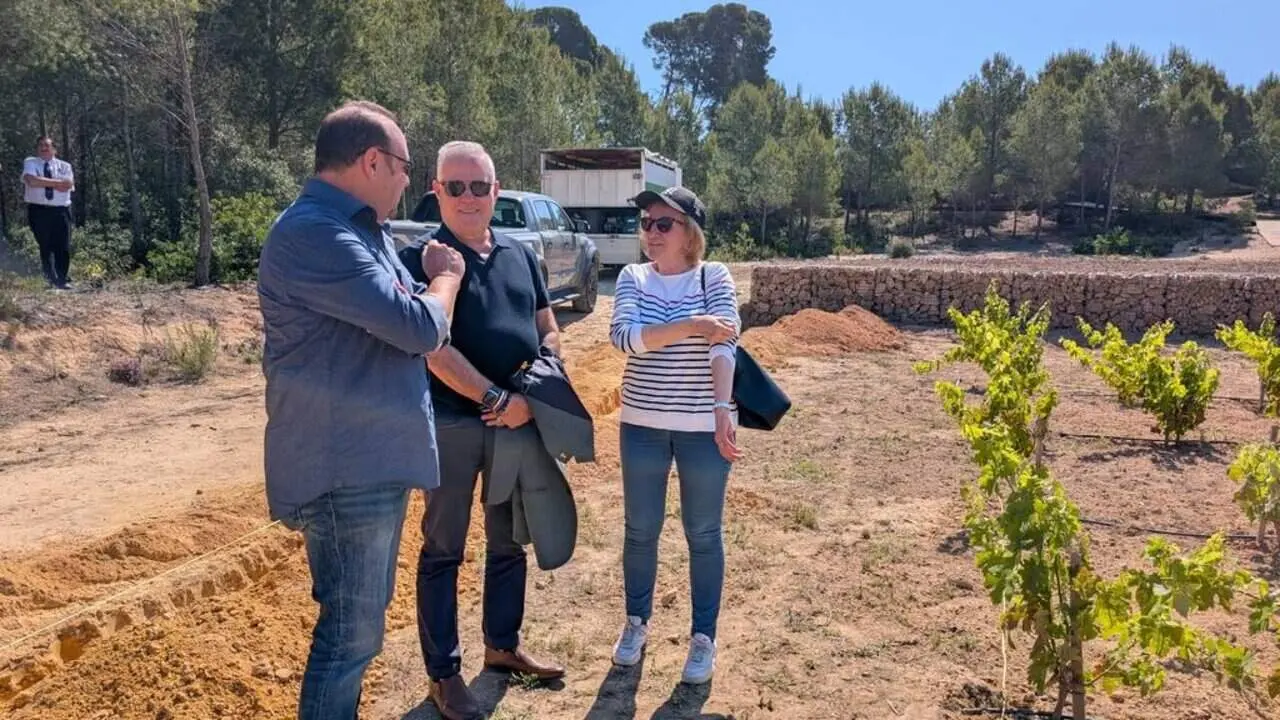

Salou incorporates 848 new vines in a project aimed at recovering ancestral varieties that have practically disappeared. This initiative combines agricultural heritage, research, and wine tourism to give new life to the local vineyard.
The project, launched in the Pla de Maset park, involves the participation of Rovira i Virgili University and Salou City Council, following a thread started in 2024 with the aim of recovering the agricultural memory of the area and adapting it to current challenges.
The project to recover ancestral varieties in Salou
An experimental vineyard that is growing
With 848 recently planted vines, the experimental vineyard at Pla de Maset is nearing a thousand vines. This expansion adds 348 Girat leaves, a historic black variety from Camp de Tarragona, and 500 Escanyagos, a white variety entering this space for the first time.
The initiative involves researcher Francesca Fort from URV, who highlights the opportunity to study the resilience of these vineyards in sandy soils, especially relevant in a climate change context with more frequent drought episodes.
Heritage and local identity
Salou’s mayor, Pere Granados, emphasizes that the project not only recovers almost forgotten varieties but also connects residents with their agricultural history and the landscape that defines the territory’s identity.
The Pla de Maset vineyard seeks to recreate the agrarian structure of the 18th and 19th centuries, when vineyards were key to the social economy of the area, thereby strengthening the bond between the local past and present.
Ancestral varieties and scientific research
The Girat leaf, a recovered variety
The Girat leaf disappeared from local crops in the 1960s, but the first planted vines come from the El Encín Estate in Alcalá de Henares, where an important collection of European varieties is preserved.
This sample originates from a vineyard in Camp de Tarragona relocated in 1975 from the Enological Station of Reus, ensuring the authenticity of the plant material now returning to the territory.
Studying adaptation to climate change
Francesca Fort points out that the sandy soils of the area retain little water, creating conditions of water stress that allow analysis of how these traditional varieties can adapt to difficult conditions.
These data will be crucial to understanding the sustainability of the local vineyard and providing tools to face future climate crises in the province of Tarragona.
Wine tourism and the future of the agricultural landscape
A visitable space to spread history
The council wants Pla de Maset to become a must-visit place to learn about the history of the vineyard and the agricultural landscape, with a perspective that combines culture, nature, and science.
The project is part of the municipal strategy to promote more sustainable and diversified tourism, highlighting local heritage and the uniqueness of the territory.
Promoting cultural and economic recovery
With the recovery of ancestral varieties and the promotion of the experimental vineyard, Salou not only reclaims its agricultural identity but also embraces an economic model that combines tradition and innovation.
The vineyard, therefore, is reinforced as a key element for cultural and economic revitalization in Camp de Tarragona.
The reality is that someone has realized that memory is also planted and watered, not just written in books.
Sources consulted
- Rovira i Virgili University – Details of the project and data on the recovered varieties
Article source: Rovira i Virgili University