Josep Pallarès will continue for six more years as rector of the URV with 72% of the votes
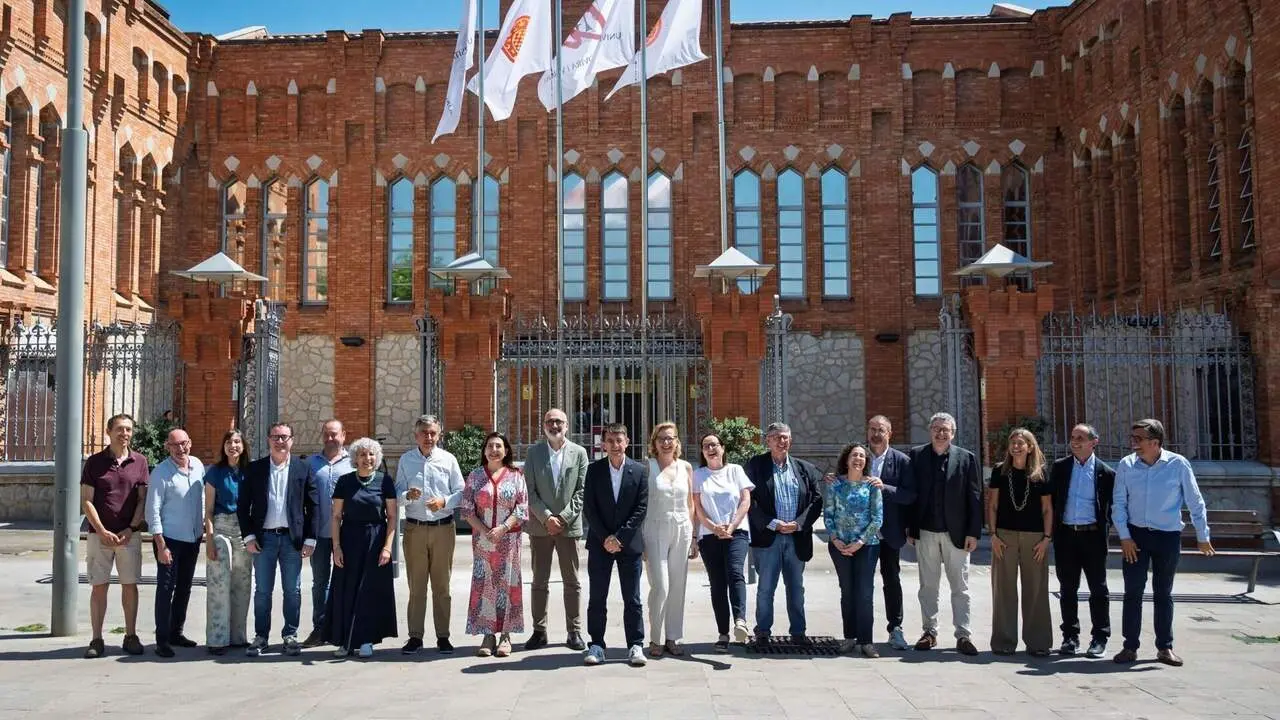

Josep Pallarès will continue for six more years as head of the Rovira i Virgili University after obtaining 72.19% of the weighted votes in the rector elections. Participation was 25.71%, practically the same as four years ago.
The elections, held recently, confirmed the majority support of the university community for Pallarès, who had already held the position since 2022 and now faces a longer mandate with greater responsibility. His project focuses on putting people at the center and strengthening the social and territorial impact of the URV.
Detailed results and participation
Distribution of votes by groups
The weighted votes clearly show the superiority of Josep Pallarès, who won in all the groups that make up the university community. The permanent doctoral faculty, which has a 51% weight in the final count, gave him 35.46% support, while Domènec Puig obtained 15.54% in this group.
The students, with 20% weight in the weighting, voted mostly for Pallarès (16.50%), as did the technical and administrative staff (PTGAS), with 11.94%. The non-permanent teaching and research staff also leaned towards Pallarès with 8.29%.
Participation percentages by groups
Overall participation remained around 25.7%, very similar to the previous call. However, while the permanent doctoral faculty voted at 89.92%, students only reached 19.40%. Even so, this figure is a notable jump compared to previous years, and URV has one of the highest student participation rates in the Catalan university system.
PTGAS also participated actively, with 85.38%, while the non-permanent teaching and research staff reached 37.75%. This disparity shows that there is still room to improve the involvement of all groups.
Speeches and promises after the election
Pallarès’ gratitude and project
At the proclamation event, Josep Pallarès thanked the support and mobilization and highlighted that his project is one of university and includes everyone to move it forward. He acknowledged the effort of the team and also valued the proposals of his opponent, Domènec Puig, which he will take into account to continue improving the university.
The new six-year mandate, resulting from legislative change, represents a great responsibility for Pallarès, which he assumes with the aim of continuing to strengthen URV’s presence and impact in the territory, responding to social needs.
Position and commitment of Domènec Puig
Domènec Puig, after congratulating Pallarès, made his ideas available and emphasized the importance of working together to bring the university to excellence. He positively valued the richness of the debate generated during the campaign and assured that he and his team will continue working to grow the URV.
The campaign left an atmosphere of collaboration and learning that, according to Puig, will strengthen the university in the coming years.
Technical details and formal election follow-up
Deadlines and subsequent procedures
Between May 28 and June 1, appeals against the provisional proclamation of the elected candidate may be submitted. On June 3, the General Electoral Commission will resolve the claims and make the definitive proclamation, which will not be official until publication in the DOGC.
This process ensures the transparency and legitimacy of the result, with rigorous monitoring by the Electoral Commission.
Unweighted data and resources to consult
The absolute votes also show a clear majority for Pallarès in all groups. In total, he obtained 3,729 votes, while Domènec Puig sums 1,064. Blank and null votes are minimal compared to the total.
All official information and participation reports can be consulted on the URV elections website, where the complete recording of the proclamation session is also available.
With this support and organization, URV embarks on six years of a stage marked by continuity and the challenge of adapting to social and territorial needs.
If the university is a machine, Josep Pallarès has learned its gears well and now has six years to prove it.
Source of the article: Rovira i Virgili University