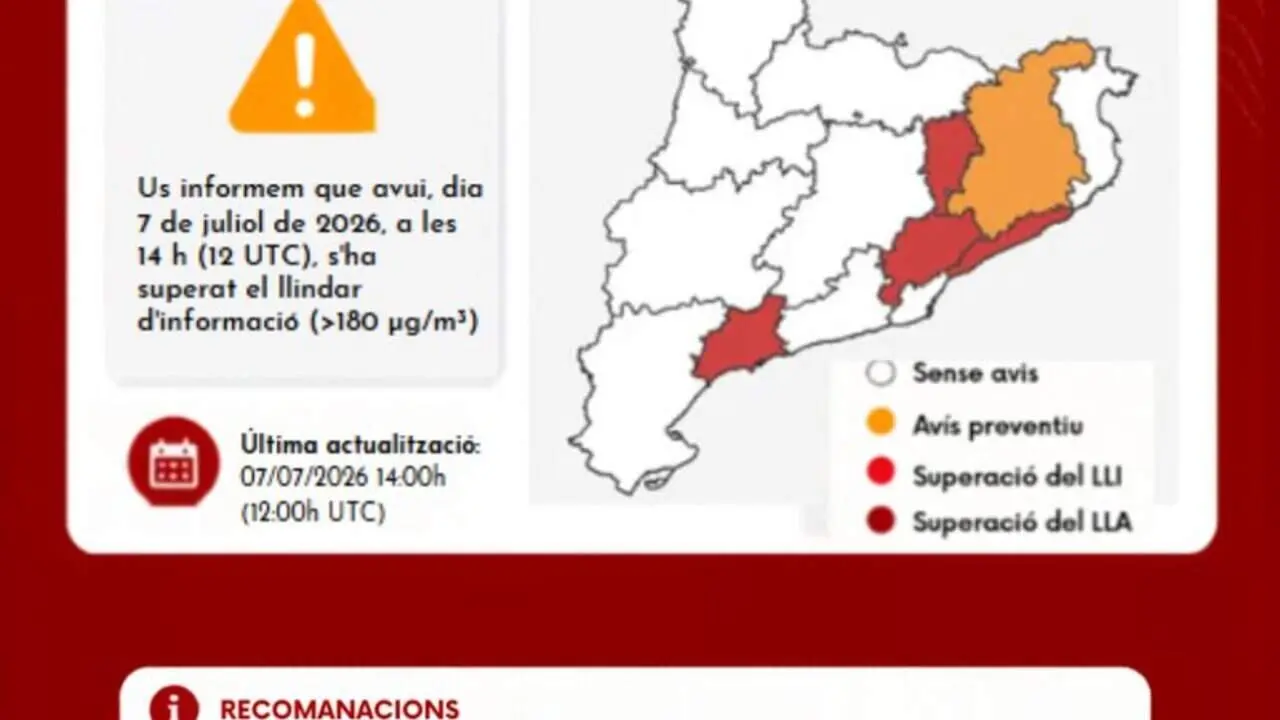
High tropospheric ozone alert today in Camp de Tarragona
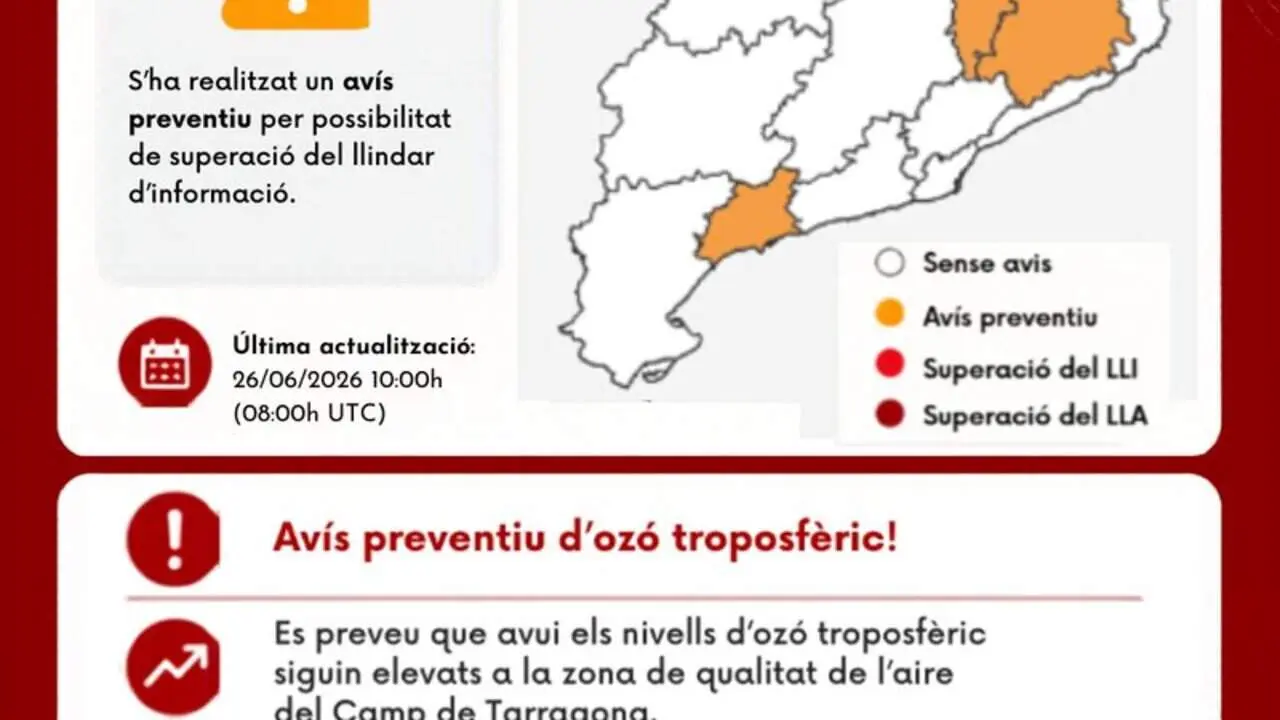

Tropospheric ozone could exceed the information threshold today in the Camp de Tarragona. The Valls City Council has issued a preventive warning alerting to an increase in the levels of this atmospheric pollutant, which can affect air quality and the health of the population.
The situation generates concern among residents and also among health professionals, especially for vulnerable groups. But what exactly does this warning mean and how does it affect our region?
What is tropospheric ozone and why is it a concern?
How is tropospheric ozone generated?
Tropospheric ozone is not a gas emitted directly but forms from chemical reactions between precursor pollutants such as nitrogen oxides and volatile organic compounds, in the presence of intense sunlight. This combination causes levels to rise on sunny days with little ventilation.
What health risks does it pose?
High ozone levels affect the respiratory tract, causing irritation, coughing, or difficulty breathing. Children, elderly people, and those with respiratory diseases are the most vulnerable. Additionally, it can worsen chronic conditions and reduce lung capacity.
 How does this alert affect the Camp de Tarragona?
How serious are the expected levels?
The warning indicates that levels could exceed 180 micrograms per cubic meter, the information threshold established by the Generalitat of Catalonia to alert the population. This figure is an indicator that the air quality is poor and that caution is necessary.
Which areas are most affected?
The Valls City Council’s tweet points to the air quality zone of the Camp de Tarragona in general. This includes municipalities closest to Valls and industrial areas or ones with high traffic, where pollution tends to accumulate more.
What can residents do to protect themselves?
What recommendations should be followed during the episode?
It is recommended to reduce outdoor physical activity, especially for sensitive people. It is also suggested to avoid using private vehicles and opt for public transport or carpooling to minimize emissions.
How can this situation impact daily life?
Although the episode is temporary, it may alter routines, especially school and work, if outdoor activities are limited. The alert serves to anticipate and minimize exposure.
The reality is that high tropospheric ozone is not new, but this specific warning from the Valls City Council highlights a real problem that affects public health and the environmental quality of the region. Being informed and acting with caution is key to getting through the day with fewer risks.
Frequently Asked Questions
- What does it mean that ozone exceeds 180 µg/m³?
- It indicates a high level that can affect health, especially vulnerable groups, and activates an alert for the population.
- How can a person sensitive to ozone protect themselves?
- Avoid physical exertion outdoors, stay indoors, and follow health recommendations during the episode.
- Is this a common situation in the Camp de Tarragona?
- Episodes of high ozone are more common on sunny days with little wind, especially in summer.
Source of the article: Valls City Council