Tropospheric ozone alert in Camp de Tarragona with levels above 180
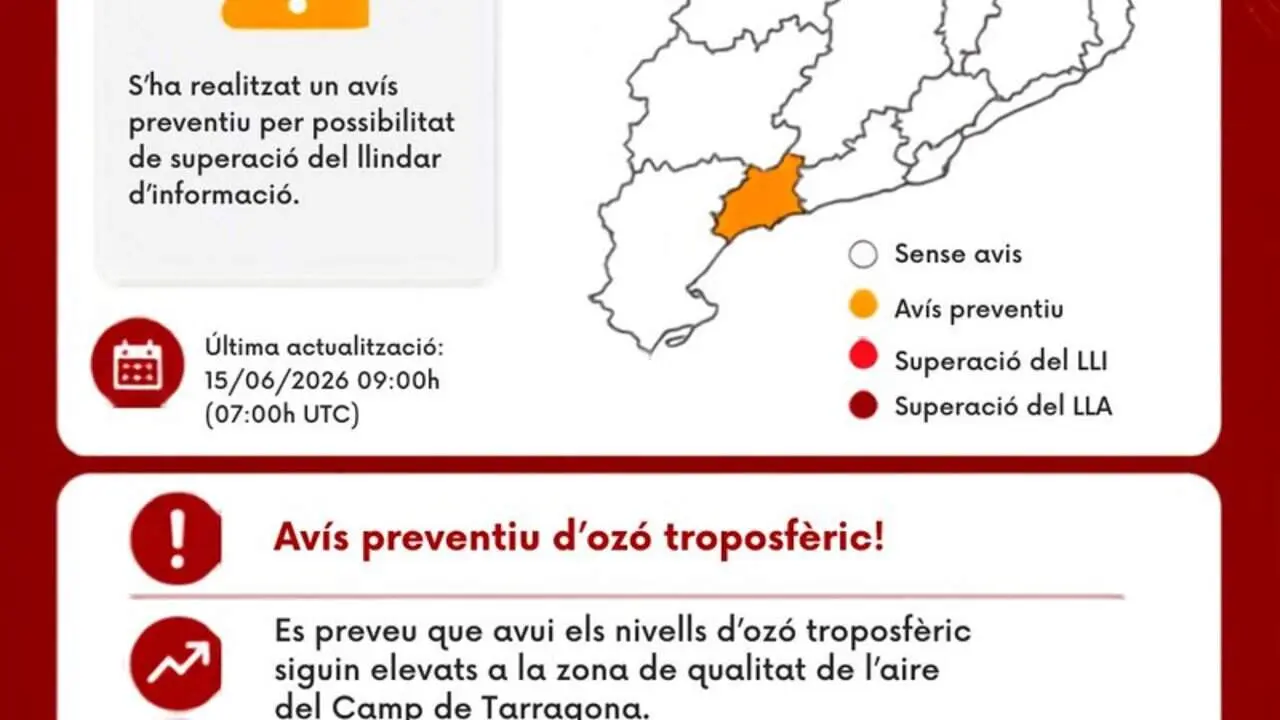

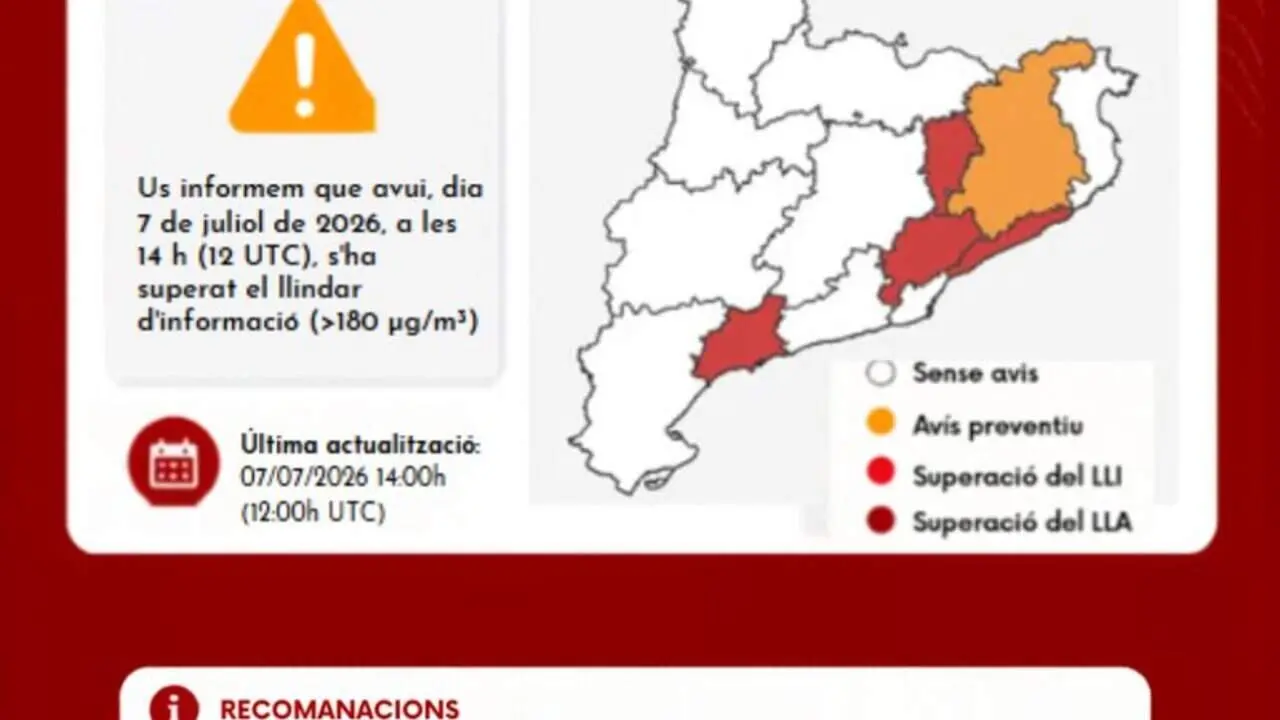
Tropospheric ozone alert in the Camp de Tarragona: today it is expected that the levels of this pollutant will exceed the information threshold set at 180 micrograms per cubic meter (µg/m3).
The City Council of Valls has issued a preventive warning for the air quality zone of the Camp de Tarragona, alerting that the situation may affect the health of the residents during the day of June 15, 2026.
What is tropospheric ozone and why does it matter?
Definition and origin
Tropospheric ozone is an atmospheric pollutant that forms at low altitude through chemical reactions between nitrogen oxides and volatile organic compounds under the action of sunlight. This gas is different from stratospheric ozone, which protects us from ultraviolet rays.
Impacts on health and the environment
When tropospheric ozone levels are high, they can cause irritations of the respiratory tract, difficulty breathing, and worsen diseases such as asthma or bronchitis. It also negatively affects plants and crops, causing losses in agricultural production.

Details of the alert in the Camp de Tarragona
Affected area
The alert affects the air quality zone of the Camp de Tarragona, which includes municipalities such as Valls and other nearby surroundings. It is an area with a high population density and industrial activity that can increase the presence of tropospheric ozone.
Forecast and recommendations
According to the City Council of Valls, today ozone levels are expected to rise above the information threshold (>180 µg/m3). The population is advised to avoid physical exertion outdoors, especially during the central hours of the day, as well as to reduce the use of polluting vehicles.
How does this affect residents and what can be done?
Recommendations for the most vulnerable
The most sensitive groups, such as children, the elderly, and respiratory patients, should limit their exposure to outdoor air during hours of higher ozone concentration.
Local measures and monitoring
The City Council of Valls and other local administrations constantly monitor air quality and issue preventive warnings to protect public health. Citizens can check the levels through official channels.
So, if you are living today in the Camp de Tarragona, don’t be surprised if you notice the air is heavier: ozone has turned up the volume, and it’s not a show you want to see up close.
Source of the article: City Council of Valls