The Gaudí Year brings music to Reus in spaces that tell his legacy
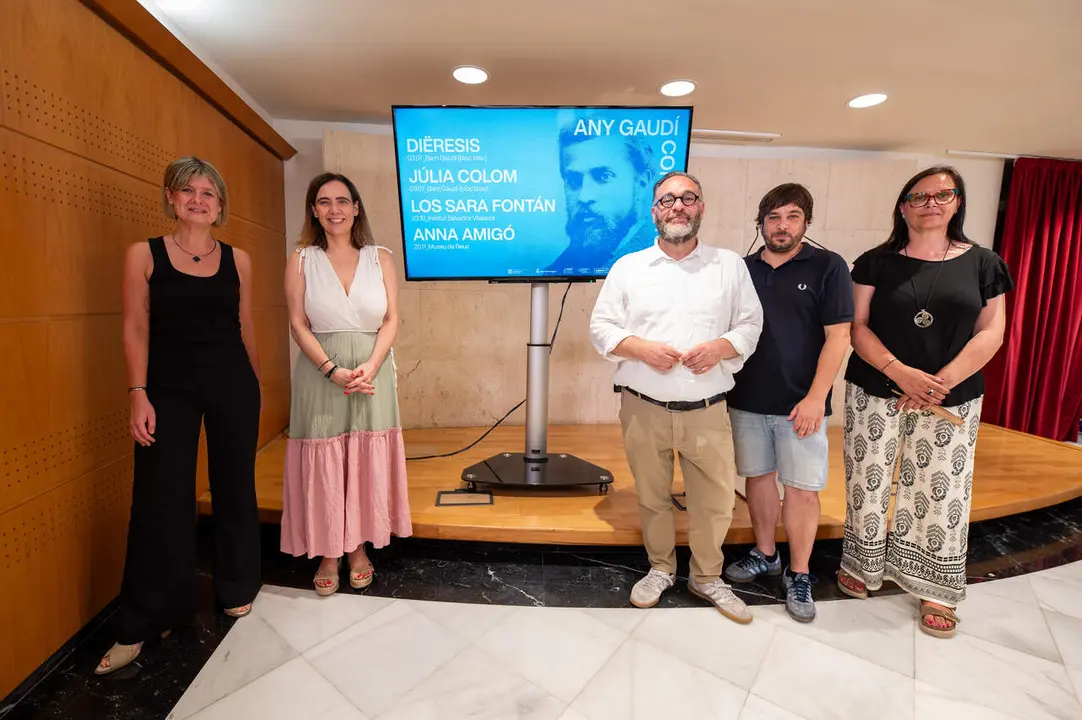

The Gaudí Year 2026 promotes in Reus a concert series in spaces that tell the past, present, and legacy of the architect Antoni Gaudí. This initiative combines music, heritage, and contemporary creation to bring Gaudí’s legacy to life in his hometown.
With musical proposals designed for iconic spaces, the series invites you to discover the universal figure of Gaudí from a contemporary and culturally enriching perspective.
A musical cycle that connects history and creation in Reus
Which spaces in Reus host the Gaudí Year concert series?
The series takes place in three key locations: the Gaudí Neighborhood, the Salvador Vilaseca Institute, and the Reus Museum. Each space offers a different dimension of Gaudí and his relationship with the city.
How is the artistic and musical selection of the series presented?
The concerts include proposals that fuse tradition and experimentation, with artists such as Diëresis, Júlia Colom, Los Sara Fontan, and Anna Amigó. These voices bring contemporary sensitivity and a dialogue with cultural roots, creating a unique experience for attendees.
The artistic direction, led by the Anima't Association and the Muses Festival, has ensured coherence between the message of the Gaudí Year and the uniqueness of the spaces, reinforcing the idea of interdisciplinary creation rich in nuances.
Music as a tool to interpret Gaudí’s legacy
Why is music key for the Gaudí Year in Reus?
Although Gaudí did not focus his work on music, he conceived artistic creation as a dialogue between different disciplines, where rhythm and harmony play a fundamental role. This series uses music to make his legacy accessible and moving for today’s citizens.
The initiative aims to generate new cultural experiences that connect the past with the present, bringing the architect closer through a universal language such as music.
Which dates and artists are part of the Gaudí Year series?
The programming starts on July 3 and 9 in the Gaudí Neighborhood with Diëresis and Júlia Colom. On October 23, Los Sara Fontan will perform at the Salvador Vilaseca Institute, and finally, on November 20, Anna Amigó will close the series at the Reus Museum.
All concerts are free and require prior reservation at ticket.reusturisme.cat, facilitating access to a wide audience interested in local culture and history.
Gaudí’s legacy from the spaces that tell his story
How is the architecture of the Gaudí Neighborhood related to the figure of the architect?
The Gaudí Neighborhood symbolizes the effort to surpass the conventional limits of architecture, as Gaudí did. The project bets on community and integration between space and daily life, an evident parallel with Gaudí’s innovative spirit.
This relationship makes the neighborhood an ideal stage for concerts that generate a dialogue between architecture, music, and society.
What importance does the conservation of Gaudí’s legacy hold at the Reus Museum?
The Reus Museum houses an exceptional collection of original Gaudí objects, such as drawings and personal documents, thanks to the work of local figures who preserved this heritage despite the workshop fire in 1936.
This space represents the living memory of Gaudí in Reus and is a meeting point to better understand his global influence starting from his hometown.
With this series, the Gaudí Year reaffirms its commitment to connecting heritage, music, and citizenship in Reus. The initiative not only highlights the figure of the architect but also creates a living bridge between history and contemporary creativity, bringing his legacy closer to a diverse and current audience.
Source of the article: Reus City Council