Inquiries increase to change community and pay less taxes
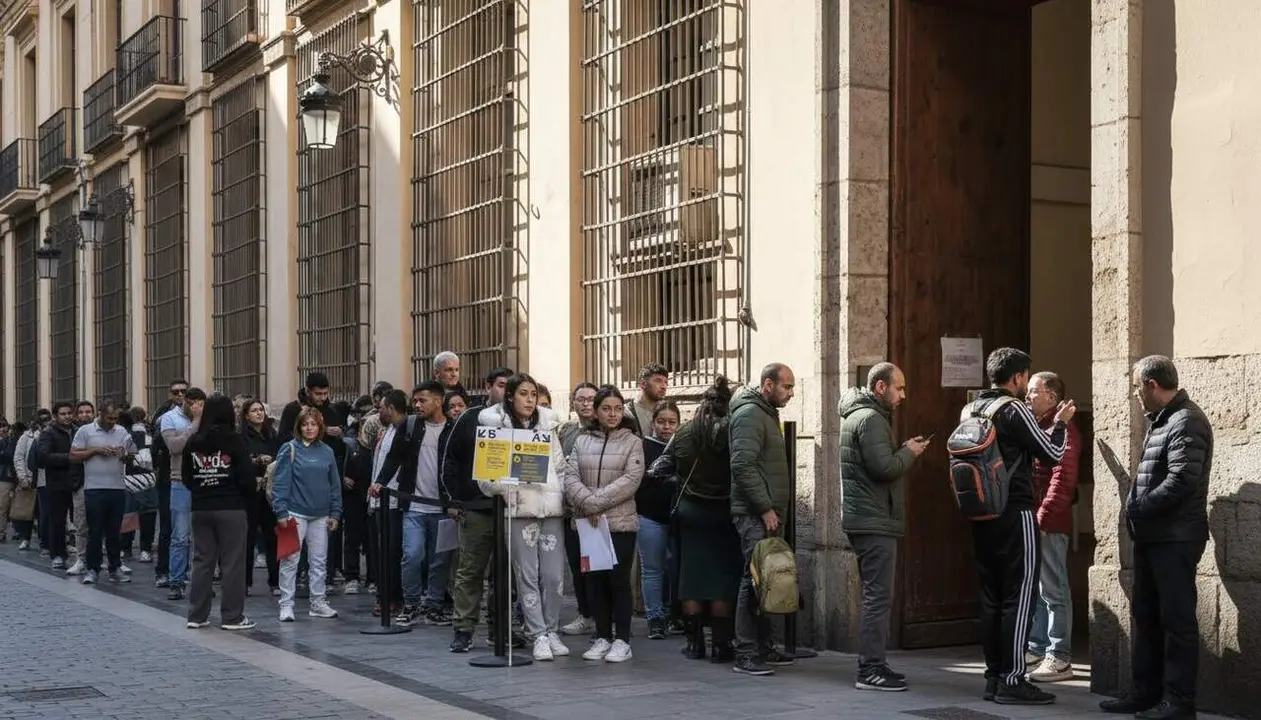

Imagine a never-ending line in front of the town hall, but not to ask for tourist information, rather to register in an apartment where almost no one lives. Tax pressure and differences between autonomous communities have skyrocketed inquiries about moving residence to pay fewer taxes.
But beware, not everyone actually changes homes. Most pretend a fictitious registration to evade the tax bill, a phenomenon that worries tax advisors and the Tax Agency itself.
The tax differences driving residence changes
Key taxes with very different market rates
The main reason many citizens and businesses consider changing communities is the large differences in taxes such as the IRPF, Wealth Tax, and Inheritance. For example, the Valencian Community, Navarre, and Catalonia have the highest IRPF rates, while in Inheritance there are territories with almost zero cost and others with very high charges.
This creates a clear incentive to change tax domicile, especially when the tax burden is perceived as a choking factor that impoverishes.
The advisors’ dilemma: real or facade moves
According to the Register of Tax Advisor Economists (REAF), 57% of advisors notice an increase in inquiries about changing residence, but more than 51% confirm that most of these moves are fictitious. The most common practice is pretending to register in a house where one does not actually live.
This strategy is not limited to Spain: some opt to move to countries with fiscal advantages like Andorra or Portugal, although reality often does not change much.
How the Tax Agency controls fictitious domiciles
Technology at the service of tax control
The Tax Agency has implemented increasingly sophisticated tools to detect fraud. With artificial intelligence and consumption data from electricity, credit cards, or medical records, it can know quite precisely where you really live.
As expert Yolanda Gómez points out, if you always carry your mobile with you, the Tax Agency can know your location almost in real time. The Shakira case highlighted this strict surveillance, where simply registering is not enough: you must prove that your vital and economic interests are in the chosen community.
Risks and sanctions for those who cheat
If the Tax Agency detects that the domicile change is just a maneuver to pay fewer taxes, it can demand regularization with interest and penalties. The regulation requires living more than 183 days at the new residence and justifying the center of economic and vital interests.
This makes fraud increasingly difficult to maintain, especially for the majority, although some highly mobile professionals may disguise it better.
Legal steps to change tax domicile
Requirements to avoid problems with the Tax Agency
For a residence change to be valid, you must register in the new municipality, live there more than 183 days, and move your center of economic and vital interests there. It is also necessary to request the autonomous health card and file the Income Tax Return in the corresponding community.
Administrative procedure and communications
After registering, you must notify the Tax Agency with Form 030 within three months. These steps are essential to avoid sanctions and prove effective residence.
If not complied with, you risk sanctions and having to pay tax differences with interest.
| Tax | Communities with high rates | Communities with low or zero rates |
|---|---|---|
| IRPF | Valencian Community, Navarre, Catalonia | Other communities with lower taxes |
| Inheritance | Some communities with high charges | Andalusia, Madrid (practically zero) |
The general feeling is that the tax system is more complex and restrictive than five years ago, which pushes many to seek loopholes, even if they are fictitious.
The Tax Agency’s controls are increasingly rigorous, which sets off alarms among those who think a false registration is the definitive solution.
But, as always, reality ends up imposing itself: if you don’t comply with the rules, the bill can end up costing you much more.