Why adding vinegar to the water when boiling potatoes is the secret to a perfect texture
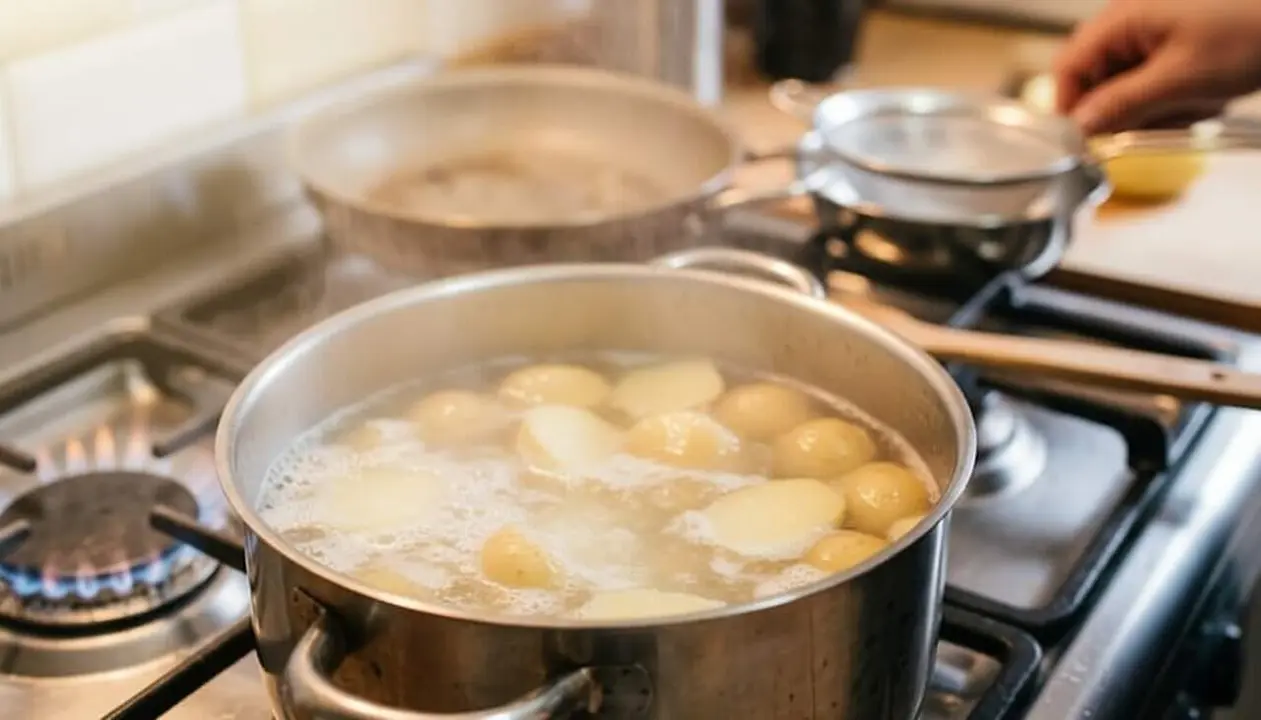

Adding a touch of vinegar to the water when boiling potatoes is a simple trick that prevents them from falling apart and helps preserve their structure. This small gesture changes the texture and the cooking response, essential for salads, fries, or side dishes where shape matters.
Tasting them, we notice how they maintain a bright golden tone and a texture that combines a crispy exterior with a soft interior. Their slightly neutral aroma and firm touch contrast with potatoes that are too soft, almost mashed.
How does vinegar influence the texture of potatoes?
Why is it important to add vinegar to the water when boiling potatoes?
The key lies in pectin, responsible for adhesion between plant cells. Heat and water will break this network, but the presence of acidity—provided by vinegar—temporarily reinforces it. This means that potatoes will soften without losing their shape or falling apart.
This is especially important when you want to prevent pieces from disintegrating, for example, when preparing a salad where each cube is visible and with defined texture. It is also crucial before a second cooking, such as frying or roasting, where maintaining the integrity of the pieces is the basis for a crispy texture and an attractive visual result.
How much vinegar should be added and how does it affect the cooking?
The usual recommendation is one or two tablespoons of vinegar per two liters of water. It is important not to overdo it, as excessive acidity can delay softening and leave the potatoes too firm. The vinegar should not alter the flavor but act on the cellular structure to maintain the perfect degree of cooking.
Practical applications of vinegar in cooking water
How does vinegar improve potatoes for salads?
For potato salads, vinegar makes the cubes well-defined, preventing them from falling apart when mixed with other ingredients. This provides a visual and textural contrast that elevates any dish, maintaining a soft interior but with a firmer surface.
What effect does vinegar have on potatoes for frying or roasting?
When potatoes are boiled with vinegar before frying or roasting, they better preserve their edges. This allows the second cooking to develop a crispier surface and a firm interior. The result is a texture that combines a golden crunch and a delicately soft inside, much more appealing than potatoes that break apart during preparation.
Sprinkling vinegar in other culinary processes can also have surprising uses, but here its key function is in vinegar in the cooking water to stabilize the structure of foods.
Tips for using vinegar in potato cooking
How to control texture and avoid problems?
It is essential to control the cooking time with vinegar to avoid potatoes being either too hard or too soft. Vinegar slightly extends the resistance of pectin, so potatoes should be cooked until they are tender but just right, when a fork pierces them and they offer slight resistance.
What natural alternatives can serve a similar effect?
Vinegar is the most common, but in some cases lemon juice is also used with a similar acidic effect, although with a greater risk of altering the flavor. The key is to maintain a balance between acidity and cooking time to achieve the optimal texture.
With this simple but scientifically grounded trick, potatoes become a key element for dishes with contrasting textures and impeccable appearance. The result is not only a more attractive dish but also a sensory experience where touch and sight go hand in hand to surprise the palate.