The unknown Russian cake from Huesca with a century-old history
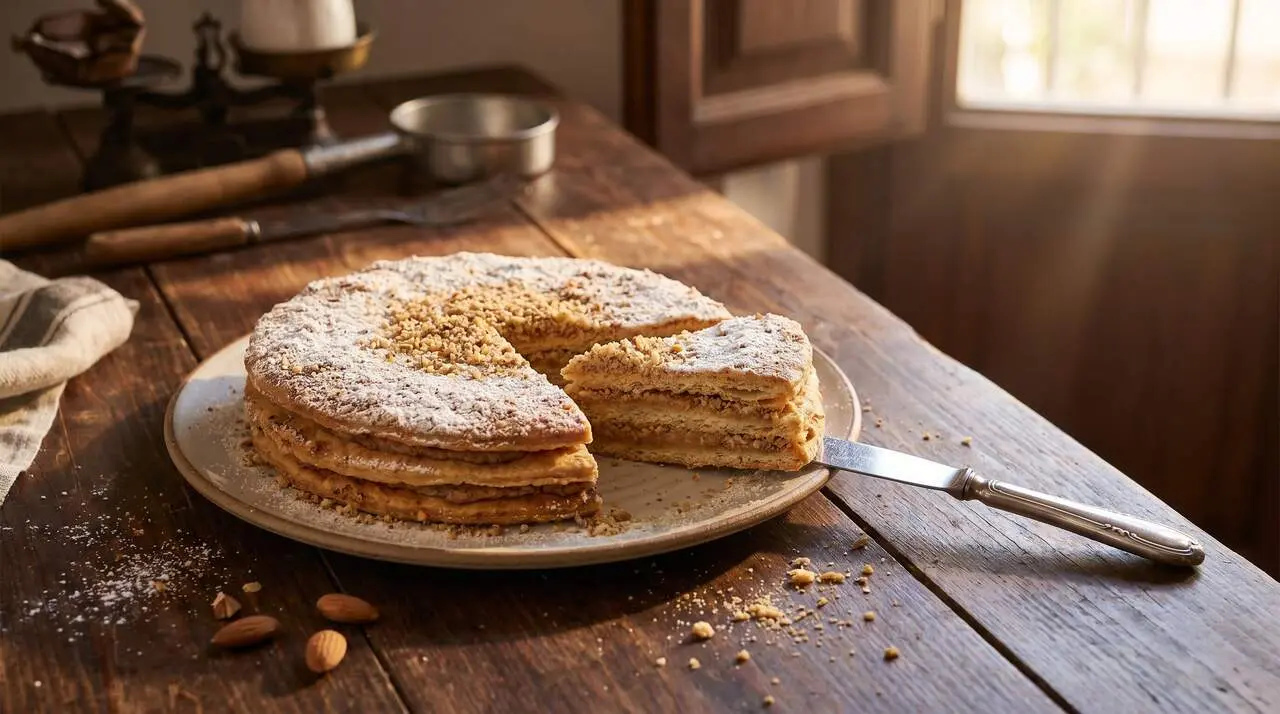

In the heart of a pastry shop in Huesca, you can come across a cake that seems to come from another era but never ceases to surprise with its texture and flavor. It is no ordinary sweet, but a masterpiece that has endured nearly two centuries without losing its original charm.
The fame of the Russian cake does not come from its name, which can be misleading, but from a story that connects Aragon with the European elite of the 19th century. But what does this sweet hide that still arouses curiosity and the desire to taste it?
The Russian cake: a sweet with a peculiar name and history
⏱️ Total time: 1 h 30 min
🍽️ Specialty: Russian cake
👨🍳 Notable pastry shop: Pastisseria Ascaso
The name and its connection with Europe
The name "Russian cake" is not the result of chance nor a recent trend. It dates back to 1855, when the cooks of Eugénie de Montijo, Spanish and Empress of France, made this dessert for a banquet in honor of Tsar Alexander II of Russia during the Universal Exhibition in Paris. It is fascinating how a sweet from Huesca traveled all the way to Paris and left its mark with this name, which still today raises more than one question.
A recipe that has defied the passage of time
The traditional preparation remains intact: two layers of meringue almond sponge cake, combined with an enviably smooth pastry cream. This lightness and creaminess are the secret that makes the Russian cake an elegant and timeless sweet, much appreciated in Huescan pastry shops and now reaching gourmet stores throughout Spain.
Ingredients and preparation of the Russian cake
Composition of the sponge and the cream
The main components are egg whites, sugar, almond flour, and a bit of plain flour for the sponge; while the pastry cream is made with milk, liquid cream, sugar, egg yolks, cornstarch, and vanilla to taste. The combination of these ingredients results in a contrast between the crunchiness of the meringue layers and the creaminess of the pastry cream.
The detailed process
- Sponge: Egg whites are beaten until stiff peaks form, sugar and sifted flours are incorporated, and it is baked at 190 ºC for 12-15 minutes without opening the oven to prevent it from deflating.
- Pastry cream: Sugar is mixed with cornstarch, the yolks are added, and the mixture is incorporated into hot milk and cream with vanilla. It is cooked until thickened, avoiding boiling too much to prevent curdling.
If you like cooking, you might also be interested in 10 surprising protein salad recipes for every day, a perfect complement for your menus.
Pastisseria Ascaso and the spread of the Russian cake
A local reference of tradition
Pastisseria Ascaso, iconic in Huesca, has managed to preserve the original recipe of the Russian cake, becoming the benchmark of this sweet in Aragon. Its preparation follows artisanal and rigorous processes that guarantee the quality and authenticity demanded by tradition.
Expansion beyond regional borders
Thanks to growing demand, Pastisseria Ascaso has succeeded in bringing this dessert to gourmet stores throughout Spain. Thus, the Russian cake, once a local secret, becomes a symbol of Aragonese gastronomy recognized and appreciated.
To complete your classic recipe collection, don’t forget to also explore the 5 healthy seasonal recipes to take in your tupper this week, ideal for any occasion.
Tips for enjoying and preserving this classic
Serving and presentation
After a minimum of two hours in the refrigerator, the Russian cake is unmolded and can be dusted with powdered sugar and even decorated with lines of cocoa powder, adding a visual touch that accompanies its tasteful elegance.
Preservation and durability
The sweet stays fresh in the refrigerator for up to three days, always covered to prevent drying out. Freezing is not recommended, as the creamy texture of the pastry cream may be affected.
The Russian cake represents a bridge between history and current gastronomy, a living example of how a dessert can retain its identity and charm after more than 150 years. Whether you taste it in Huesca or find it in a gourmet store, it is an experience that invites you to rediscover tradition with every bite.