The secret of the homemade Manchego pisto that fascinates gastronomy
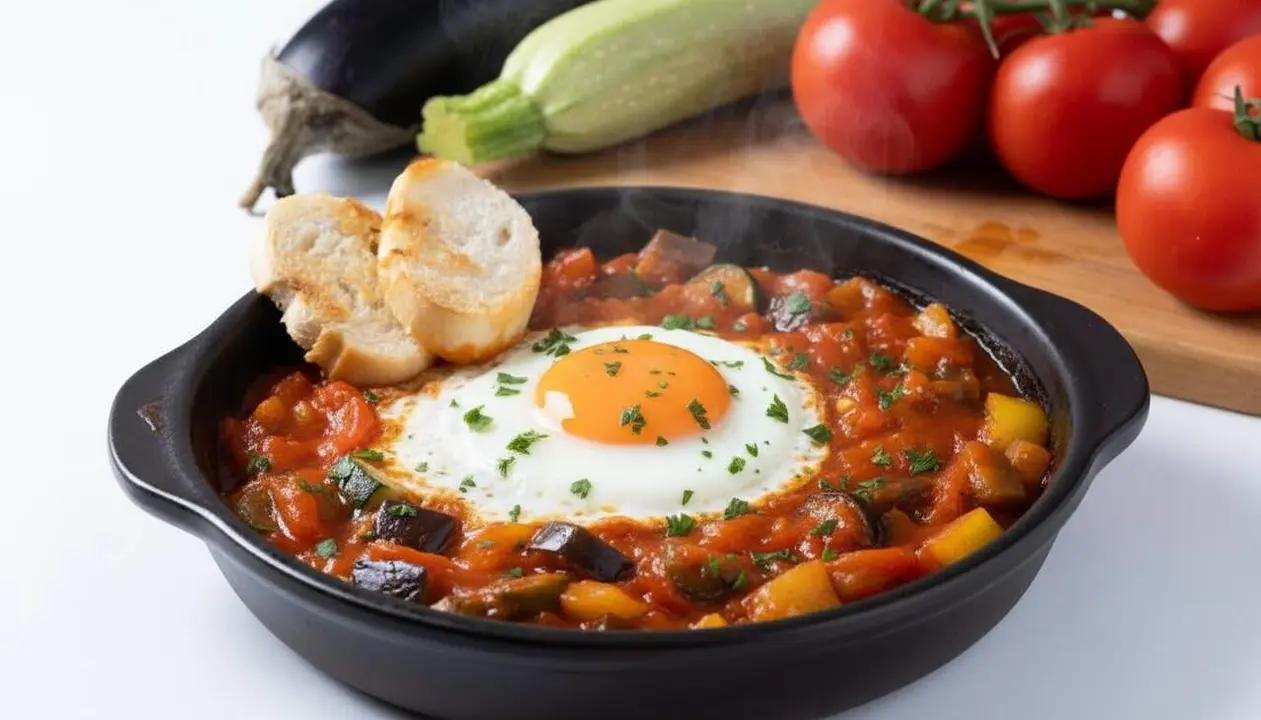

In a corner of Spanish cuisine, a simple vegetable dish has withstood the test of time with its rural essence intact. El pisto manchego, with its vivid colors and aroma of slow-simmered sofrito, is a classic that seems to evoke the scents of the Castilla-La Mancha vegetable garden.
But this dish is not just a mix of vegetables: its humble origin and slow cooking technique make it a symbol of traditional cooking. However, preparing it at home authentically is quite a challenge that many try to solve without success, because it is not just about putting ingredients into the pot.
How pisto manchego was created and its evolution
Rustic roots and basic ingredients
Pisto manchego was born among the farmers and shepherds of La Mancha, who made use of the products from their vegetable gardens to create a simple yet flavorful dish. Originally, it only contained tomato and pepper, slowly sautéed with oil or butter, and possibly garlic, cooked over coals or in a pan. This places its creation after the 16th century, when tomato and pepper arrived from America.
Origin of the name and cultural connections
The word "pisto" comes from the Latin pistus, which means "crushed" or "beaten," describing the technique of cooking the vegetables until they reach an almost homogeneous and soft texture. This dish, although closely associated with Castilla-La Mancha, has parallels in other Mediterranean recipes like the French ratatouille or Sicilian caponata, and also recalls the alboronía from Arab cuisine, which used similar ingredients.
Tips for achieving an authentic pisto manchego
Technique and preparation order
To make a pisto worthy of La Mancha, it is necessary to cut all the vegetables to the same size to ensure even cooking. The secret is also in the order: first the onion and pepper, then the zucchini, and finally the tomato, as the latter vegetables are more tender and break down faster. The cooking must be very slow and gentle, without rushing.
Ingredients and olive oil
A good pisto cannot be made without a mild extra virgin olive oil, such as Arbequina, which does not overpower the flavor of the vegetables. Chef Samantha Vallejo-Nágera recommends avoiding oils with a too bitter taste. For his part, chef José Andrés advocates a controlled cooking that maintains the texture of the vegetables without turning them into jam.
Traditional recipe to make pisto manchego at home
⏱️ Cooking time: 50-60 minutes
🔥 Approximate calories: 150 per serving
👨🍳 Difficulty: medium
The first step is to blanch the tomatoes with a cross at the base for 30-40 seconds in boiling water and then place them in ice water to peel them easily and remove the seeds. Meanwhile, the onion and peppers are diced evenly. In the pan, plenty of olive oil is heated over very low heat and the onion and pepper are sautéed for about 15-20 minutes, allowing them to soften without burning.
Then the zucchini and tomato are added, salted, and the pan is covered to let everything cook slowly for 30 to 40 minutes. Finally, the heat is increased to evaporate the excess liquid for five more minutes. The result is a dish that can be enjoyed immediately or, as experts say, is even better the next day. For the perfect accompaniment, they recommend a well-fried egg, which adds contrast and texture.
If you want to delve into other Mediterranean variants, you can see the vegetable Pisto recipe and also discover the Pisto with egg recipe, which is a local classic.
A dish that goes beyond the simplicity of a salad, pisto manchego is a living example of regional cuisine that has managed to maintain its character, flavor, and identity over centuries, a gastronomic treasure of Castilla-La Mancha that deserves its place at the table.