Mercadona allows returning cans and bottles for money, but...
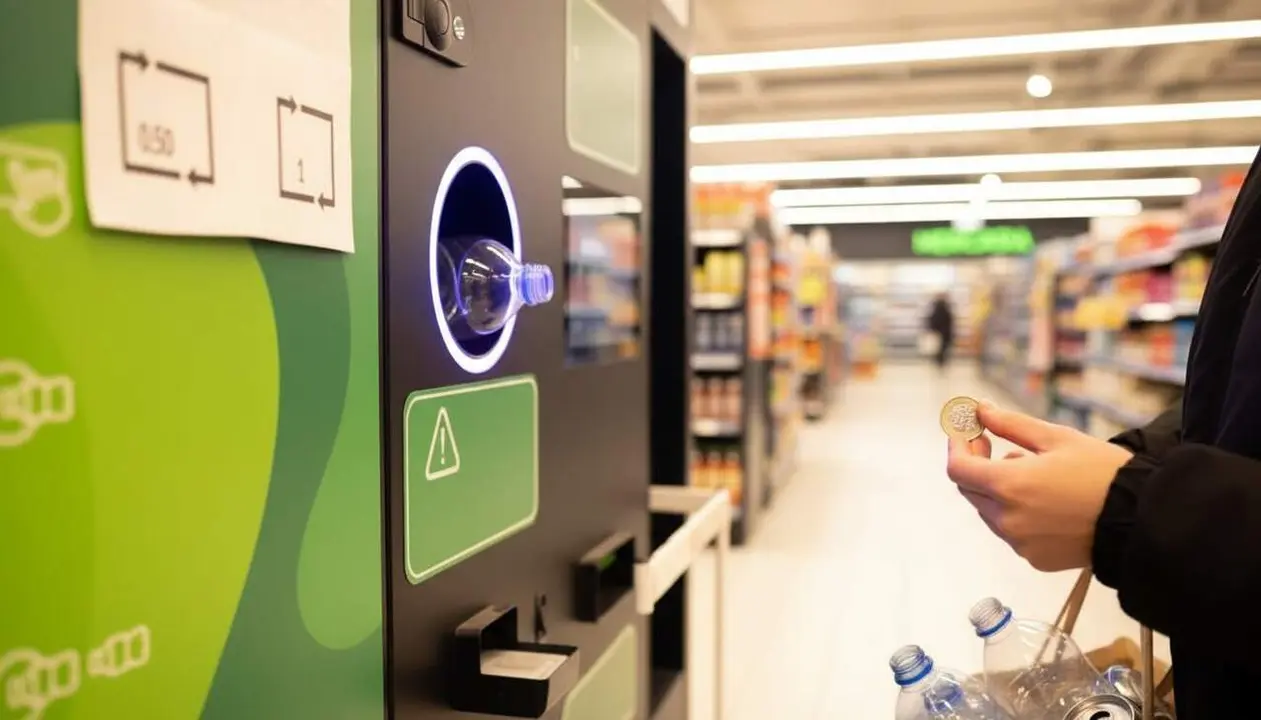

Imagine arriving at Mercadona and getting money back for the cans and plastic bottles you have consumed. This is already a reality in Portugal, where this system works with an extra deposit of 10 cents that you can easily recover.
But, what about Spain? The deadline to apply this model here is approaching in November 2026, and it seems that not everything will be as fast or simple as in neighboring Portugal.
Mercadona promotes the return model in Portugal while Spain still waits
💶 How much? 10 cents per container
🕐 Deadline in Spain: November 2026 (may be extended)
🍽️ System: Deposit, return, and refund (SDDR)
How does the SDDR work at Mercadona Portugal?
In the neighboring country, Mercadona has already activated the SDDR system in some supermarkets. This means that when you buy a drink, you pay a small additional 10-cent deposit for the container. If you later return the can or plastic bottle (up to 3 liters), you recover that amount.
The refund can be done in various ways: coupons to redeem at the checkout, discount vouchers, or even direct deposit to the bank card at specific points. A system that, according to Antonio Romero, president of the association of beverage distributors and manufacturers in Spain, should be the model to follow.
The challenge in Spain: date and cross-border coordination
Here, the law establishes that the SDDR system must be implemented before November 2026, but according to industry sources, this date will likely be delayed. Coordination with Portugal is key for the system to work in neighboring countries with significant cross-border traffic.
Antonio Romero highlights that coordination between countries is necessary to avoid confusion and maximize the system's effectiveness. Furthermore, he insists that the model for consumers must be practical and similar to the Portuguese one to ensure people are encouraged to return containers.
What does the SDDR system imply for consumers and the environment?
Benefits and motivations for returning containers
The SDDR changes the way we manage waste: it financially rewards the return of containers and promotes their reuse or effective recycling. This not only reduces pollution but also creates a habit that can change consumption mindset.
But it’s not all that simple: the system must be quick and convenient for the consumer. Anyone who has used a return machine knows that sometimes the process can be a bit slow or confusing, and that discourages participation. This is where Spain’s imitation of the Portuguese model becomes essential.
The role of Mercadona and other large chains
Mercadona is not only a pioneer in Portugal but also under the spotlight in Spain due to its influence capacity. Mercadona confirms it is ready to adapt when the legal moment arrives, and its experience in Portugal can be a guide for other distributors.
On the other hand, the chain is working alongside manufacturers and distributors to create an association that promotes the SDDR in Spain. This reinforces the idea that shared responsibility is key to making this system viable on a large scale.
Analyzing the future of can and bottle returns in Spain
Possible delays and foreseeable adaptations
Despite the law setting November 2026 as the deadline, industry sources explain that the implementation could be extended. The reasons include the need to coordinate systems with Portugal and adapt internal infrastructures that are not yet ready.
Thus, what we see is a gradual process, with trials and adjustments, where companies and government will have to work hand in hand to avoid frustrating consumers who already want to see their recycling efforts rewarded.
How it will impact daily life and what consumers expect
For consumers, the implementation of the SDDR represents a change that can be welcome or met with skepticism. The key will be that the system is easy to use and that reimbursement is clear and immediate. Any hurdle can cause people to stop participating.
Therefore, experts and representatives like Antonio Romero insist on an experience similar to the Portuguese one. And Mercadona, for its part, will continue to be a protagonist in this quiet recycling revolution.
By the way, if this topic interested you, you can also read how Mercadona says goodbye to the traditional fish market to bet on a fresher, renewed model.
The reality is that the deposit, return, and refund system is about to transform the way we manage packaging waste in Spain, but there is still a way to go before seeing it implemented with full effectiveness.