Yellow or white skin chicken: 5 keys to choose the best according to culinary experts
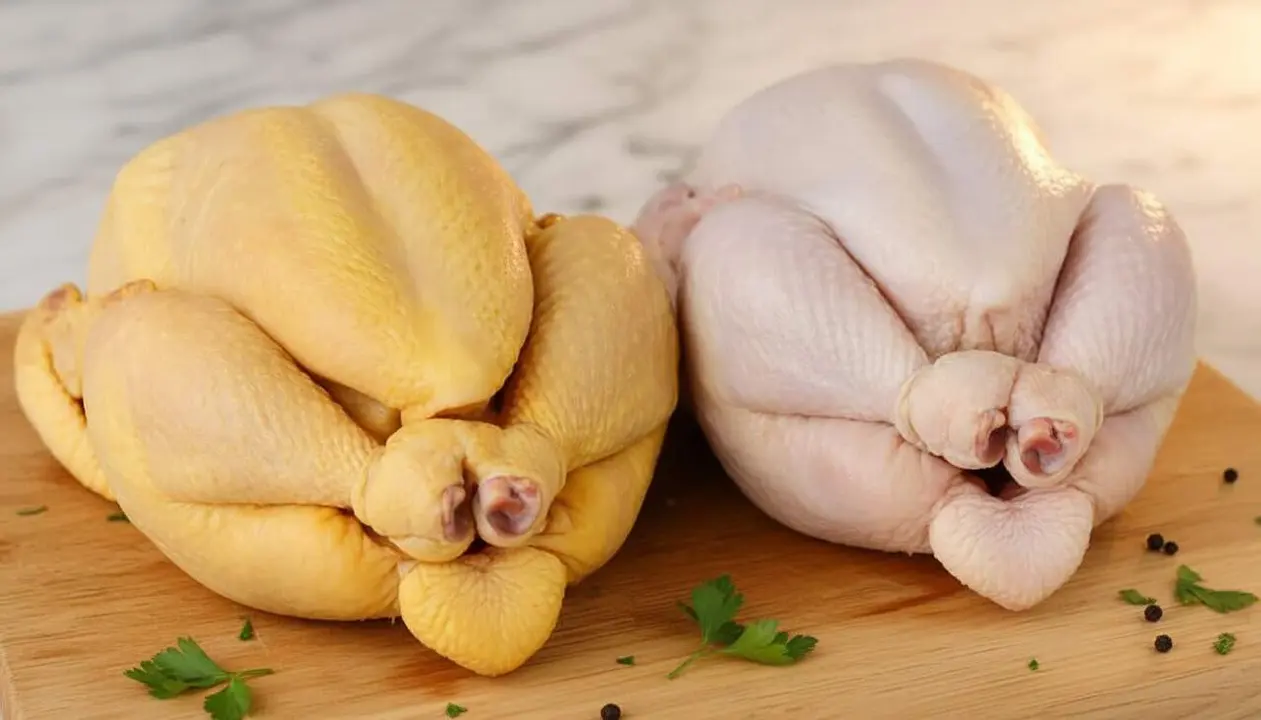

The color of chicken skin is often a subject of debate among cooks and consumers. But beyond the appearance, what does it really mean when a chicken has yellow or white skin? This question often arises when we are at the market or butcher shop, looking at chickens and wondering what to choose.
The key difference lies in the bird's diet and not in the quality or health of the chicken. It is not a matter of flavor or nutritional value as simple as it may seem at first glance, which complicates the decision for food lovers.
Why does skin color matter to consumers and cooks?
What is the relationship between the chicken's diet and skin color?
The characteristic yellow color of the skin of some chickens comes from the natural carotenoids present in their diet, especially in cereals like corn, alfalfa, and even some flowers. These pigments deposit under the skin, giving it that well-known golden hue.
On the other hand, chickens with white skin are mainly fed cereals like wheat or sorghum, which have fewer carotenoids, resulting in lighter skin. This does not affect the texture or juiciness of the meat, only its visual appearance.
Why is yellow-skinned chicken often preferred in markets and restaurants?
Yellow skin is usually more visually appealing when cooked in the oven or on the grill, as it achieves a more intense golden color that suggests perfect cooking and a stronger flavor. Thus, many restaurants choose this variety for its presentation.
Consumers, however, should know that the golden appearance does not guarantee superior flavor or more nutrients. It is a matter of aesthetics and perception more than gastronomic quality.
Does skin color determine if the chicken is healthier?
Are there nutritional differences between yellow- and white-skinned chicken?
Experts assure that there are no major differences in terms of proteins or B vitamins between the two types. The content of minerals like phosphorus and selenium is practically identical, and any variation is linked to the diet, not the skin color.
Therefore, the popular belief that yellow-skinned chicken is more natural or nutritious is not scientifically supported. Quality depends more on freshness and product handling than on skin tone.
Is the flavor really different according to skin color?
The flavor difference that some detect is related to the bird’s diet and not the color itself. A chicken fed with corn may have a slightly sweeter taste, but this characteristic depends more on the ingredients than on the pigment in the skin.
This makes it more appropriate to choose according to the recipe and personal preferences rather than the superficial color of the skin.
How to choose between yellow- or white-skinned chicken when buying?
What criteria should take priority beyond skin color?
Beyond whether the chicken has white or yellow skin, attention must be paid to the overall appearance of the piece: the meat should be firm and uniform, without greenish or grayish spots on the skin, and without strong or unpleasant odors.
Preservation is key: the chicken must always be refrigerated and respect the indicated expiration date. This impacts quality and food safety much more than skin color.
What do culinary experts recommend for choosing chicken according to preparation?
If you want a chicken with a more golden and attractive finish for roasting or grilling, yellow-skinned chicken is a popular option. On the other hand, if the goal is a dish where skin color does not matter, either option is valid.
As chef Dani García, known for his Mediterranean cuisine, points out, the secret of a perfect roast chicken lies not in the skin but in the combination of salt, sugar, and lemon that enhance flavor and texture.
In this sense, chicken is a product that can adapt to any palate and culinary style.
Finally, the decision between yellow- or white-skinned chicken should not be a dilemma, but a matter of taste and presentation, always considering the freshness and quality of the product.
The difference between a yellow- or white-skinned chicken is a reflection of its diet, not its quality or health. Choose according to the recipe, presentation, and your budget, and do not be misled by superficial appearances.
Frequently Asked Questions
- Does the color of the chicken skin affect its freshness?
- No, skin color depends on diet and does not indicate freshness. Freshness is determined by the appearance of the meat and the smell.
- Is yellow-skinned chicken healthier?
- No, the nutritional value is very similar between yellow- and white-skinned chickens, and it does not directly depend on color.
- Which chicken is better for grilling?
- Yellow-skinned chicken stands out for the golden appearance it acquires during cooking, but any can be excellent depending on the preparation.