Mercadona confirms the surprise change in fish sales at supermarkets
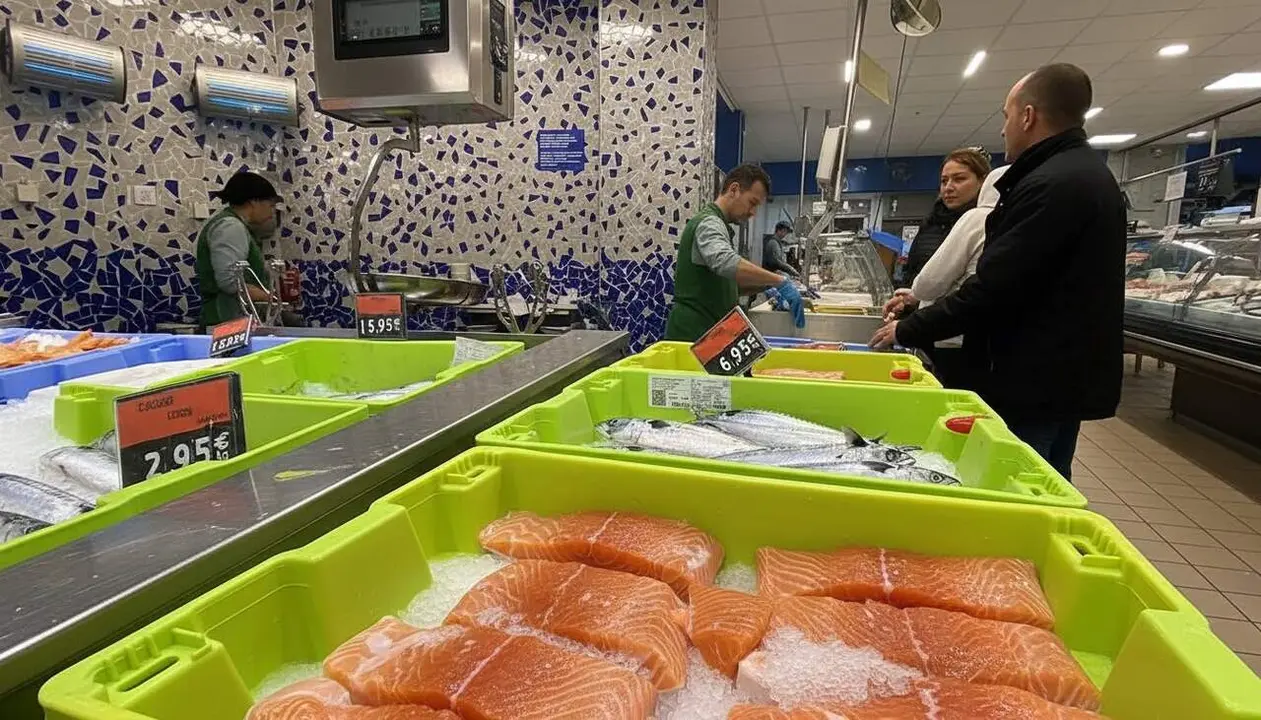

Mercadona has thoroughly reviewed its way of selling fish after years of studying how we shop and what we really expect. The result? A new model that aims to drastically reduce the time that passes from when the fish leaves the water until you have it on your table.
The Valencian chain has implemented this change focused on improving quality and product freshness, with a model that seeks to minimize time and guarantee value. And it’s not just to look good: after blind tests, surveys, and real usage data, Mercadona acknowledges that "the experience at home wasn’t always what we expected."
Key changes in fish sales and service
Prepared and packaged fish to speed up shopping
One of the big leaps is that fish is no longer sold like before. Mercadona bets on cleaned and ready-to-cook products—fillets, slices, and whole pieces—all packaged in prepared trays. This makes shopping faster and helps customers avoid queues and last-minute purchases. In the supermarket’s words, they want a "more complete" fish section adapted to real consumption.
Freezing and preservation: what you need to know
There’s the million-dollar question: can you freeze the fish in these new trays? Mercadona confirms this and adds that it lasts several days in the fridge without losing freshness. But if it needs to be frozen after opening the tray, they recommend doing so in special hermetically sealed bags. And if that wasn’t enough, thawed fish that is refrozen must be cooked at over 70ºC for at least two minutes to avoid risks.
The new Tienda 9: more than just a fish counter change
Investing 3.7 billion to renew the experience
This change in the fish counter is part of a much bigger bet: the Tienda 9 supermarket model. With a planned investment of 3.7 billion euros in the coming years, Mercadona wants to modernize its store network and make them more efficient and sustainable.
Internal reorganization for more freshness and efficiency
The new model organizes stores by processes rather than by departments, which facilitates work and optimizes internal movements. This translates into more space for fresh products and a logical reorganization of refrigerated and frozen sections. Moreover, the new Central Workshop concentrates all cutting, cooking, and packaging, reinforcing quality and freshness while reducing energy use by up to 10% and water by up to 40%.
Refrigeration and sustainability in focus
Aerofoil systems that will improve cooling and environment
The new cold display cases will incorporate Aerofoil technology, which minimizes cold loss without the need for doors, thus improving store comfort and energy efficiency. This means less consumption and less noise in the fish section.
CO₂ as refrigerant for a lower environmental impact
Mercadona also bets on using CO₂ as a refrigerant in cold centers, a decision that reduces environmental impact and makes cooling generation more efficient and sustainable. One more step towards a chain that wants to be greener.
By the way, if you want to find out how Mercadona lowers prices or says goodbye to the traditional fish counter, you can check the details in our articles about Mercadona cuts and Mercadona says goodbye.
The reality is that Mercadona has decided fish can no longer be an eternal wait at the counter. With this model, Juan Roig’s supermarket aims to make shopping faster, products fresher, and customers happier. Or at least, that’s what they try. But, to end, the question remains: what will be the next surprise in the fresh section?