How Italians Resist the Blue Crab Plague by Farming
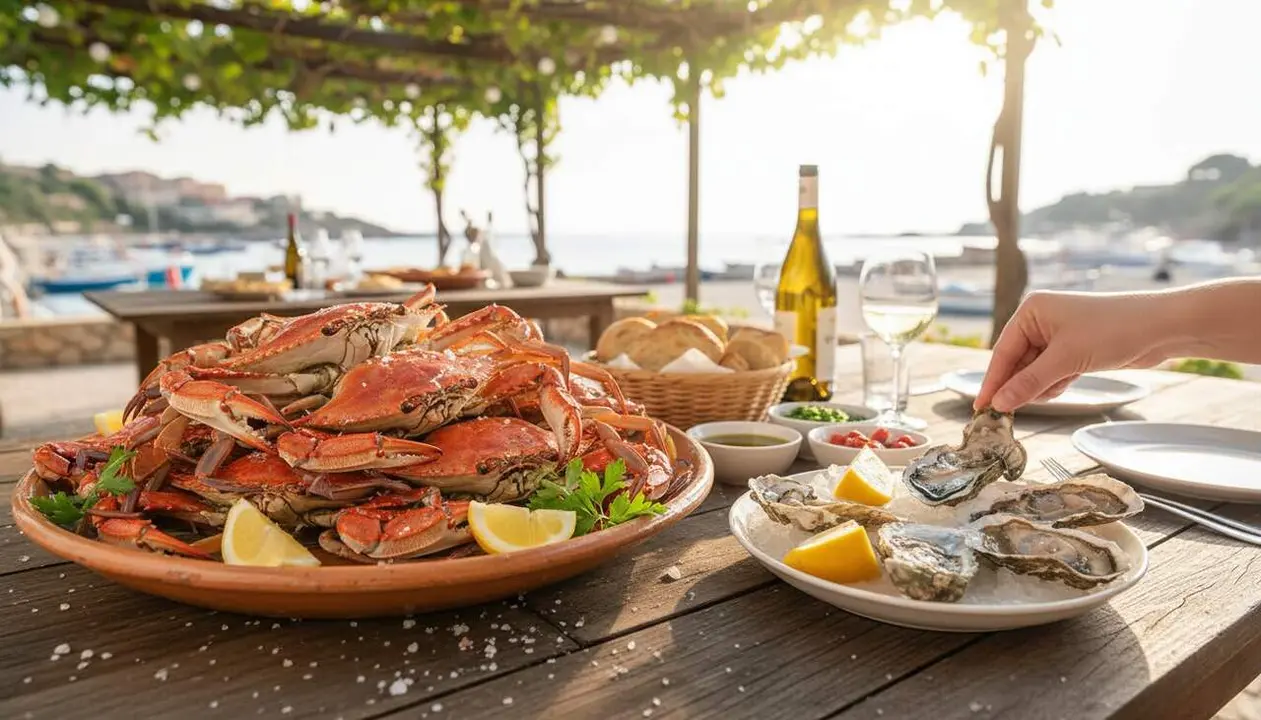

The blue crab, an invasive species that has rapidly spread throughout the Mediterranean, is endangering various marine crops. This threat particularly affects the production of mollusks such as mussels and clams, which see their environment disappearing under the onslaught of this voracious crustacean. From the Ebro Delta to the Catalan coasts, its presence is multiplying and generating considerable economic and ecological problems.
However, in Italy they have found a strategy that could change the rules of the game: cultivating resistant oysters. These species with thicker shells seem to better withstand the attacks of the blue crab, opening the door to an alternative that could save the local aquaculture industry, which is heavily threatened by climate change and the expansion of this invasion.
The blue crab and its threat to the Mediterranean
Originating from the coasts of the Western Atlantic and the Gulf of Mexico, the blue crab arrived in Europe in 1901 and has massively colonized the Mediterranean in the last decade. In Spain, it was first detected in the Ebro Delta in 2012, an area that has proved ideal for reproducing and growing. From there, it has spread along the entire Catalan coast and reached Andalusia and Mallorca, driven by the warming waters caused by climate change.
It is an insatiable predator that attacks crustaceans, fish, mollusks, and algae, directly harming marine crops and artisanal fishing. Fishermen complain that it competes for their bait, making it harder to catch other commercially valuable species, and that it destroys mussel and clam farms. This impact not only threatens the ecological balance but also endangers the economic viability of many families linked to the sea.
Why is the blue crab a serious problem?
Its speed and reproductive capacity cause its population to grow unchecked. Furthermore, its aggressive behavior displaces native crustaceans and destroys crops that were previously profitable, causing significant losses for fishermen and farmers.
How has the situation affected the local economy?
In Italy, especially in the northern Adriatic Sea, shellfish production has fallen by up to 80% due to the invader. Daniela Borriello, director of fisheries at Coldiretti, warns of the serious situation: thousands of jobs are at risk due to the disappearance of clam and mussel crops.
The Italian response: oyster farming as a solution
Italy has begun transforming its traditional mussel and clam farms into oyster farms that better resist the blue crab's attack. These oysters, with thicker shells, withstand the pressure of the invasive crustacean, offering a viable alternative to maintain economic activity in coastal areas.
The main difficulty is that oysters are more expensive and less common in the Italian diet, especially in typical pasta dishes. For this reason, the Ministry of Agriculture, led by Minister Francesco Lollobrigida, is promoting measures to increase consumption, including a possible VAT reduction from 22% to 10%.
What is the Italian government doing to encourage oyster consumption?
Minister Lollobrigida argues that oysters should not be a luxury product but affordable for everyone. With this idea, he aims to stimulate the market and help fish farmers dependent on this crop, viewing it as an opportunity to generate sustainable wealth.
What challenges does changing traditional crops pose?
Besides product resistance, it is necessary to adapt gastronomic culture and consumption habits. The transformation involves accepting a less common bivalve but with economic and environmental potential that could balance the losses caused by the blue crab.
The current state in the Iberian Peninsula and future prospects
Galicia, the main shellfish and crustacean production area in Spain, does not yet suffer from the blue crab plague. However, experts warn that its arrival could cause very serious ecological and economic damage, as this species voraciously feeds on native bivalves such as velvet crab and spider crab.
In this context, the industry must be prepared to adapt and explore alternatives, such as cultivating resistant oysters, which emerges as a possible solution against the invasion.
How is Galicia preparing for this threat?
The scientific community is monitoring the blue crab's evolution and studying preventive measures to avoid its northward spread. Awareness and research are key to maintaining the health of marine ecosystems and the viability of crops.
What alternatives does the sector propose against the plague?
Reinforcing crops with physical barriers is not enough, as the blue crab can overcome them. Therefore, oyster farming, which offers more physical resistance, is one of the most promising strategies to ensure the continuity of economic activity.
In this scenario, transforming cultivation and promoting oyster consumption become not only a gastronomic issue but also an economic and environmental strategy. It remains to be seen whether, like the Italians, they succeed in making this shellfish a solid alternative for a Mediterranean battling its most unexpected invasion.
The phenomenon of the blue crab not only tests the adaptability of fishermen and producers but also forces a rethink of the relationship between gastronomy, economy, and environment on our coasts. This silent battle in the Mediterranean waters may end up redefining the flavors and consumption habits of many generations.
The reality is that the Italian solution of cultivating resistant oysters is opening a path for other threatened regions, and following their steps could be key to protecting the maritime and gastronomic wealth of the Mediterranean.
Frequently Asked Questions
- What is the blue crab and why is it a problem?
- The blue crab is an invasive crustacean that attacks native mollusk and crustacean crops, causing economic losses and ecological damage in the Mediterranean.
- How do oysters resist blue crab attacks?
- Some oyster species have thicker shells that allow them to better withstand the pressure and attacks of this voracious crustacean.
- Why does Italy want to promote oyster consumption?
- The Italian government wants oysters to stop being a luxury product by reducing VAT to make them more affordable and help local fish farmers.