Casa Leopoldo closes for the fifth time: the weight of history
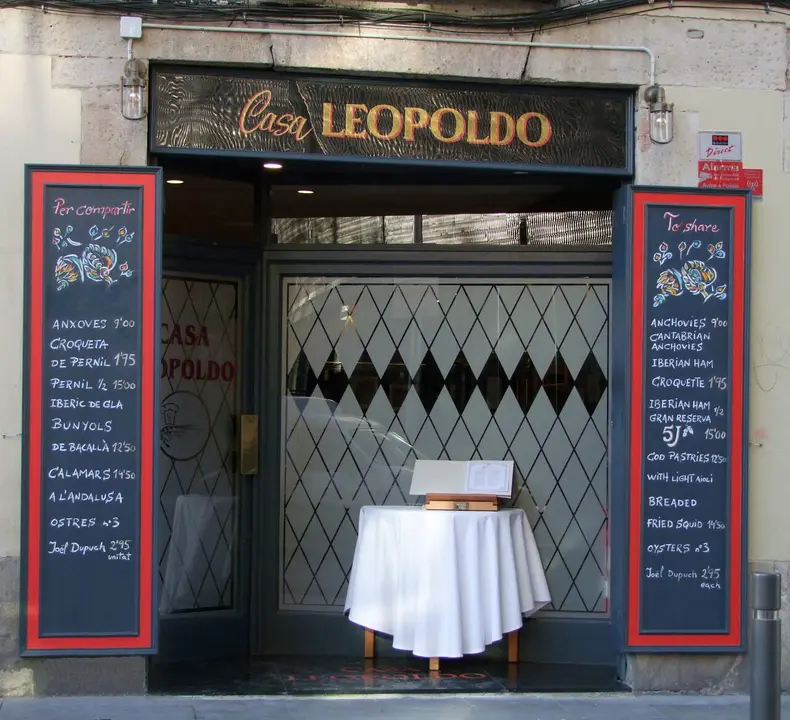

Casa Leopoldo closes its doors after five closures in more than 90 years of history. This restaurant, located in the heart of El Raval, has been a landmark for Catalan cuisine and the cultural scene of Barcelona in the 20th century. Despite its fame and tradition, recent years have tested its resilience and adaptability.
Sunday, June 28 will be the last day to enjoy a meal in this space full of history before the venue closes permanently to the public. The news has caused a stir among lovers of gastronomy and local culture.
Why is Casa Leopoldo closing for the fifth time?
What may seem like a tragedy for those who love this place is the result of a complex combination of factors. According to Bruno Balbàs, co-founder and CEO of Banco de Boquerones, the current managing group, the main reason for the closure is the demand and weight of the history involved in managing a restaurant like Casa Leopoldo.
Balbàs explains that the constant need to tell the story and convey the essence of the venue to customers is an intense job: "When I first entered, I felt the weight of history like a slap, and I liked it very much, but it is an enormous public relations task." This effort, combined with the feeling of insecurity in the neighborhood and changes in customer habits, has made continuity unsustainable.
How does the context of El Raval and the customers influence this?
El Raval, traditionally a neighborhood with a complex identity, presents challenges that affect the business. Balbàs acknowledges that "some part of the clientele is afraid to come, they arrive and leave by taxi." Moreover, the decrease in visits to high-end restaurants has impacted profitability, with customers now making occasional tributes instead of the three visits they made before.
What has been Banco de Boquerones’ response?
Despite efforts to keep alive the character and memory of Casa Leopoldo, the project has not achieved stability. Banco de Boquerones has tried to recover the memorabilia and identity it had lost, even with the approval of Rosa Gil, the last great historic manager. But even so, it has not been enough to guarantee continuity.
The heavy history: Casa Leopoldo as a cultural and gastronomic icon
The weight of history is not just a cliché: Casa Leopoldo has been a living witness to 20th-century Barcelona. Opened in 1929 by Leopoldo Gil, a former railway worker from Aragon with anarchist ideas, it was a meeting point for businessmen and bullfighters with oxtail stew as the flagship dish.
With the arrival of Rosa Gil, the founder’s granddaughter, in the 1970s, the restaurant became a temple of Catalan cuisine and also a gathering point for Barcelona’s left-wing intellectuals, where figures such as Eduardo Mendoza and Vázquez Montalbán were seen.
Why did Casa Leopoldo mark a before and after?
Gil and his family popularized the mountain and sea culinary recipes of Empordà, which today are considered classic. Casa Leopoldo was not just a restaurant, but a place where gastronomy intertwined with culture and politics.
How has the venue evolved in recent years?
After Rosa Gil’s retirement in 2015, the restaurant changed management several times, going through various styles and formats, from a gourmet tapas bar to a more conventional menu bar, especially after the pandemic. This was one of the hardest blows to its identity.
Current difficulties and the uncertain future of Casa Leopoldo
This Sunday’s closure is not only the end of an era but also an example of the challenges faced by emblematic restaurants in a changing market. The reality is that keeping a place like Casa Leopoldo alive requires dedication and energy that the current management group can no longer sustain.
Balbàs expresses his hope that the testimony of this restaurant will be taken up by an entrepreneur willing to take on the challenge, so that the history is not forgotten and Catalan cuisine has a dignified space in this historic location.
What are the prospects for Casa Leopoldo?
Although it closes now, its trajectory and relevance to the city suggest that this will not be a definitive silence. The memory and charisma it has accumulated over more than ninety years are assets that no other restaurant in Barcelona has.
How does the closure affect Barcelona’s gastronomy?
The loss of a place like Casa Leopoldo is a significant event for Catalan cuisine and the city’s gastronomic identity. This closure highlights the difficulties in preserving historical spaces in an increasingly competitive and changing sector.
For those who want to experience this unique moment, there is still time until Sunday, June 28 to enjoy Casa Leopoldo’s last service. A moment that will mark a before and after in Barcelona’s gastronomy.
But, as an experienced restaurateur said, "History can be a difficult luxury to bear."
If you want to learn more about the local culture, we recommend exploring the history of Vella dels or discovering curiosities about Jaume dels.
The great restaurants that have marked Barcelona have intense lives, but not always simple ones. Casa Leopoldo is a clear example, closing its doors but leaving an indelible mark.
The legacy of Casa Leopoldo and its historical weight will continue to be a reference point for Catalan and Barcelona gastronomy.
Now we only have to see who will be the next to take on this challenge and give new life to this space that has meant so much to the city.
The reality is that the weight of history is not always an ally, and at Casa Leopoldo it has ended up overcoming it.
Frequently Asked Questions
- Why is Casa Leopoldo closing for the fifth time?
- Casa Leopoldo is closing mainly due to the demands of maintaining history and managing an emblematic venue, along with factors such as the feeling of insecurity in El Raval and the reduction of regular customers.
- When will the last day to eat at Casa Leopoldo be?
- The last service open to the public will be on Sunday, June 28, after which a private celebration will be held for the staff.
- What importance does Casa Leopoldo have in Catalan cuisine?
- Casa Leopoldo is a reference for traditional Catalan cuisine and a key cultural space that has welcomed intellectual figures and popularized recipes from Empordà in Barcelona.