5 surprising tricks to cook spinach and preserve nutrients

Some time ago, a friend confessed to me that she always boiled spinach as she had learned as a child. But the result was always that dull green and a bit bland. And, above all, it made me thoughtful to know that she was losing a large part of the nutrients this vegetable can offer.
Spinach is one of the most complete and vitamin-packed vegetables, but the way you cook it can make all the difference in its nutritional contribution. Want to know how to get the most out of it without wasting any properties?
How to cook spinach to preserve all its vitamins and minerals
1. Steamed spinach: the technique that respects the product
Steaming is the most effective way to retain the maximum nutrients. Just put the spinach in a steamer or colander over a pot with little water and leave it for about 2-3 minutes, until it just slightly wilts.
Then, remove it immediately to avoid overcooking and losing properties. This way you will get a vibrant and flavorful result.
2. Sautéed spinach: quick and nutritious
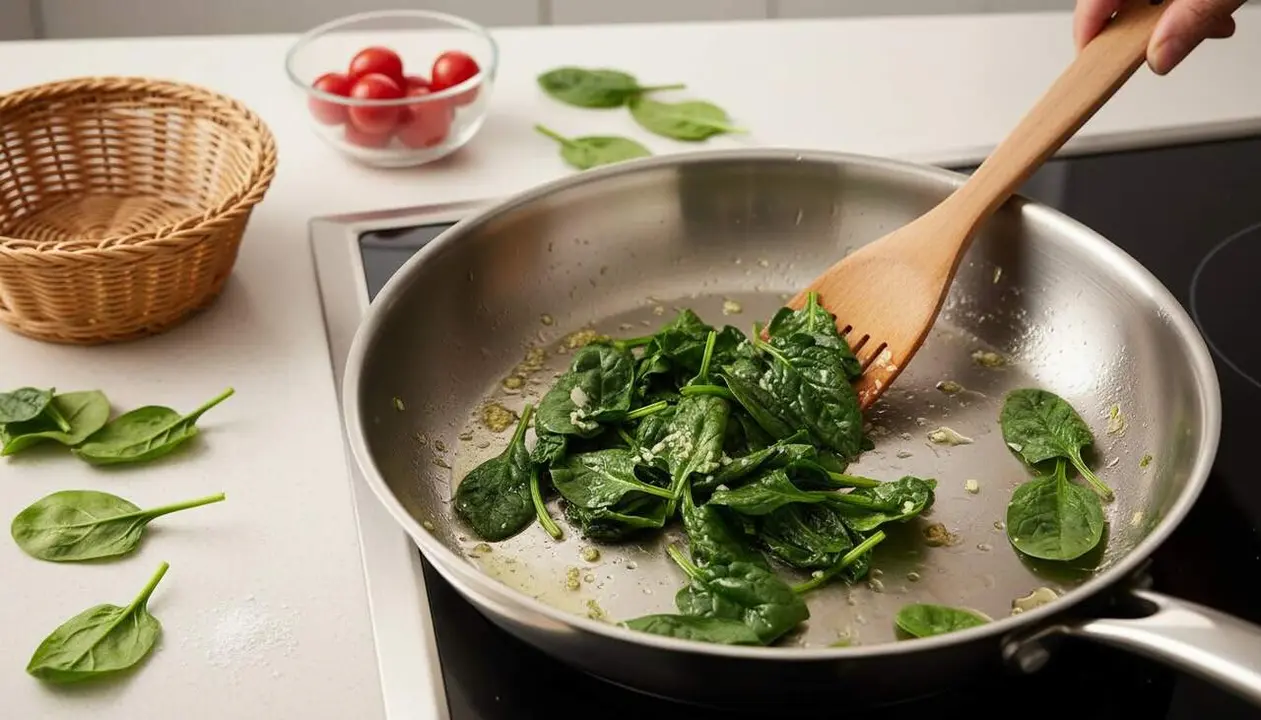
Another excellent method is sautéing. Heat a pan with a splash of olive oil and add the raw spinach, cooking it over medium heat for 2 to 4 minutes.
This method retains vitamins well and adds a tasty and slightly crunchy touch. And if you add a bit of garlic or a few drops of lemon, the result is even better.
Practical tips to make the most of spinach
Avoid prolonged cooking
Cooking spinach for too long is the worst thing you can do. Also, don’t add too much water: this causes water-soluble vitamins to be easily lost.
Eating them right after cooking is key to taking advantage of all their properties.
Enhance flavor and benefits
Incorporate ingredients like garlic or lemon to boost both flavor and antioxidant benefits. These are small tricks that make a big difference.
Why is boiling spinach not recommended?
Loss of water-soluble vitamins
When we boil spinach, many vitamins like C and some from the B group dissolve in the water, which is usually discarded. This causes much of their nutritional value to be lost.
Degradation of antioxidants due to excess heat
Long cooking with lots of water not only removes vitamins, but also destroys essential antioxidant compounds that help protect health.
Therefore, although boiling does not make spinach bad, it does greatly reduce its nutritional potential.
One extra tip: if you sometimes have to boil them, use the water to make soups or broths, so you don’t waste the nutrients that remain there.
With these tricks, cooking spinach goes from a routine to a little nutritious ritual that will make you feel good inside and out.