5 chef secrets for making perfect fried tomato without sugar or tricks
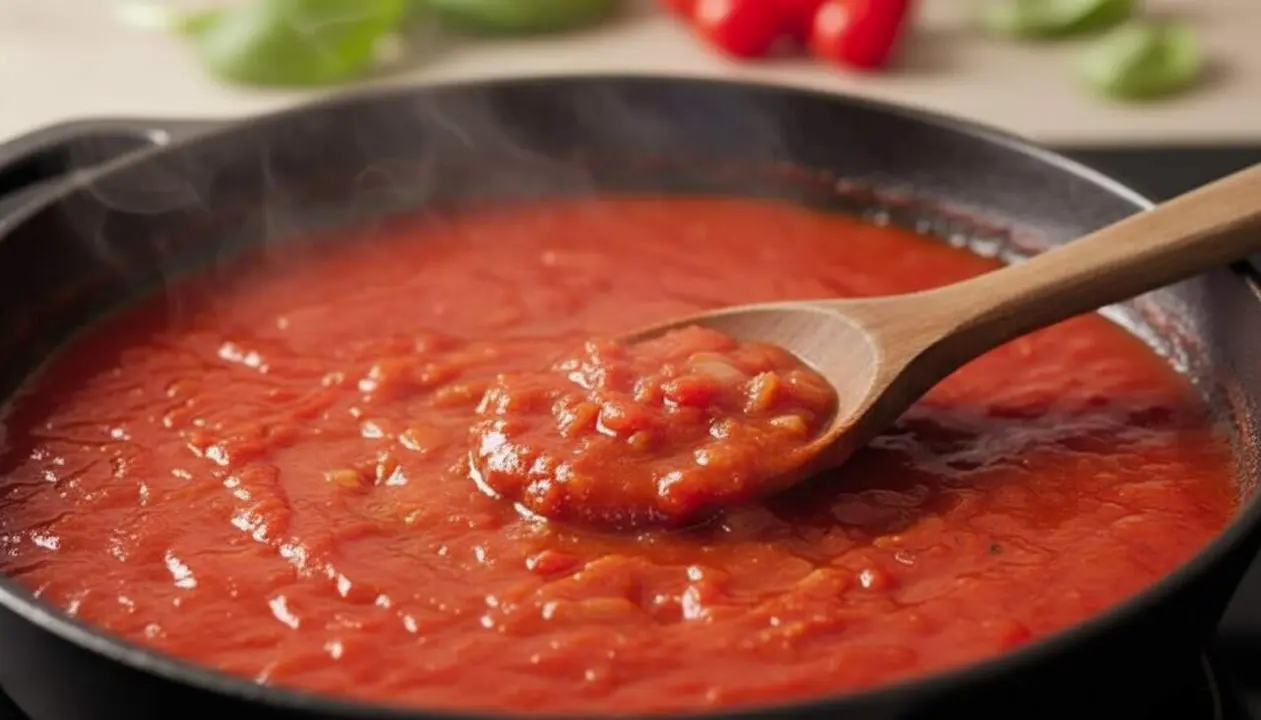

Culinary experts agree that the most common mistake when making fried tomato is adding sugar to correct the acidity. This practice only masks the real taste of the tomato and does not solve the root of the problem.
The key is a precise combination of ingredients and cooking time, with a special emphasis on olive oil and aromatics. This formula transforms the sauce into a smooth, balanced emulsion full of character.
Why does it matter to avoid sugar to correct the acidity of fried tomato?
What mistake do home cooks make with fried tomato?
Many people think that adding sugar solves the acidity problem, but renowned chefs like Ferran Adrià or Samantha Vallejo-Nágera explain that sugar only masks the original taste of the tomato and does not neutralize it. This causes the sauce to lose its essence and naturalness.
What is the true solution to neutralize the acids?
The answer lies in handling the relationship between ingredients and the cooking process. The citric, malic, and oxalic acids are transformed with extra virgin olive oil and time, which favors a smooth emulsion that respects the nature of the tomato, without the need to artificially sweeten the sauce.
How do olive oil and aromatics affect the final flavor?
Why use a high amount of olive oil?
Catalan chefs recommend 150 ml of extra virgin olive oil for every 300 grams of tomato. Although it may seem a lot, the oil is the heat conductor that allows the acids to transform slowly, creating a velvety and balanced texture.
What role do aromatics play in the recipe?
Slow sautéing with onion and three cloves of garlic creates a natural sweetness that organically balances the palate. This aromatic structure adds depth to the sauce and prevents the need to use sugar to soften it.
What professional tricks improve the cooking of fried tomato?
How does white wine help balance acidity?
Samantha Vallejo-Nágera recommends adding 50 ml of white wine when the sauté is ready. The alcohol evaporates, leaving a deep and aromatic flavor that replaces unnecessary sugar and enhances the final taste.
Why are slow cooking and salting at the end key?
The sauce should cook over low heat for one hour, reducing its volume by a third to concentrate flavors. Ferran Adrià emphasizes that salt should only be added at the end to prevent loss of texture and smoothness during cooking.
Alicante experts already warn that technical details make the difference in classic dishes, and in this case, patience and proportions are what transform fried tomato into an essential and delicate element.
Respecting these steps not only improves the flavor but also the nutritional properties. Tomato is rich in vitamin C and lycopene, and cooking it with oil improves its absorption, making this basic dish also healthy.
Thus, we set aside quick fixes and correct acidity with technique, ingredients, and time to obtain a fried tomato with character and harmony.
But not only that, experts warn: precise and patient cooking is what maintains quality and health over time, as in this recipe that seems simple but is true art.