Mercedes revolutionizes the automobile with 1,000 HP axial flow engines
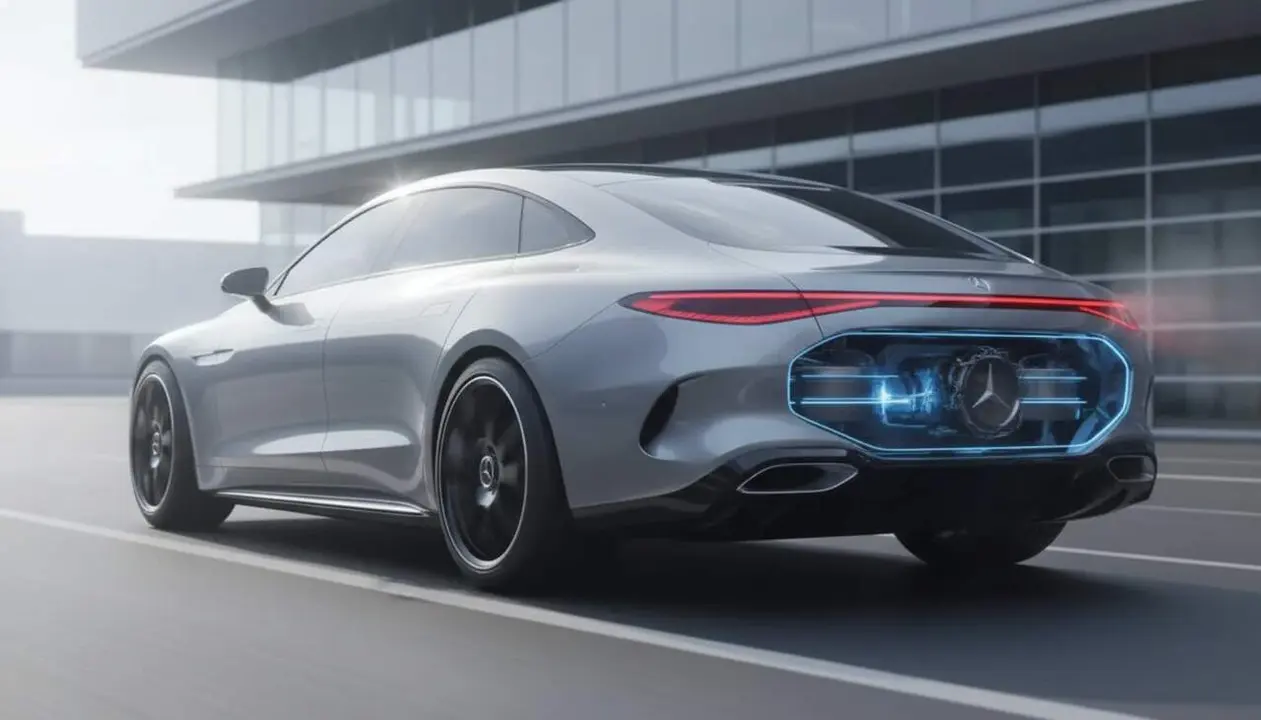

Mercedes has shaken the automotive sector with an axial flux motor that weighs less than 10 kilos and can generate up to 1,000 horsepower. Yes, you read that right: brutal power in a format you can almost hold with one hand. But this is not just a number to brag about; it is the beginning of a technical revolution.
The world of automobiles is tired of big, heavy, and complex engines. Mercedes, with this technological toy, mocks all that and shows that power does not have to be at odds with lightness or extreme compactness.
Why do axial flux motors matter to the driver?
If you are a regular driver or simply a car lover, you are surely interested in how this type of motor can change the driving experience. Mercedes has created an engine that fits perfectly into small spaces—like the front and rear axles—and makes power transfer much more direct and efficient.
The lightness of the motor, only 10 kilos, allows reducing the total weight of the vehicle, improving agility and range. Additionally, these motors can rotate above 15,000 revolutions per minute, a figure previously seen only in racing engines.
What is this motor like and what makes it unique?
Mercedes’ axial flux motor does not look like a traditional engine. It is disc-shaped, like a clutch or brake disc, and this is key because it takes up very little space and can be placed longitudinally, facilitating direct power transmission.
Moreover, its design improves cooling, preventing heat from affecting performance in demanding driving, a common problem in conventional electric motors.
What are the practical advantages for you?
- Brutal power: up to 1,000 HP with only 10 kg weight.
- Spectacular acceleration: 0-100 km/h in just over 2 seconds.
- Top speed over 300 km/h, a figure that does justice to the AMG name.
- Compact format that allows placing up to three motors per vehicle, optimizing traction and control.
What does this mean for the industry and market?
Axial flux motors have already been integrated into models like the new Mercedes-AMG GT, with a three-motor configuration that achieves more than 800 horsepower. This new generation represents a leap in electrification technology that other European brands had neglected.
Mercedes not only shows it can still surprise in a sector dominated by Chinese companies and startups, but also proposes a real solution to reduce weight and improve performance. This is not only interesting for high-end models but could set trends for the entire industry.
Why did Mercedes buy Yasa?
Yasa, the technology company responsible for this innovation, came into Mercedes’ hands a couple of years ago. With this acquisition, the German brand secures a key competitive advantage in electrification and innovative motors.
This strategic move reflects a clear bet on technical innovation and leaving behind bulky and heavy engines that, frankly, already seemed like a thing of the past.
How will this affect drivers and the future of cars?
The reduction in weight and the increase in power and efficiency translate into more dynamic cars, with more range and better response. This interests everyone, especially in a context where electrification and sustainability are key topics.
Axial flux motor technology can allow for lighter, more powerful models with better range, a trio any user would want in their garage.
What do you need to know about the new Mercedes motor?
To begin with, it weighs only 10 kg and can generate up to 1,000 horsepower. It is an axial flux motor, meaning its components rotate on an axis parallel to the magnetic flux, unlike conventional radial motors.
This compact configuration allows placing it near the vehicle’s axles and facilitates power distribution in multiple motors, thus improving traction and control.
How does this translate into real numbers?
In models like the Mercedes-AMG GT, this technology results in a combined power of over 800 horsepower with three motors (one on the front axle and two at the rear) and acceleration from 0 to 100 km/h in just over 2 seconds.
Additionally, the top speed exceeds 300 km/h and the motor spins above 15,000 revolutions per minute, figures that would make any super sports car blush.
What technical advantages does it offer?
- Improved cooling: design that prevents overheating and maintains performance for longer periods.
- Weight and volume reduction: facilitates integration into compact and lightweight vehicles.
- High efficiency: less energy loss and better response in sharp accelerations.
Beyond the numbers, the most interesting thing is that Mercedes demonstrates that electric motor technology still has room to innovate, and that the race is not closed to Asian brands.
Axial flux motors could be what we need to make the electric car truly exciting, light, and powerful.
The reality is that Mercedes has taken a giant step toward a future where power and lightness go hand in hand, and that, for car enthusiasts, is news that sets off alarms.
⛽ Combined consumption: Variable depending on model and configuration
💶 Starting price: From AMG GT models
🏁 0-100 km/h: Just over 2 seconds
Mercedes has not only put a motor on the table but a new way to conceive electric power. This will make cars lighter, faster and, why not say it, much more fun to drive.
In a context where everything seems to be moving toward electric mass production with generic products, this motor is like a shout of spirit in favor of personality and uncompromising power.
If you are one of those who still believe that an ambitious car must have an engine that makes you vibrate, Mercedes’ proposal is news you cannot ignore.
The future is no longer a distant promise but a challenge that is already here and comes loaded with discs spinning at over 15,000 revolutions per minute.
Frequently Asked Questions
- What is an axial flux motor?
- It is an electric motor where the rotation axis is parallel to the magnetic flux, allowing a more compact and lighter design compared to conventional motors.
- Why does this motor weigh only 10 kilos?
- Its compact design and advanced material technology allow weight reduction without losing power, which improves the vehicle’s overall efficiency.
- When will these motors be seen in more Mercedes models?
- Mercedes has already integrated this technology in AMG GT models and plans to progressively extend it to other vehicles in the coming years.