Kimera K39: the restomod with Koenigsegg engine that breaks molds
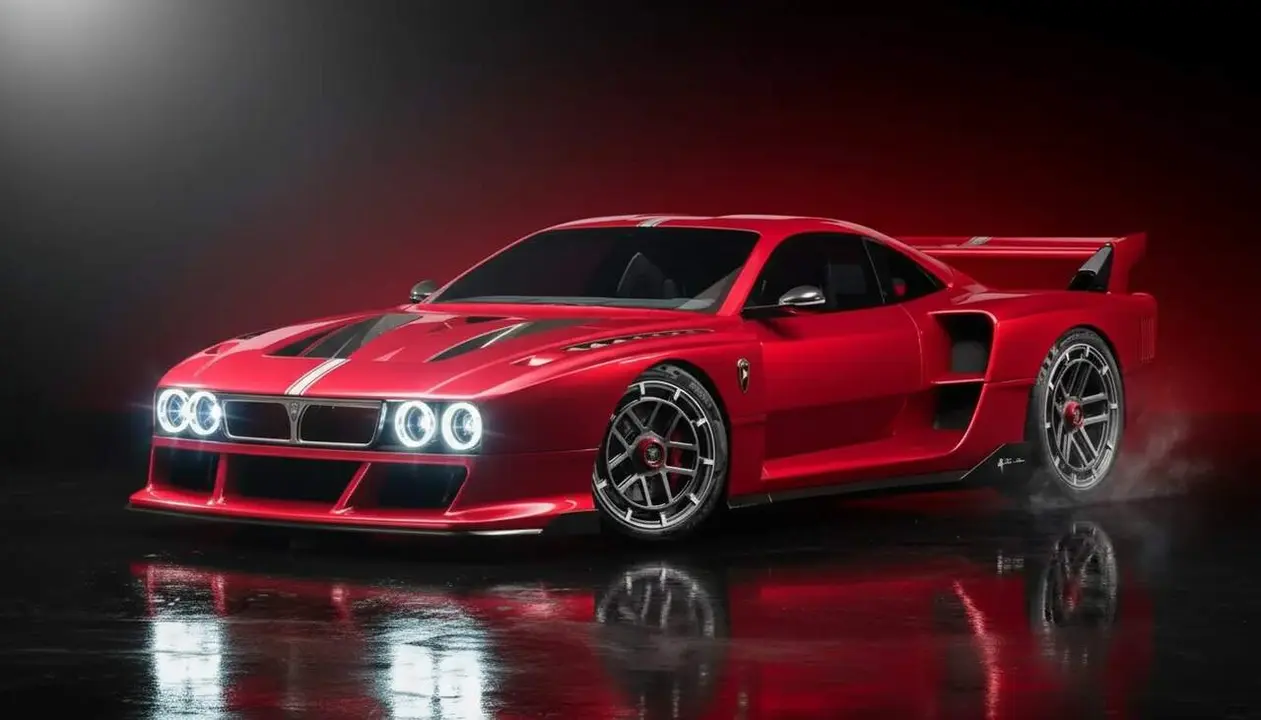

There is a curious paradox in the sports car scene: the big manufacturers release models with less and less soul, while the small hungry ones arrive full of surprises. The Kimera K39 is the perfect example of this silent revolt, a car that not only challenges the market but plays its own way, without complexes.
The K39, a restomod of the Lancia 037 Stradale, is not just a tribute, but a shout of identity. With a Koenigsegg V8 under the hood, this Italian hypercar seems to have more passion than many of its bigger, colder rivals.
Kimera K39, restomod with soul and Koenigsegg power
⛽ Combined consumption: N/A
💶 Starting price: 2.3 million € (limited edition)
🏁 0-100 km/h: N/A
A twin-turbo V8 that does not go unnoticed
The 5.0-liter twin-turbo V8 that powers the Kimera K39 is a mechanical gem that comes straight from Koenigsegg. With a power of 1,000 HP and 1,200 Nm of torque, this heart beats at 8,250 rpm, a redline that denotes its sporty and fierce nature. It doesn’t reach the 1,600 HP of its big brother, the Koenigsegg Jesko, but it is a beast adapted for a more compact and lighter sports car.
The engine has been tuned with more 'sensible' turbos from the Agera and a revised intake system to run on 95-octane gasoline, keeping in check a weight around 1,100 kg, almost 400 HP more than the EVO38, its direct reference.
A chassis and architecture that draw attention
The K39 is not just a simple restomod but a hypercar created from scratch with a super-rigid carbon fiber monocoque. This structure grants it ideal stiffness and lightness for both road and track use.
The transmission is a seven-speed manual, a luxury increasingly rare, and the traction is rear-wheel drive, a classic for purists seeking strong emotions. The pushrod suspension, both front and rear, offers a direct and unfiltered response. The brakes, still steel discs, will evolve towards a carbon-ceramic disc system, while the 20- and 21-inch wheels with Pirelli Trofeo RS tires complete a package that is a statement of intent.
Design and inspiration: a modern F40 with a rally soul
The visual character of the Kimera K39
Visually, the K39 turns heads. The wide wheel arches that break the body give it the air of a compact yet muscular car, as if a thin sports car had been swallowed by a bulkier one. The quad headlights and split grille are a direct tribute to Lancia, while the full-carbon body and aerodynamic details designed with Dallara’s help place it on another level.
The rear is pure functional elegance: double circular lights, a central Koenigsegg exhaust, and a deep diffuser that seems to say there’s no room for discretion here.
A hint of the Ferrari F40? Much more than a coincidence
If you look closely at the overhangs and especially the four lines behind the wheels, you can see a clear inspiration from the Ferrari F40. This resemblance is no accident: Luca Betti, Kimera’s chief, is a big fan of the Italian classic and wanted the K39 to capture that analog essence, the pure character, and the feeling of a car made to be enjoyed the old-fashioned way.
With an interior promised to be as functional as beautiful, with manual shifts and a minimalist yet detail-rich dashboard, the K39 presents itself as a modern reincarnation of a spirit many thought lost.
Goals for the mountain and extreme exclusivity
Heading to Pikes Peak with the K39 Pikes Peak
But Kimera’s hunger does not end on conventional roads. They are already planning an even more extreme version to conquer the mythical Pikes Peak climb in 2027. The K39 Pikes Peak will be a circuit monster, with a gigantic front wing, a roof air intake, and a huge rear wing that looks more like a scaled-down passenger plane than an aerodynamic element.
Only about ten customers will be able to access this beast, an ultra-limited run with a price that sits in the 2.3 million euro range. That said, anyone wanting to feel pure adrenaline will have to be quick.
The future of the Koenigsegg-Kimera collaboration
Christian von Koenigsegg has acknowledged that this is the first time they have given the engine to a third party, and that they only did so because there is genuine faith in the Kimera project. Although they don’t rule out further collaborations, they assure it will only happen when everything fits perfectly and the chemistry is right.
Thus, while the big manufacturers lose soul and take refuge in cold technology and mass production, small players like Kimera come out hungry and with a Koenigsegg V8 under their arm to prove there is still room for passion and strong emotions in automotive sports.
The Kimera K39 is a direct shout to all those who think magic is lost in modernity. A hypercar that embraces the past but glances at the future, and does so with an engine that leaves no one indifferent.