Timing chain or timing belt: which system lasts longer and why?

The timing chain and the timing belt are key components in the internal combustion engine, and their choice affects the durability and maintenance cost of the vehicle. But before deciding which system is better, it is useful to understand what really differentiates them.
Many customers focus on this detail as a buying argument, but the truth is that today it is not always a decisive factor. Still, knowing which system your car has can prevent unexpected troubles.
Timing chain and timing belt: what makes them different?
What exactly is their function?
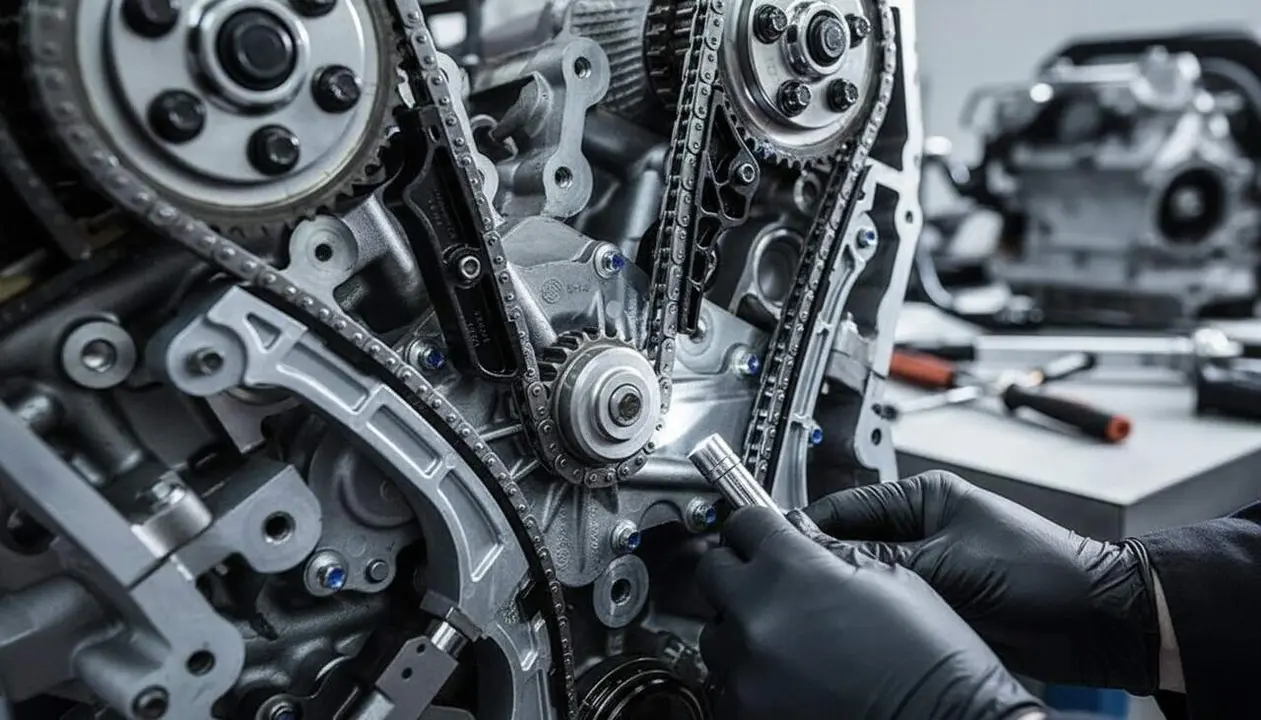
The timing system synchronizes the crankshaft movement with the camshaft to ensure that the valves open and close right on time, preventing the pistons from hitting them. Without this, the engine would be destroyed.
Initially, almost all engines used a timing chain, but in the 1970s the belt gained popularity, being lighter and easier to replace, although less durable.
What is the difference in materials and design?
The chain is a very durable metal part, similar to a bicycle chain but thicker and more robust. On the other hand, the belt is made of synthetic materials such as rubber with fibers to withstand friction, but it is more vulnerable to wear and aging.
Additionally, the chain requires a metal cover and a more complex tensioning system, while the belt is protected by an easily accessible plastic cover.
How to know if my car has a chain or a belt?
Where to look to identify the system?
The car manual is the safest way to find out. If it specifies periodic belt changes, the system is a belt; if it only mentions inspections, it is probably a chain.
You can also open the hood: a plastic cover with clips usually covers the belt, while a sealed metal cover indicates the presence of a chain.
Are there patterns according to the brand or type of engine?
Powerful engines and premium brands usually have chains for their durability, although small-displacement engines can also use them. More economical and compact engines tend to have belts to reduce costs.
Which lasts longer and what does it imply for maintenance?
Durability of each system: what to expect?
A timing chain is designed to last the entire lifespan of the car, usually more than 300,000 km, provided maintenance is proper and quality oil is used. It only needs to be replaced if it makes metallic noise or the tensioners fail, roughly after 250,000 km.
In contrast, the belt has a limited lifespan, between 60,000 and 160,000 km or 5 to 10 years, depending on the manufacturer. Not changing it on time can cause a serious and very expensive failure.
What costs and risks does each system involve?
Belt maintenance has a medium-high cost, often between 350 and 800 euros, and can exceed 1,000 in high-end cars or large engines. Replacement is mandatory to avoid breakage that destroys the engine.
The chain, being more expensive and robust, does not require replacement at fixed intervals, only in case of failure, making its maintenance practically non-existent, aside from periodic inspections.
| Characteristic | Timing belt | Timing chain |
|---|---|---|
| Material | Rubber and synthetic components | Metal steel |
| Approximate lifespan | 60,000-160,000 km or 5-10 years | +300,000 km (for entire lifespan) |
| Maintenance cost | Medium/high (periodic replacement) | Very low (replacement only if failure) |
| Risk of failure | High if not replaced on time | Very low, rare failure |
Choosing between chain or belt is not only a matter of durability but also of budget and driving style. But remember that a broken belt can leave you stranded, while a well-maintained chain endures countless kilometers without drama.
According to Daniel Murias, engine expert, “the quality of the oil and maintenance are crucial so that the chain does not fail after hundreds of thousands of kilometers.” And from the workshop, Joan, a mechanic from Barcelona, recommends always monitoring strange noises to avoid bigger issues.
If you still have doubts, the safest option is to have periodic inspections and not wait for problems to arise. After all, the engine does not forgive negligence.
Therefore, the timing chain is usually the most durable and least costly in the long term, while the belt requires periodic changes and more attention. Both systems have advantages and disadvantages, but the key is to know your car well and follow the maintenance plan to avoid surprises in your wallet.
Having clear which system your vehicle is equipped with can save you an unexpected bill and ensure the engine runs like a clock for many kilometers. After all, the timing system is the synchronizing soul of the engine, and taking care of it is taking care of your car’s heart.
Frequently Asked Questions
- How can I know if my car has a timing chain or belt?
- Check the vehicle manual or maintenance plan. If periodic replacement is mentioned, it has a belt; if only inspection is mentioned, it’s almost certainly a chain.
- What is the typical lifespan of a timing belt?
- Usually between 60,000 and 160,000 km or 5 to 10 years, depending on the manufacturer and vehicle use.
- What can happen if I do not replace the belt on time?
- It can break and cause collisions between valves and pistons, resulting in a very costly failure to repair.