Audi R8 V12 TDI: the diesel supercar that shook the 2000s
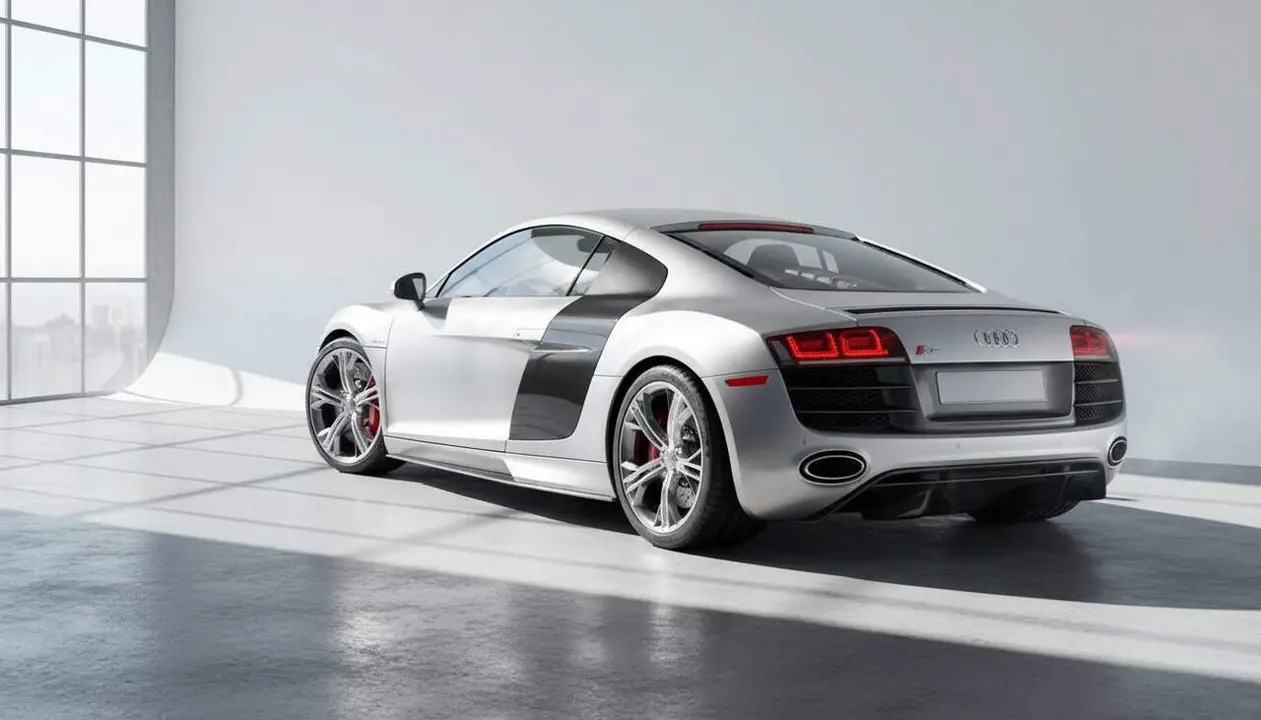

In the early 2000s, when it seemed that the automotive industry knew no limits, Audi decided to play hard. The Audi R8 V12 TDI was not just an experiment, it was a provocation: a supercar that combined a powerful diesel engine with the aesthetics of an R8.
The idea of putting a 6-liter V12 diesel with 500 HP and 1,000 Nm of torque inside a sports car sounded not only strange but also raised eyebrows among purists. But Audi wanted to prove that anything was possible and that even a diesel could be a monster on the road.
Audi R8 V12 TDI: an experiment that breaks molds
The engine that challenged Ferrari and stereotypes
The heart of the R8 V12 TDI was a 12-cylinder V-type 6-liter turbodiesel that delivered a shocking figure: 500 HP and 1,000 Nm of torque. For comparison, while Ferrari boasted its famous gasoline engines, this diesel "tractor" offered similar performance but with lower consumption. An almost sacrilegious combination, right?
It was capable of accelerating from 0 to 100 km/h in just 4.2 seconds and reaching nearly 300 km/h, figures that are still respectable today. All this with a sound and feel completely different from conventional supercars.
The aesthetics and brand message
On the outside, the R8 V12 TDI maintained the clean, aggressive, and aerodynamic lines typical of the R8, but with details that revealed the beast under the hood: specific side exhaust outlets and rims designed to withstand the brutal torque.
Audi presented this model at Frankfurt in 2008 as a concept to show that diesel technology could compete with the most exotic gasoline engines. But it was clear that it was not intended for mass production, but rather to demonstrate that Ingolstadt never stopped playing with groundbreaking ideas.
The technical challenges and the impossibility of production
How to tame a 1,000 Nm monster
Turning such an engine into a car that worked under real conditions was a tremendous challenge. Audi engineers had to face problems like extreme cooling and creating a transmission capable of handling the monumental torque. It wasn’t just about putting in a powerful engine, but maintaining reliability and safety.
The result was a rolling laboratory, but with a prohibitive cost and practically zero demand for a diesel supercar. That’s why it never reached series production.
The legacy in the Audi lineup: the Q7 V12 TDI
Despite everything, the technology found its practical outlet in the Audi Q7 V12 TDI. This SUV was actually sold in Europe, equipped with a similar engine: a 6-liter 500 HP V12 TDI offering acceleration from 0 to 100 km/h in 5.5 seconds. A monster with more body but the same brutal essence.
The idea of combining extreme power and diesel did not die, but was relocated where it made the most commercial and practical sense.
The wild context of the 2000s and Audi’s boldness
When anything went to impress
In the 2000s, before the crisis that cooled the sector, the industry let loose. Audi, with its R8 V12 TDI, was a clear example: putting a V12 diesel engine in a supercar was an almost crazy idea, but they did it simply because they could.
That period gave rise to some of the most iconic and extravagant models of recent times, and the R8 V12 TDI is one of them: a proof that technology, when there are no limits, can get a little wild.
The purists’ critical view and the influence on the future
Of course, many considered the project sacrilegious, but the reality is that it moved Audi’s technological agenda and highlighted that diesel engines could be more than just everyday engines. But not all that glitters is gold, especially at 1,000 Nm.
These experiments paved the way for future applications and left an indelible mark in the history of the four-ring brand.
The reality is that the Audi R8 V12 TDI was a punch on the supercar table, a statement that at that time only Audi dared to make. A diesel beast that today still provokes smiles and disbelief in equal parts.