What are the new AI cameras that Traffic has just installed on the AP-7 and the A-2?
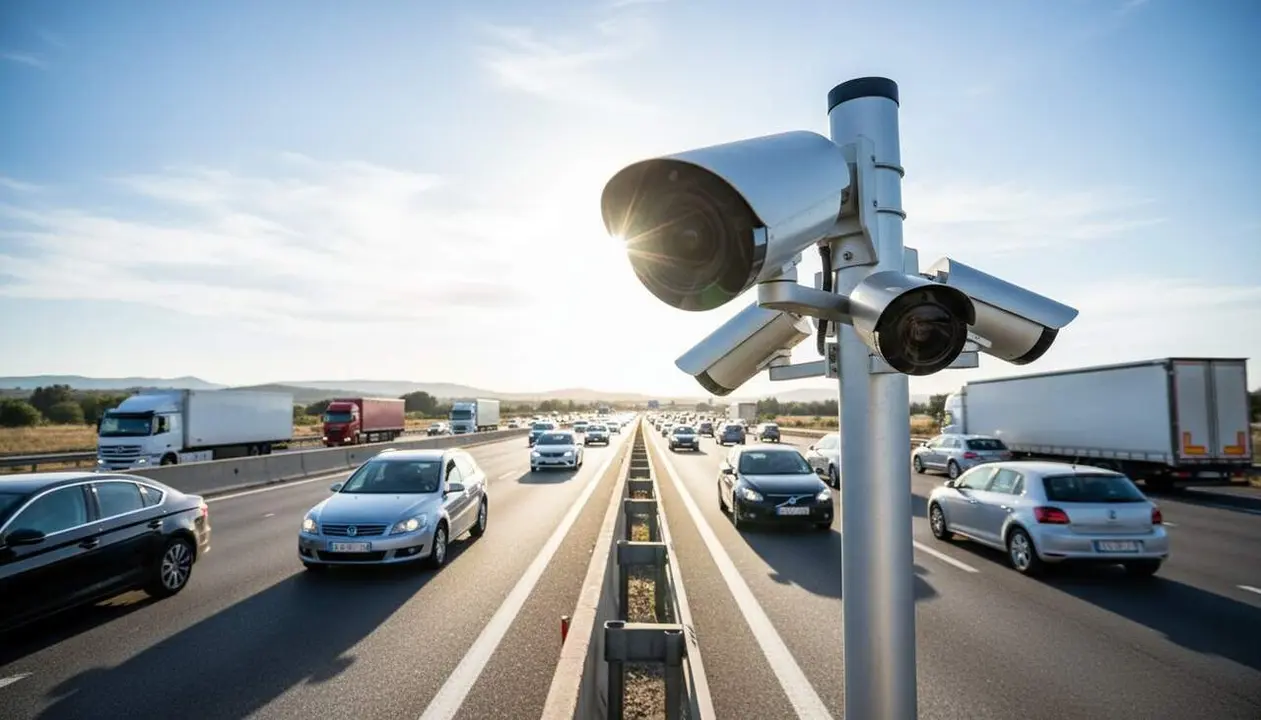

The new cameras with artificial intelligence identify drivers who use their mobile phones or do not wear seat belts on the AP-7 and A-2 and have recorded thousands of cases in the pilot test. This report explains what the system detects, the accuracy reported by Traffic, and the practical implications for drivers.
The pilot test, deployed on trailer carts with high-definition cameras and algorithms, operates in peri-urban and high-capacity sections. The measured values —+8,500 mobile phone uses and +4,500 seat belt violations— are not anecdotes; they are the basis for the decision to extend this control. A technology that watches the road.
Detected Infraction and Context
Why does this matter to the driver?
This technology identifies two specific behaviors: improper use of the mobile phone while driving and the lack or incorrect use of the seat belt. This matters because, according to Traffic, these behaviors are directly related to the severity of injuries in case of an accident and to the driver's active distraction.
What behaviors does it detect exactly?
The system distinguishes, regarding mobile phone use, between drivers holding it with their hand and those resting it on the top of their legs —this second behavior takes the driver’s eyes off the road for longer. For the seat belt, the AI records occupants without a seat belt or with incorrect use.
Legal Analysis and Verified Data
What does the source say about sanctions and procedures?
The news report does not specify fine amounts or point deductions: the piece does not include amounts, nor details about imposition procedures or appeal deadlines. Therefore, any data on amounts or points does not appear in the source and the regulatory text or the DGT must be consulted to know them.
What figures and accuracy does the pilot test provide?
During the two-month test, Traffic detected **more than 8,500 cases** of improper mobile phone use and **more than 4,500 infractions** related to the seat belt. The study indicates an estimated prevalence of mobile phone use between **3.6% and 6.6%** depending on the road and traffic, and a prevalence of non-use of the seat belt between **1.3% and 1.8%**.
The declared accuracy is also relevant: Traffic points out accuracies higher than **70%** for seat belt detection and **over 84%** for mobile phone use detection.
| Infraction | Fine | License points | Appeal deadline |
|---|---|---|---|
| Improper use of the mobile phone (holding it or resting on the lap) | Not specified in the source | Not specified in the source | Not specified in the source |
| Non-use or incorrect use of the seat belt | Not specified in the source | Not specified in the source | Not specified in the source |
- The test was conducted on trailer carts with mobile cameras on the AP-7 and A-2 in different traffic environments.
- Observed patterns: mobile phone use is more frequent in peri-urban sections (e.g., Cornellà de Llobregat) and during daytime hours; seat belt non-use tends to be higher on the AP-7 and during weekends and nighttime hours.
- The technology shows accuracy levels declared by Traffic; this implies that not all detections will automatically be sanctionable without subsequent administrative verification.
How to avoid sanctions: practical guides
What should I do as a driver?
Short answer: keep the mobile phone out of your hand and wear the seat belt correctly. Beyond the rule, this reduces the probability of being detected by the camera and, above all, improves road safety.
What additional risks should I be aware of?
The combination of automated detection and human patrol can increase the likelihood that an observed behavior ends up converted into an administrative file. This is especially true in areas with high detected prevalence (for example, Cornellà de Llobregat for mobile phone use).
Practically, the best move is simple: put the mobile phone on silent mode or in the glove compartment, use certified hands-free systems if strictly necessary, and always verify that all occupants are wearing the seat belt properly fastened. This is not just about preventing a possible sanction; it is about reducing the risk of an accident.
As an expert view: the pilot test shows that the technology can identify specific behaviors with an accuracy that Traffic values as high, but automated detection has limits —light, occupant position, type of vehicle— and a clear administrative procedure will be necessary to transform a detection into a sanction. Technological control with administrative rigor.
The reality is these cameras expose behaviors often normalized: using the mobile phone at midday or wearing the seat belt poorly at night. If deployment expands, the combination of **automated detection**, **objective data**, and administrative controls can change behaviors on the road. Reflect: once the technology is deployed, flexibility to justify a behavior decreases.
In summary, the data from the pilot test —**+8,500 mobile phone uses** and **+4,500 cases without seat belts**— are the warning. Act preventively: put away the device and adjust the seat belt. This reduces risks and possible administrative consequences; and above all, can save lives.
Frequently Asked Questions
- How do I know if a camera detection can end in a sanction?
- The media information indicates automated detections; the article does not detail the exact procedure to impose sanctions. The administration will need to publish the administrative process that follows each detection.
- What is the system’s accuracy?
- According to Traffic, the accuracy exceeds 70% for seat belt detection and is over 84% for mobile phone use, as stated in the source.
- Where and when is mobile phone use detected most?
- The test shows higher prevalence in peri-urban sections (e.g., Cornellà de Llobregat) and during daytime hours, especially between 11:30 a.m. and 3:30 p.m.
- Where is seat belt non-compliance recorded most?
- The AP-7 shows higher prevalence (up to 1.8% according to the study), and infractions increase during weekends and nighttime periods.
- Where can I consult the actual fines and points?
- The article does not include amounts or point losses; for this information, current regulations or communications from the DGT and the Catalan Traffic Service should be consulted.