The URV Teaching Innovation Day promotes generative artificial intelligence in Tarragona
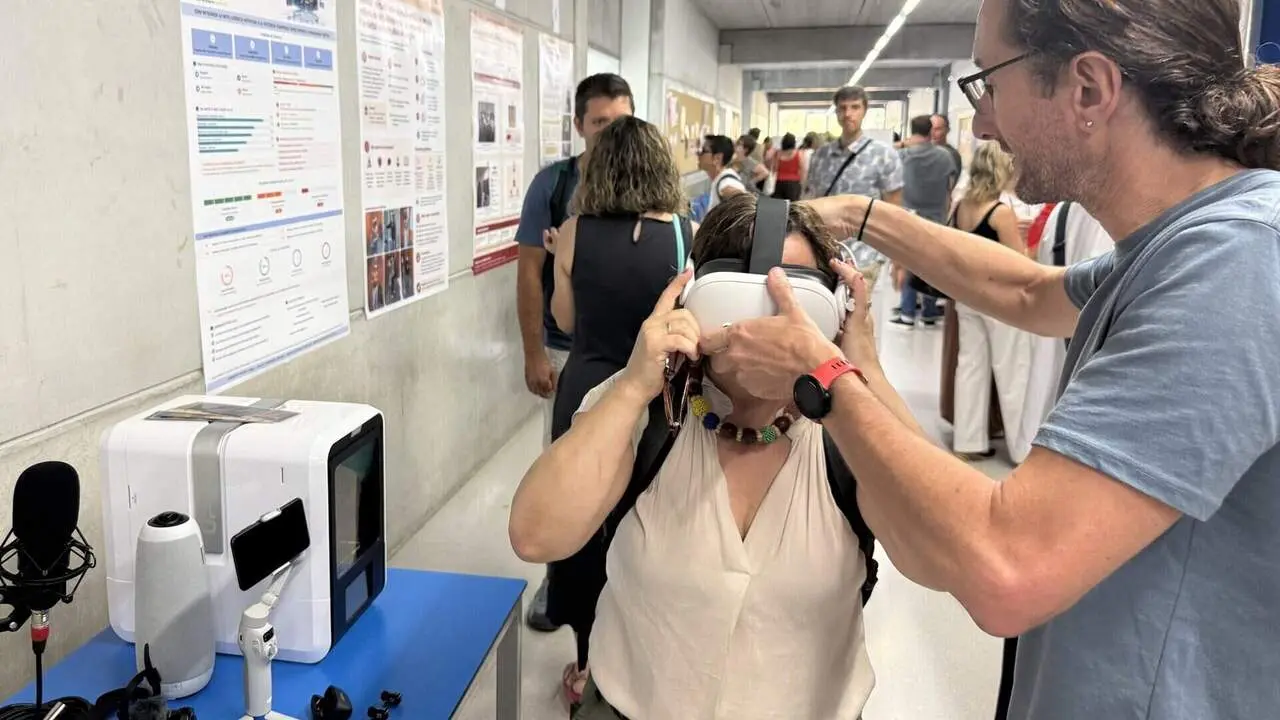

The Universitat Rovira i Virgili gathered nearly 200 people in Tarragona to address the new challenges that generative artificial intelligence poses to higher education. This event highlighted how teaching innovation can transform the way of teaching and learning in the province.
With the involvement of faculty, technical staff, and students, the meeting showcased projects that not only adapt but also reinvent academic practices in the face of emerging technologies.
The event as a driver of educational innovation in Tarragona
What stood out at the meeting for URV teachers and students?
The URV ICE organized the event on July 2 at the Faculty of Economics and Business, where 40 projects were presented in five simultaneous rooms and 20 posters in a new format that generated great interest. This variety of formats allowed everyone to find a space to share and learn.
How is generative artificial intelligence linked to teaching?
The projects presented emphasized the critical and responsible use of generative AI, with applications ranging from gamification to simulation and inclusion. The debate included how these tools can transform active learning and assessment, generating new dynamics in Tarragona classrooms.
The challenges and opportunities of generative AI in university teaching
What challenges does AI pose to teachers in Tarragona?
In Joan Tomàs Pujolà’s conference, the tension between innovating and managing the disruption caused by AI was highlighted. Professors must adapt to an environment where students have access to tools that can radically change teaching and learning processes.
What lines of work is the URV promoting to integrate AI?
Vice-Rector Urbano Lorenzo explained initiatives to incorporate AI critically and with added value into teaching. This involves not only technology but also training teachers and students in ethical and effective use, a key challenge for higher education in Tarragona.
Teaching innovation projects and networks at the URV: a local perspective
How do the Strategic Innovation Networks contribute to educational transformation?
The Methodological Innovations Network gathered student voices through focus groups to understand doubts and training needs regarding AI. This shows the URV’s commitment to fostering active and critical participation from Tarragona students.
What interdisciplinary projects are presented at the URV?
The Interdisciplinarity Network has created a guide for interdisciplinary final projects and a catalog of good practices. This commitment to interdisciplinarity helps prepare students for complex problems, highly present in both local and global contexts.
| Type of project | Number presented | Highlighted aspects |
|---|---|---|
| Projects in rooms | 40 | Innovation with AI, gamification, simulation, inclusion |
| Posters | 20 | Visibility and exchange of new experiences |
| Innovation Networks | 2 main | Methodological with AI and Interdisciplinarity |
The audience award for best poster recognized a project on simulation as a methodology to achieve deep learning, a clear example of how local innovation can have a direct impact on educational quality.
The Teaching Innovation Day not only showcases the technological drive at URV but also creates a community that makes Tarragona a territory where higher education faces new challenges with tools and ideas born locally.
The province of Tarragona thus benefits from a university that not only adapts but leads in the responsible and critical use of artificial intelligence in higher education, highlighting local talent and innovation.
Source of the article: Universitat Rovira i Virgili