Catalunya Sud Cancer Center: the European elite in oncology at your home
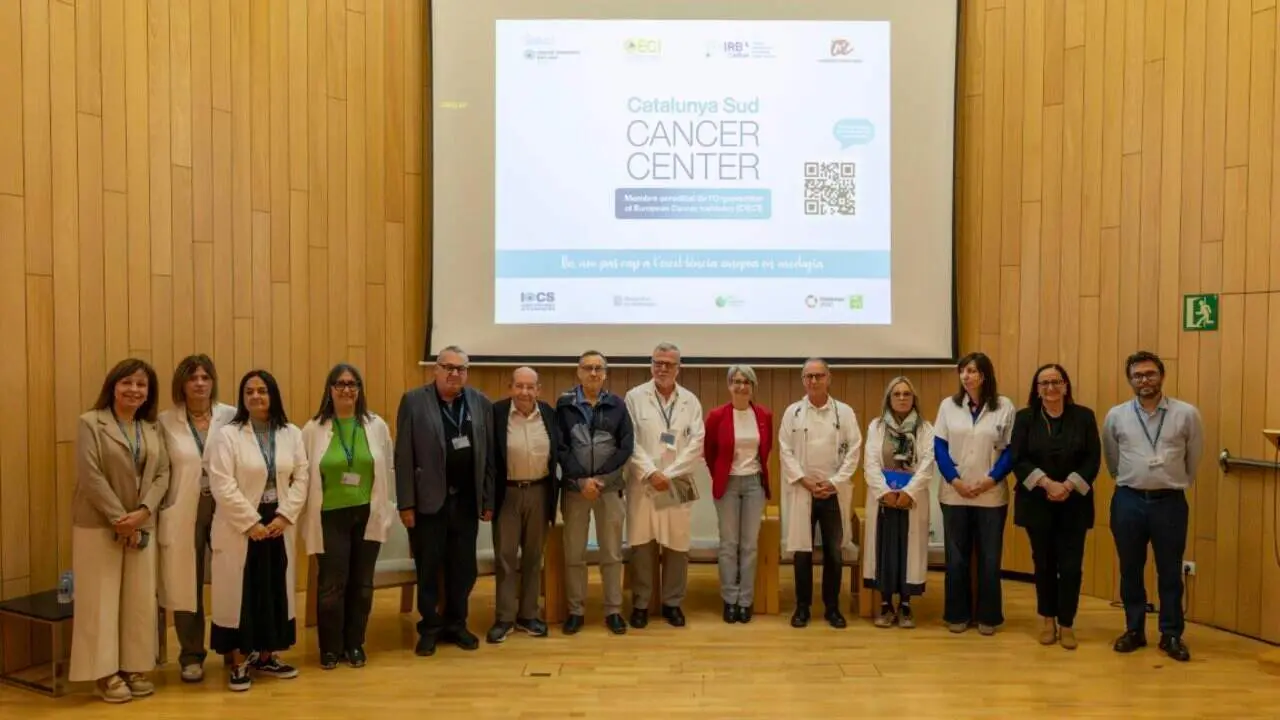
Imagine being able to receive cancer treatment with the same guarantees as the best centers in Europe, but without having to travel to Barcelona or Madrid. This scenario is already a reality thanks to the Catalunya Sud Cancer Center, accredited by the European Organisation of Cancer Institutes (OECI).
The center, which integrates the Sant Joan University Hospital of Reus, the IRB Catalunya Sud, and the Rovira i Virgili University, has managed to place southern Catalonia on the European map of elite oncology, offering top-level clinical care, innovative research, and healthcare training.
A comprehensive oncology center recognized by the European elite
The OECI accreditation and its impact
Being a member of the OECI is no formality. This organization evaluates 345 quality standards covering everything from governance to patient experience. The Catalunya Sud Cancer Center has passed this evaluation, positioning itself among the leading European oncology centers and certifying safe and coordinated care.
According to Marta Milà, manager of the Camp de Tarragona Health Region, this recognition means that treatments will be more personalized and better coordinated, directly benefiting the local population.
An ecosystem connecting care, research, and teaching
At the forefront of the center, the IRB Catalunya Sud and Rovira i Virgili University are part of a model that not only treats cancer but fights it through research and education. IRB CatSud director Joan Vendrell summarizes it: “This is a starting point to attract more clinical trials and continue improving clinical research.”
This multidisciplinarity is also reflected in the close collaboration between the URV Faculty of Medicine and the Research Institute, a combination that enhances talent retention and competitiveness in teaching.
The pillars that define the Cancer Center’s excellence
The nine accreditation areas that make the difference
The hell of administrative processes has a name: 345 criteria. Nurse Berta Caballé, who has led the accreditation, highlights nine areas covering everything from governance to prevention, diagnosis, treatment, research, and education. It is not about arriving and settling but about a comma and continuation to keep improving year after year.
This means patient-centered care, with multidisciplinary teams working together for each type of cancer, ensuring rapid diagnoses and tailored treatments.
A long and rigorous process that guarantees quality
Achieving this accreditation has not been an easy path. The process has extended over years, involving internal self-assessments, external audits by international experts, and continuous improvement plans. All this guarantees that the center not only complies but aims to exceed the most demanding European standards.
The involvement of all levels of the organization is key to ensuring that quality is not a one-time goal but a constant practice.
Benefits for patients and the territory
More specialized care and personalized treatments
Being part of the OECI means access to innovative therapies and clinical trials that often arrive earlier than elsewhere. This translates into safer and more coordinated care, avoiding long travel and offering integrated treatment close to home.
Patients in southern Catalonia, over 800,000 inhabitants, can already count on a service that annually attends to more than 2,700 new cancer cases with highly specialized multidisciplinary teams.
Territorial impact and international projection
The accreditation not only benefits patients but also strengthens the region’s position as a first-rate scientific and healthcare hub. This helps retain talent, boosts research, and increases southern Catalonia’s prestige on a national and European scale.
In a context where the concentration of healthcare services is the norm, having a center of this level prevents thousands of people from having to make unnecessary trips to major capitals.
It is clear that the Catalunya Sud Cancer Center has gone from being a local bet to a European reference in oncology.
The future of the fight against cancer in southern Catalonia is already here, and it is not far away.
Source of the article: Rovira i Virgili University