20 sunken vessels scanned off the Catalan Coast: the Thalassa project creates unique 3D models
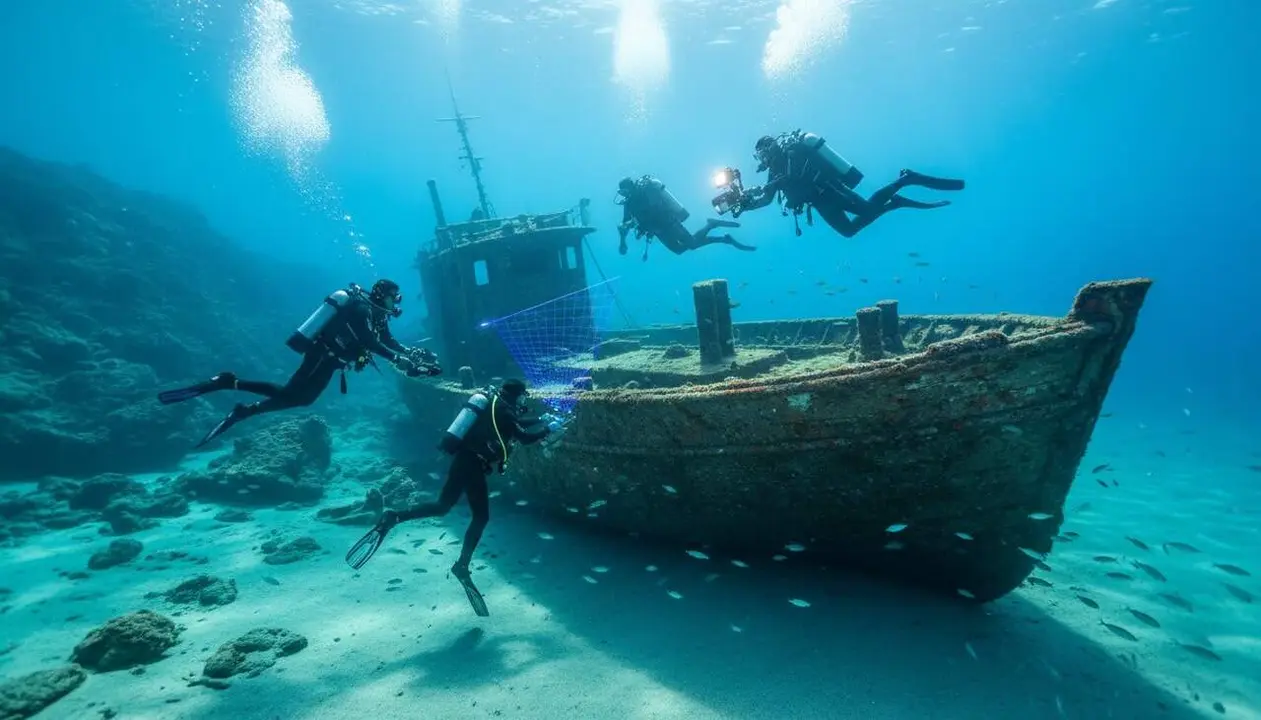

The Thalassa project has already scanned about twenty sunken vessels along the Catalan coast, creating three-dimensional models that preserve a hidden underwater heritage. This work combines science and outreach to conserve the memory of these wrecks and facilitate their safe exploration.
For over a year, a group of divers has been working with action cameras to capture images at about 40 meters deep, collaborating with local clubs and incorporating knowledge about the marine environment to enrich the dives.
The Thalassa project and the documentation of Catalan underwater heritage
Why is this initiative of interest to locals and local divers?
Thalassa not only creates 3D models of sunken ships but also helps preserve the history hidden beneath the sea of Tarragona and other points along the Catalan coast. With an educational and scientific approach, it offers information useful for both researchers and divers, allowing for the planning of safer and more informed dives.
Which wrecks have they scanned and where are they concentrated?
So far, half of the 20 scanned wrecks are located on the Tarragona coast, especially in the Costa Daurada Marine Park and l'Ametlla de Mar, where four vessels have been documented, including the fishing boat Pepito La Lula. Other locations include Roses, l'Escala, Palamós, and even a sunken hermitage in the Canyelles reservoir.
The technical process and economic challenges of the project
How do they manage to do scans at 40 meters deep?
The team uses conventional audiovisual equipment, with a scanning protocol adapted to Mediterranean wrecks and a success rate of up to 90% in image capture for rendering. Pre-dive work on land and weather conditions are crucial for the success of each dive.
What economic obstacles does Thalassa face and what do they plan to improve?
The main challenge is the high cost of gases for air tanks, which has risen significantly due to the global geopolitical situation. They are also considering adding underwater thrusters to speed up and ensure safety during scans, but this depends on future financial support.
The future and objectives of the Thalassa project
What role does the Cavour vessel play in the project?
The Cavour, a ship sunk in 1917 at 52 meters deep in l'Ametlla de Mar, is the main goal and the “cherry on top” of the first phase. At 120 meters in length, its 3D documentation would represent a major advance but requires partnerships and resources to carry out the survey.
How is collaboration and funding managed?
Thalassa maintains contacts with entities such as the Center for Underwater Archaeology and seeks agreements and public or private funding to continue documentation and expand the digitized heritage. Logistical collaboration with local diving centers is key to making the dives feasible.
| Aspect | Details |
|---|---|
| Number of wrecks scanned | 20 vessels |
| Average depth | About 40 meters |
| Most frequent location | Tarragona coast, Costa Daurada Marine Park and l'Ametlla de Mar |
| Equipment used | Action cameras and conventional audiovisual equipment |
| Scanning success rate | 80-90% |
| Main economic risk | Cost of gas cylinders and complementary equipment |
Thalassa’s work provides the community with free and open three-dimensional models that keep alive the memory of these ships and allow monitoring of their conservation state. In a territory where cultural and natural heritage is abundant but often hidden, this initiative offers a new way to connect with maritime history.
The project not only documents but also builds a link between divers, researchers, and citizens with the living memory of the Catalan sea. The focus on the Cavour and the search for financial support indicate that this adventure still has a long way to go.
Source of the article: Ariadna Escoda Padilla / Catalan News Agency