A small fire has reignited after 15,000 years. In Vimbodí i Poblet, archaeologists have excavated hearth remains that illuminate how the Upper Paleolithic hunter-gatherers lived in the Conca de Barberà.
The find is much more than ashes and burnt stones. It speaks directly to us about how that human group organized itself, fed itself, and adapted to a changing environment thousands of years ago.
The Molí del Salt site: a treasure in the Conca de Barberà
Recent excavations and key discoveries
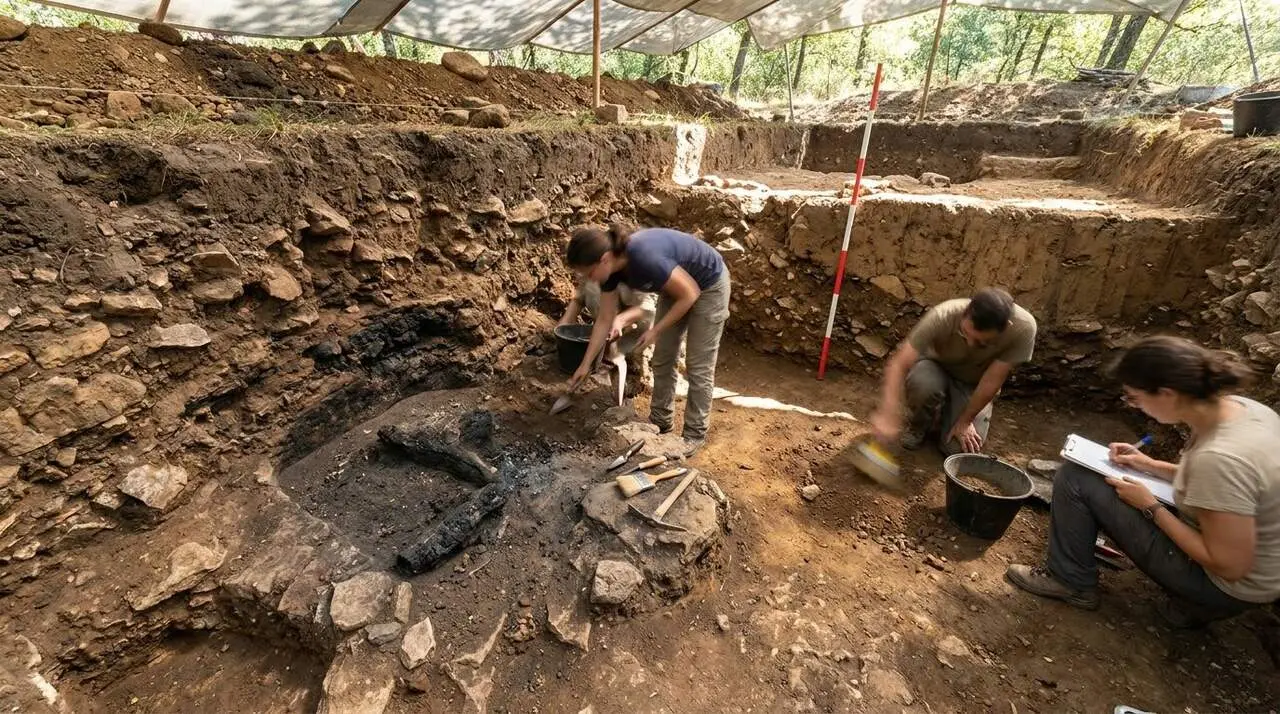
The excavations carried out between May 11 and June 5, 2026, focused on level B2, an archaeological layer that began to be investigated in 2019. Here, remains of hearths used about 15,000 years ago were documented, marking one of the most relevant results of the campaign.
Archaeologists, with tools and patience, have precisely identified these hearths, which reveal essential details about the daily life of human groups of that era.
Historical and geographical context of the site
Molí del Salt is located in Vimbodí i Poblet, within the Conca de Barberà, a key area for understanding human evolution in the Upper Paleolithic. This region, the Francolí basin, has been the scene of recurrent human occupations, and the discoveries shed light on how life was before domestication and agriculture.
The site has made it possible to identify layers showing continuous or recurrent occupations, indicating that the area was favorable for hunter-gatherers.
The hearth remains: what do they tell us about hunter-gatherers?
The role of hearths in daily life
Hearths are not only fires for warming or cooking; they are social centers. Archaeologists emphasize that these remains provide clear evidence of daily activities, from food preparation to social interaction among group members.
Imagine the smoke, the heat, and the conversation surrounding that fire 15,000 years ago. This find makes tangible a human experience that seemed distant and abstract.
Technical and archaeological details of the remains
The hearths are found in a well-defined archaeological level, with associated materials that confirm their antiquity and use. Their preservation has allowed the study of the composition of ashes and plant remains, revealing which fuels were used.
Moreover, this information helps establish patterns of occupation and mobility of the groups, indicating how they adapted to the environment and managed natural resources.
The archaeological campaign and the future of the site
Dates and responsible team
The intervention took place between May 11 and June 5, 2026, with a team of specialized archaeologists working to decipher the secrets hidden in level B2.
The excavations are part of an ongoing project that began in 2019, which hopes to continue providing relevant data about the Upper Paleolithic in the area.
Projections and importance for the region
The data obtained interest not only experts but also enrich the cultural heritage of the Conca de Barberà and Tarragona. This discovery may attract researchers and tourists interested in the most remote human history.
It is clear that Molí del Salt is much more than a site: it is a window to the past that still has much to tell.
| Aspect |
Details |
| Location |
Vimbodí i Poblet, Conca de Barberà |
| Period |
Upper Paleolithic, 15,000 years ago |
| Archaeological level |
B2, excavated since 2019 |
| Function of hearths |
Warming, cooking, social point |
| 2026 campaign duration |
May 11 to June 5 |
The find at Molí del Salt demonstrates that even 15,000 years ago, fire was already the center of human life, with uses that remain essential to us today. These remains are a direct testimony connecting us with those who trod the Conca de Barberà long before us.
Source of the article: Editorial | ACN