


Reading together, growing together
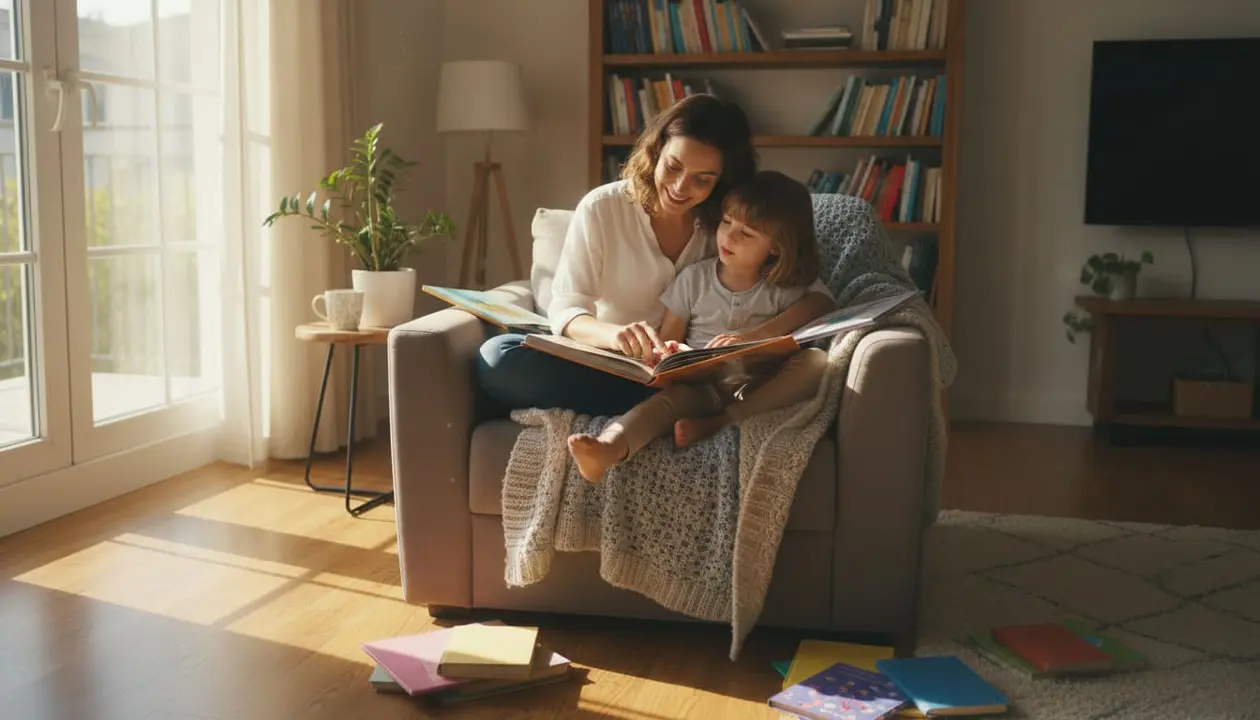
How to get children to read more? It’s not a matter of imposing, but of sharing a pleasure. Reading together is much more than a solitary act; it is a ritual that connects and creates complicity.
Creating spaces for shared reading transforms reading into an experience full of emotions and special moments that stimulate the love for books and deep conversation.
They always ask me how to get children to read more. As if reading were a medicine that must be taken obligatorily. But reading should not be imposed; it must be shared. Reading should start as a pleasure, a delight, an experience that makes us feel good.

When you look back, do you remember who read you a story before bed? It wasn’t just the story; it was the moment. It was the feeling of companionship, security, and love. It was that space just for us where all that mattered were the words and our connection.
Reading together is much more than turning pages. It’s creating a ritual, a space of connection. It’s discovering new worlds together, laughing at the same scenes, being afraid of the same characters. It’s sharing emotions.
And you don’t have to wait for children to know how to read on their own. In fact, continuing to read aloud to them when they’re older is an incredible gift. It allows access to stories more complex than they could read alone, it allows deeper conversations, it keeps that special moment alive.
We can also each read our own book but in the same space. Sitting on the couch, each immersed in our own story, but together. This also teaches that reading is a valuable activity, one worth dedicating time to.
And if you want practical advice: leave books within reach throughout the house. On the nightstand, on the couch, in the kitchen. Let them be part of the everyday landscape. Let them be as accessible as anything else.
The passion for reading is not taught through obligations. It spreads by example and grows with shared moments.
Until next month, and may you “ThinkDeeply” a lot.