5 must-see monuments to visit on foot in the city of Córdoba, a World Heritage site

Walking through Córdoba is like taking a direct journey to over 2,000 years of history and culture concentrated in a compact space. The Andalusian city surprises with a monumental ensemble that allows you to explore it entirely on foot, without rush or crowds of transportation.
Its narrow streets and monuments declared as Assets of Cultural Interest form a living mosaic that almost feels like an open-air museum. But what makes this city so special for lovers of cultural walks?
Córdoba, the Spanish city with four UNESCO recognitions
💶 Currency: Euro, approximate daily budget 70-90 €
✈️ How to get there: Seville or Malaga airport, train or bus to Córdoba
📅 Best time to visit: April-May and September-October to avoid crowds and enjoy good weather
For those looking for a cultural destination that can be explored without a car or tram, Córdoba offers an old town that is a treasure. Four UNESCO declarations endorse its richness: the Mezquita-Cathedral, the historic ensemble, the Patio Festival, and Medina Azahara. This places it among the few cities in the world with so many heritage awards.
Therefore, walking around the city is more than simple tourism: it is a stroll through layers of civilizations that have left their mark over centuries.
What makes Córdoba unique for UNESCO?
Córdoba is not just a city with monuments, but a set that combines Islamic, Roman, Jewish, and Christian art. The mosque, declared a World Heritage Site in 1984, is just the beginning; its extensive historic center received global recognition in 1994. The Patio Festival, with its flowered courtyards, is cataloged as Intangible Cultural Heritage, and Medina Azahara, the caliphal city, is an exceptional archaeological vestige.
Why is it important to know these recognitions?
Knowing this distinction helps understand the responsibility to conserve a heritage that speaks of coexistence and cultural diversity. In addition, it offers a very rich and varied visiting experience, where every corner has a historically and aesthetically recognized value internationally.
A walking tour among monuments declared Assets of Cultural Interest
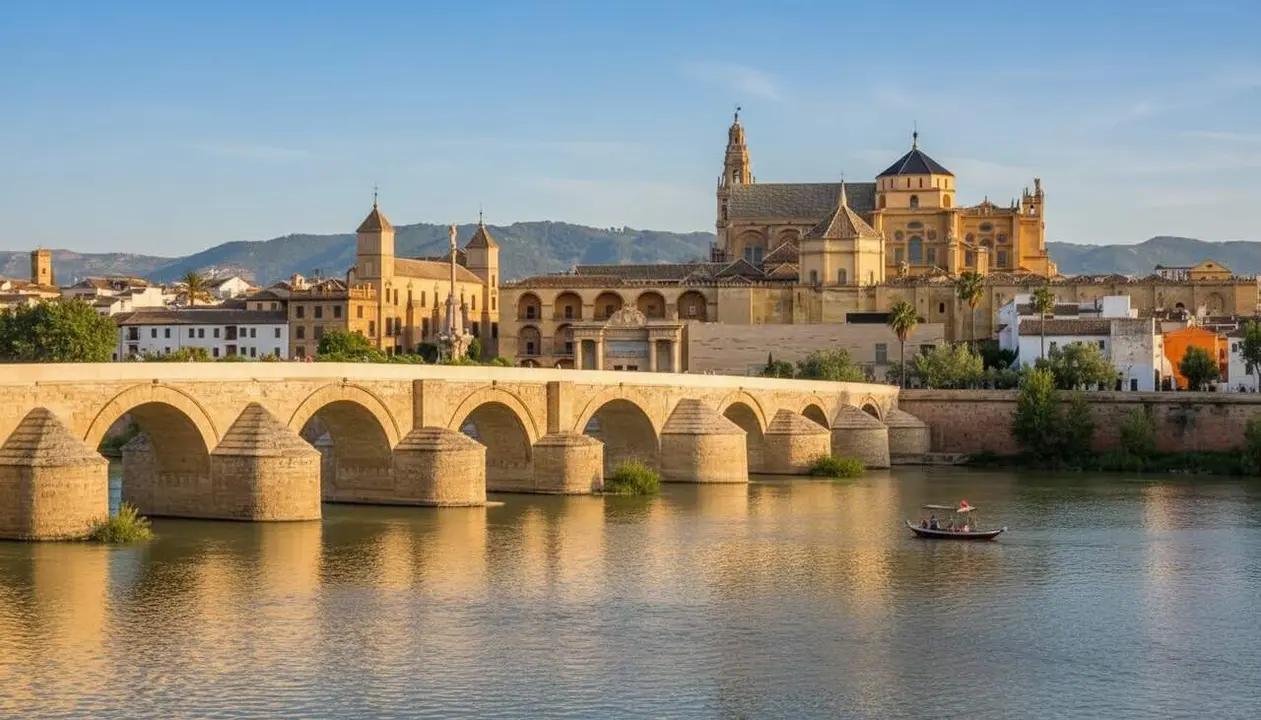
The key to enjoying Córdoba is to get lost in its blue and white streets, where in less than 10 minutes you can go from the mosque to a millenary Roman bridge or to the Calahorra tower. Everything is close, and every step is a leap back in time.
Visiting the Jewish Quarter is a must: a neighborhood that preserves the magic of narrow streets, courtyards, and squares where history remains palpable.
What are the BIC monuments you cannot miss?
- Mezquita-Cathedral: masterpiece of Islamic and Christian art, a worldwide icon.
- Puente Romano: over 2,000 years crossing the Guadalquivir.
- Torre de la Calahorra: defensive fortress declared Asset of Cultural Interest.
- Synagogue of Córdoba: one of the few medieval synagogues preserved in Spain.
- Alcázar of the Christian Monarchs: historic setting with gardens and towers.
How is heritage combined with the walking experience?
The BIC monuments are not cold visits but spaces to live the past. The streets and squares offer an atmosphere that invites you to stop, breathe, and listen to the echo of various cultures. This makes the route a constant play between art, history, and urban life.
Walking through Córdoba: a journey through over 2,000 years of history
The walk through Córdoba is a lesson in comfort for those who prefer not to depend on public transport. The distances between key heritage points do not exceed 15 minutes on foot.
But beyond the buildings, the city surprises with its details: hidden courtyards, traditional taverns, alleys full of flowers, and squares where time seems to stop.
What makes walking through Córdoba special?
The historical coexistence of Roman, Muslim, Jewish, and Christian cultures creates a unique urban landscape. Every corner is a fragment of a great story that can be explored on foot without hurry or crowds.
Why is it an ideal cultural getaway?
The city allows a calm pace but full of discoveries, ideal for those who want to feel part of history while enjoying authenticity and local life. It is a destination that, without rush, offers thousands of cultural treasures at every step.
The reality is that Córdoba is the paradigm of a city where walking is not only a means but the essence of the cultural experience. With its combination of BIC monuments and UNESCO recognitions, it is a living museum waiting to be discovered on foot.
Frequently Asked Questions
- What are the main monuments declared Assets of Cultural Interest in Córdoba?
- The Mezquita-Cathedral, the Puente Romano, the Torre de la Calahorra, the Synagogue of Córdoba, and the Alcázar of the Christian Monarchs are the most notable.
- How can Córdoba be comfortably explored?
- The best way is on foot, as its historic center is compact and the distances between points of interest are short.
- When is the best time to visit Córdoba?
- In April-May or September-October, to enjoy good weather and avoid tourist crowds.