Why do they recommend mixing banana peel with vinegar in the garden?

Have you ever noticed that your planter seems more alive when you tell it a homemade joke? Well, amidst strange recipes and tricks that seem like witchcraft, the combination of banana peel with vinegar is making its way into the most urban gardens.
But it’s not just the trend of the moment: this mixture releases essential minerals and helps balance the soil’s pH, making plants happier. However, it’s not as simple as pouring and waiting for miracles.
The banana peel and vinegar mixture: what is it and what is it for?
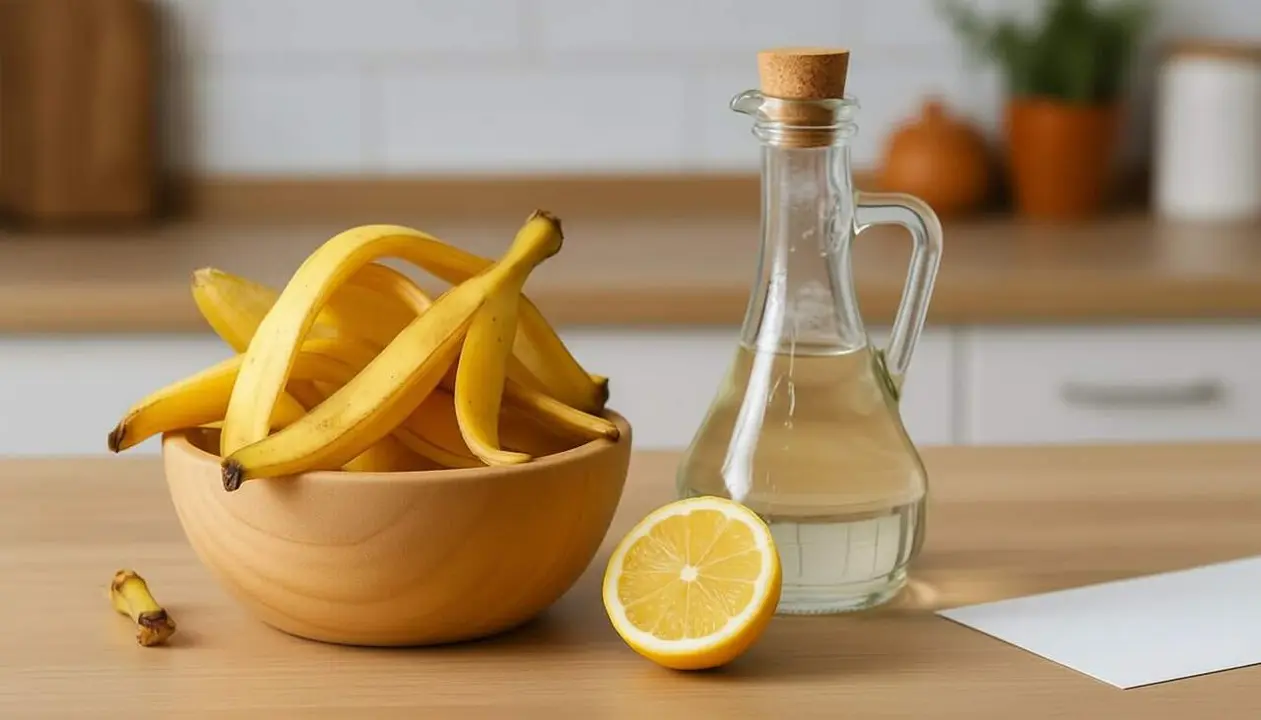
Making a homemade fertilizer with these two kitchen ingredients is an economical and ecological way to provide potassium, phosphorus, and magnesium to the soil. Banana peel is loaded with these minerals, while vinegar speeds up their decomposition and helps lower the soil’s pH.
This benefits plants that prefer acidic substrates, such as hydrangeas, azaleas, and some fruit trees. Additionally, vinegar can help repel pests and fungi without the need for harsh chemicals.
How does the mixture work?
- Vinegar breaks down the peel and releases nutrients more quickly.
- It lowers the soil pH, making it more acidic and favorable for certain plants.
- It acts as a natural pest repellent without harming pets or children.
Why not apply vinegar directly?
Applying pure vinegar on plants can be a bad idea: it is too harsh and can burn the leaves or damage the substrate. For this reason, the best option is to let the banana peel and vinegar mixture rest and then dilute it with water before using it.
This achieves a safe and effective liquid fertilizer for watering.
Step-by-step to prepare homemade banana peel and vinegar fertilizer
⏱️ Rest time: 48 hours
🔥 Applications: weekly watering
👨🍳 Difficulty: easy
| Step | Instruction |
|---|---|
| Step 1 | Collect the banana peels and place them in a clean, covered container. |
| Step 2 | Cover the peels with vinegar (white or apple cider), making sure they are completely submerged. |
| Step 3 | Let the mixture rest for at least 48 hours so the nutrients decompose. |
| Step 4 | Dilute the resulting liquid with the same amount of water before applying it to the plants. |
Practical tips for using the mixture
- Do not apply it directly on leaves to avoid burns.
- Perform a prior test on one plant to check the reaction.
- Use it on plants that tolerate acidic soil, such as hydrangeas, azaleas, or fruit trees.
- If you have compost, add the peels directly without vinegar to enrich the soil.
If you want to know what to mix to make the most of your kitchen waste, this is just one of the options you can explore.
Plants that appreciate the banana peel and vinegar combination
The mixture is especially recommended for:
- Hydrangeas, which thrive in acidic soils.
- Azaleas and orchids, which need nutrients and a low pH.
- Fruit plants like tomatoes and strawberries.
- Tropical plants that prefer a more acidic and rich substrate.
It is also ideal for small gardens and urban orchards, where a homemade and natural fertilizer makes a difference.
But remember: always dilute before applying and avoid direct contact with leaves to prevent damage.
If curiosity leads you to want to learn about other vinegar uses in gardening, you can discover vinegar uses that no one will tell you at the store.
The truth is this mixture holds more than one useful secret for those who love gardening and seek the most natural way to care for it.