Why mixing banana peel with vinegar is a gardening secret

Many gardening enthusiasts and experts agree that the mixture of banana peel with vinegar is a simple yet powerful method to nourish and protect plants. The key lies in the ability of these ingredients to provide essential minerals and adjust the soil's acidity.
If you want to know how to make this homemade fertilizer and get the most out of this formula, keep reading.
What is the purpose of the banana peel and vinegar mixture in the garden
Main benefits
This mixture provides a direct source of potassium, phosphorus, and magnesium, vital minerals for plants to develop strong roots, vibrant flowers, and healthy leaves. Additionally, vinegar speeds up the decomposition of the peel, releasing nutrients in less time. Another important effect is vinegar’s ability to lower the soil’s pH, which optimizes conditions for plants that prefer a slightly acidic environment.
Moreover, this combination can help naturally repel pests and fungi, avoiding the use of harsh chemicals, and keeping a healthier and safer garden.
Precautions and responsible use
It is vital not to apply vinegar directly on plants nor in high concentrations; it can damage the leaves and alter the soil too much. The best practice is to let the mixture rest and dilute it before watering.
This avoids any risk and ensures plants receive only the positive nutrients with a gentle impact.
How to prepare the homemade fertilizer with banana peel and vinegar
Ingredients and initial preparation
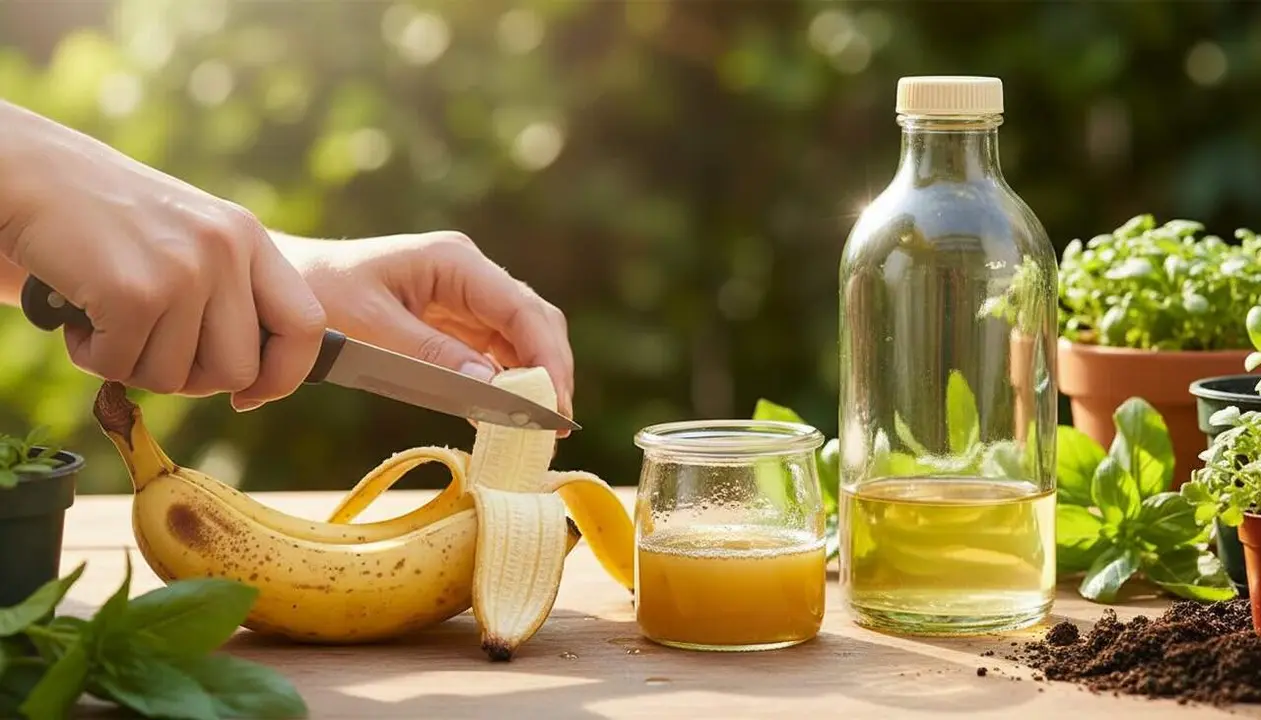
- 150 grams of clean, chopped banana peel
- 300 ml of white or apple cider vinegar
Step by step
- Place the banana peels in a clean container.
- Completely cover them with vinegar, ensuring the peels are submerged.
- Let the mixture rest for at least 48 hours at room temperature, avoiding direct light to not alter its quality.
- Before applying, dilute the mixture with an equal amount of water (1:1) to reduce acidity.
The result is a liquid with a slightly acidic but fresh aroma, which is applied directly to the soil to boost garden health.
Tips for using the mixture correctly
Safe application
- Avoid spraying directly on leaves to prevent burns caused by acidity.
- Test the mixture first on one plant to observe its reaction for a few days.
- Apply the fertilizer once a week, especially on plants that need extra support.
Plants that benefit the most
Hydrangeas, orchids, azaleas, strawberries, tomatoes, and other tropical plants thrive in slightly acidic soils and are the main beneficiaries of this treatment.
It is also ideal for small urban gardens, pots, and home gardens aiming for natural and sustainable maintenance.
If you have compost at home, you can add banana peels directly without vinegar, but the mixture with vinegar speeds up the decomposition process and makes nutrients more quickly accessible.
For more information about what to mix and the use of vinegar: you can consult specialized articles that expand on these concepts.
The reality is that this homemade formula represents a sustainable and effective alternative to maintaining a healthy and vibrant garden, with a soil texture that invites touch and a color that speaks of life.