New BOE regulation: goodbye to traditional cans of mussels and sardines
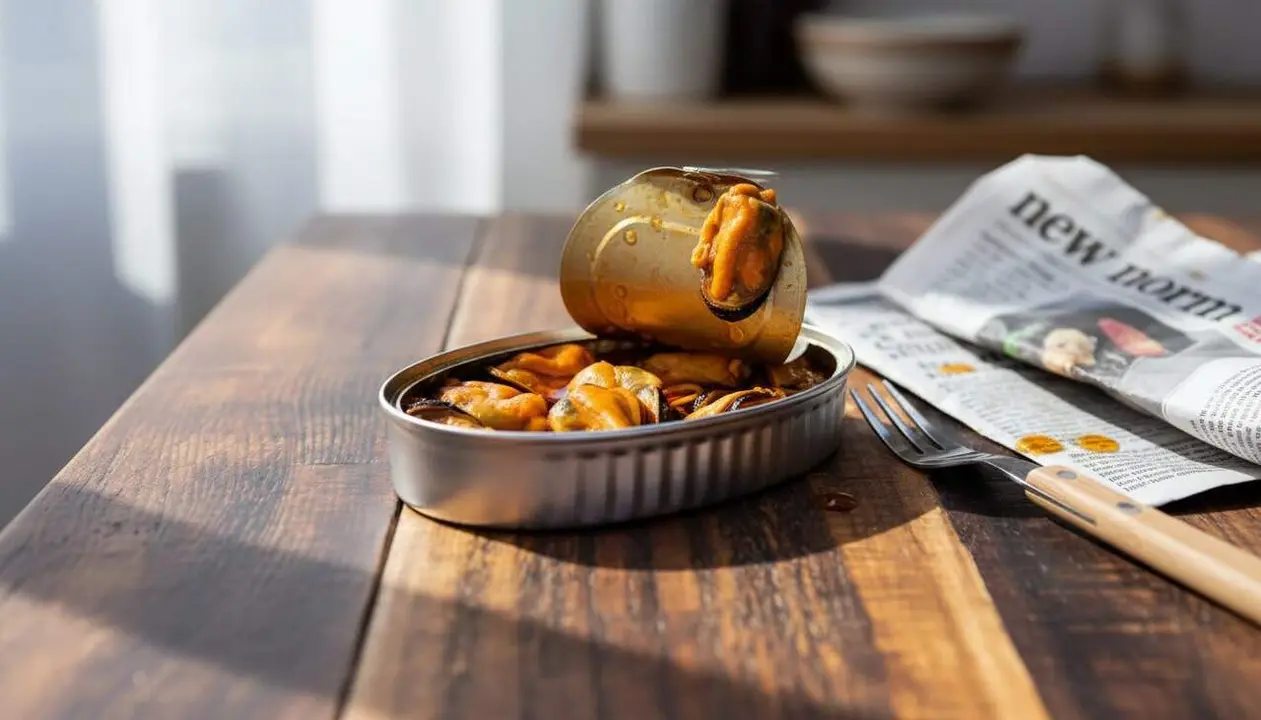

The BOE has set course for a change that affects the cans of mussels, cockles, and sardines we knew until now. This new regulation redraws the map of commercial and scientific denominations of canned products in Spain, with very specific dates and measures.
The regulation, which came into effect on January 2, 2026, requires labels to be adapted to officially and internationally recognized scientific names. This directly impacts what we find in stores, beyond the simple packaging.
The legal change shaking up fish and seafood preserves
Why does this matter to consumers? The new regulation precisely governs the terms used to describe preserved products like sardines, mussels, or cockles. This means the way they are presented and sold changes to guarantee clear and uniform information.
How are terms defined in the new decree?
Royal Decree 1082/2023 establishes definitions for terms like "whole," "peeled," "headless," or "ultra-frozen". It also specifies particular animal parts, such as "roe" or "cocochas," ensuring the consumer knows exactly what they are buying.
Which products are affected?
The decree covers all fishery and aquaculture preserves, including cans of mussels, cockles, sardines, belly meat, and tuna. For example, the denomination "sardinilla" may only be used for specimens of a specific size according to the fishing area.
The measures on sizes and origins of fish and seafood
What has changed in the size criteria? The regulation sets very specific criteria for different species. For example:
- Sardinilla: between 11 and 15 cm in the Mediterranean, between 11 and 13.7 cm in other fishing areas.
- Chicharros: between 15 and 20.2 cm in the Mediterranean, no more than 18.82 cm in other zones.
- Melva canutera: maximum 600 g.
- Whiting: not exceeding 1.5 kg.
- Glass eel: less than 12 cm.
This avoids common confusions and enhances transparency in the purchase, as consumers will be able to identify the quality and origin of the product more securely.
How did this regulation previously affect mussels and cockles?
Before, many of these products followed outdated 1985 rules, which were little updated. Now everything is integrated into a modern and unique system that will be reviewed annually in the BOE to prevent definitions and standards from becoming obsolete.
What controls will be applied and who will oversee them?
The autonomous communities will be responsible for controlling and monitoring compliance, with sanctions for manufacturers who fail to meet the requirements. This ensures that the regulation is respected throughout Spain.
How to interpret the label with the new regulation
What data will be essential for purchasing? Now it will be necessary to focus especially on four key aspects appearing on the label:
- Commercial denomination: official name under which the product is sold.
- Scientific name: guarantees precise identification of the species according to the FAO ASFIS base.
- Origin or fishing area: indicates the place of origin, key to assessing freshness and sustainability.
- Form of presentation: how the product is offered, for example, in loin, belly meat, or broken pieces.
This last point helps avoid common purchasing confusions and know exactly what is being consumed, reinforcing consumer protection.
The new regulation also strengthens transparency and the adequacy of the product to real expectations, a historic demand from consumers and organizations like the OCU.
From sardines and other preserves, this change expands information to promote more informed purchasing.
On the other hand, if any irregularity is detected, returns or claims must be facilitated, as the sector demands in similar cases with the possibility of returning cans.
The reality is that this step represents an essential update for a sector that constitutes a vital part of Spanish gastronomy and economy, and which also improves consumer safety and trust.
Ultimately, it is a regulation that puts an end to decades of unclear labels and some arbitrariness in denominations. Now, what we see on the can accurately reflects what is inside.
Frequently Asked Questions
- When did the new BOE regulation come into effect?
- On January 2, 2026, Royal Decree 1082/2023 regulating commercial denominations in fishery and seafood preserves began to be enforced.
- How can a sardine be identified according to the new rule?
- The small sardine or "sardinilla" must measure between 11 and 15 cm if from the Mediterranean, and between 11 and 13.7 cm if from other areas.
- Who controls compliance with this regulation?
- The autonomous communities are responsible for monitoring and sanctioning manufacturers who do not comply with the new regulation.