
The vast majority of cucumbers come from Morocco: purchases grow by 200%
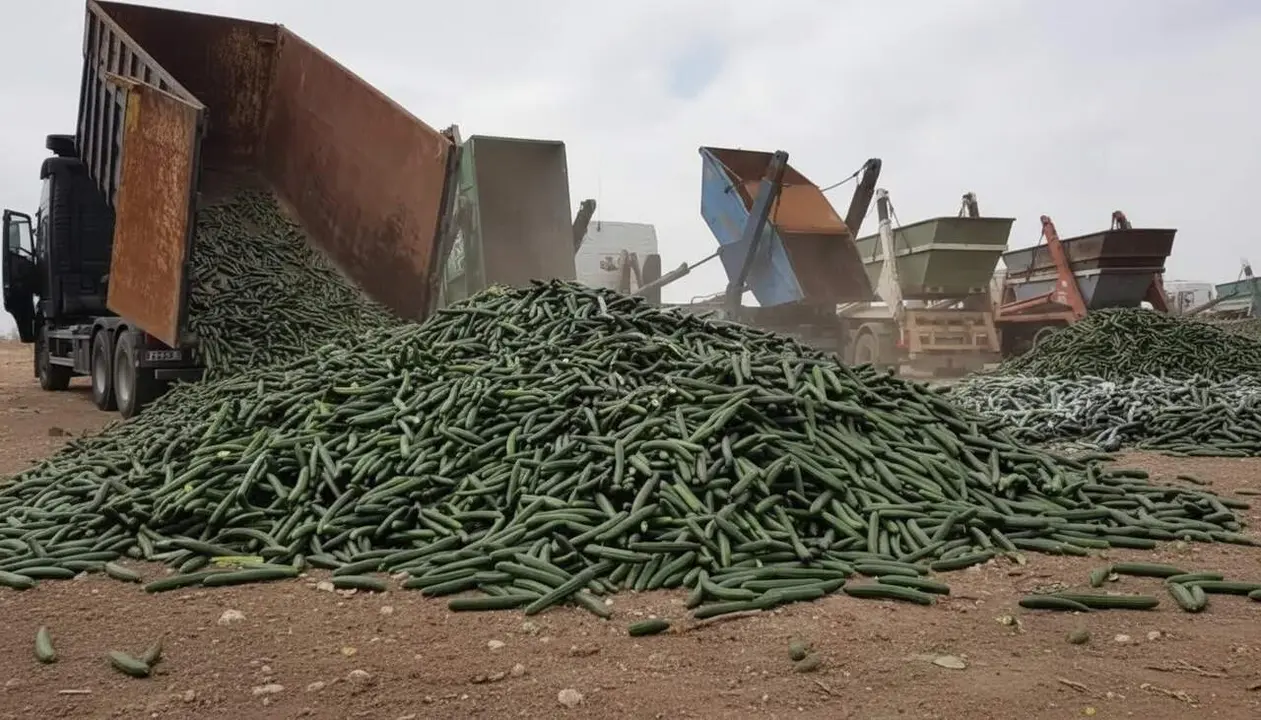

Morocco’s cucumber as a supplier of vegetables to Spain and the European Union has been growing to almost unbelievable levels. It is not just their climate, but a combination of trade agreements and more flexible labor regulations that help boost production and exports.
If you think the cucumber you buy is always the same, maybe you have been sleeping at the wheel. Official data from the Ministry of Economy make it clear that since 2016, Spain’s imports of Moroccan cucumbers have risen by 215.6%, from just over 578,000 tons to nearly 18,244 tons in 2025.
The boom of the Moroccan cucumber in the Spanish market
💶 Imports 2025: 30.9 million euros
⏱️ Growth 2016-2025: +248% tons imported
🍽️ Main destination: Almeria
Quantities and trends
71.71% of cucumbers imported into Spain come from Morocco — a percentage that crushes German competition (11.08%) and Portuguese (9.11%). Portugal, by the way, has experienced a significant jump, going from 175,401 tons and 114,113 euros in 2016 to more than 2,318 tons and 2.487 million euros in 2025.
Almeria, with the largest state cultivation area, is the main recipient of imported cucumbers, holding 50.52% of the total. This reality fuels the complaints of Spanish farmers, who see the market collapse with foreign products that cause local prices to drop.
Prices that don’t add up
Local farmers cling to the COAG IPOD index, which shows that in August this year, farmers received 0.68 euros per kilo of cucumber. In contrast, the average price of imported Moroccan cucumbers was 1.16 euros, and even higher for those from Germany, at 1.52 euros per kilo.
This difference becomes a sword of Damocles for national producers, who see prices at origin plummet before their product enters the market, when controls are still less effective.
How does this affect the Spanish agricultural sector?
Economic and social impact
In 2025, Spanish operators spent 30.9 million euros on imported cucumbers, an increase of 340.17% compared to 2016. This translates into a 248% rise in tons imported, putting at risk the viability of many farmers working under strict European conditions.
Farmers denounce that this phenomenon is a veiled way of weakening national production and distorting the market in favor of producers who do not compete under the same conditions.
Sector opinions
Source from Almeria farmers points out that the Spanish industry is overwhelmed by these massive purchases, making the market a rollercoaster for national producers. For their part, operators defend the need to satisfy consumer demand with affordable products.
If you want to follow the battle between local producers and imports, I recommend not missing the new sector movements, which you can follow at Gran Hotel and the latest news at Sports - Page.
Perspectives and future challenges
Legislation and the market
The flexibility of Moroccan regulations on phytosanitary and labor conditions has been key in this rise. European and Spanish adaptation to these dynamics will be decisive to balance the scales.
Controls over product entry and support for local farmers are hot topics in sector and administration meetings.
Alternatives and strategies
- Promotion of local consumption: Campaigns to revalue Spanish cucumber.
- Improving competitiveness: Innovation in crops and processes to reduce costs.
- Trade regulation: Adjusting rules to avoid market distortions.
Spanish farmers have been denouncing this situation for years, but the market seems unstoppable. The question that remains is: until when?
The reality is that Moroccan cucumber has conquered the Spanish market with figures that make one think, putting national production in check with data that cannot be ignored.