Karlos Arguiñano and the secret of stewed artichokes with lemon
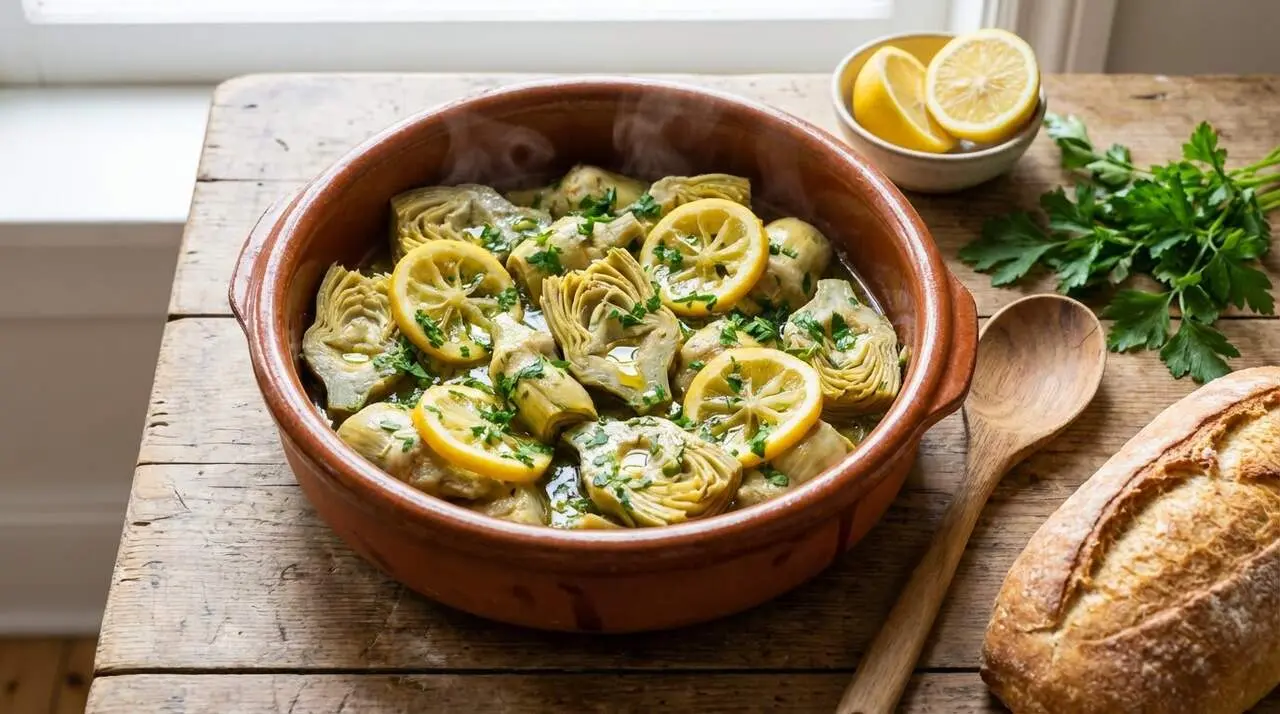

Artichokes are a classic in Mediterranean cuisine, but they are not always done well. Karlos Arguiñano has his own way of making them that does not go unnoticed. It’s not just cutting and throwing them into the pan; it’s a choreography where the lemon plays a leading role.
There’s little as frustrating as watching artichokes turn black and sad before eating them. Well, the secret is to cut them quickly and put them in water with the juice of a whole lemon. This prevents oxidation and, as if that weren’t enough, it makes the final flavor much fresher and more elegant.
Karlos Arguiñano and stewed artichokes: basic steps
⏱️ Cooking time: 30-35 minutes
🔥 Calories: approximately 350 per serving
👨🍳 Difficulty: easy
Preparation of artichokes with lemon and parsley
First, you need to clean the artichokes, cut off the tip, and quarter them. The movement must be quick because they must immediately be placed in a bowl with water and the juice of one lemon. The peel of the lemon must float, a detail that, according to Arguiñano himself, adds elegance.
Some prefer to put parsley in the water to prevent oxidation, but our chef insists that lemon is key, although the parsley will eventually make its appearance on the final plate.
The sauté and cooking over medium heat
Meanwhile, cut the spring garlic in half lengthwise without completely separating it, and break apart the tender onions by removing the first tougher layer. All this is placed in the pot with a generous drizzle of olive oil, nothing careful here, as the oil is part of the dish.
Then add a glass of water and the juice of the other lemon. Cover the pot and let it cook over medium heat for 30 to 35 minutes. Stir occasionally to prevent burning — don’t let it burn, that’s the key — according to Arguiñano’s instructions.
The final touch: poached egg and ham that “sweats”
Poaching the egg to the perfect point
Once the stew is ready, it’s time to add the egg. Arguiñano recommends poaching one egg per person for 4 minutes, letting the white set but the yolk remain slightly liquid. If you prefer fried eggs, that’s also a valid option, but it’s not the same.
The contrast between the soft texture of the egg, the acidic touch of the lemon, and the richness of the oil makes this dish a reinvented classic that doesn’t leave anyone indifferent.
The ham, the ingredient that works the magic
Finally, Arguiñano places a slice of ham over the hot stew so it “sweats” and releases all its intensity. The ham adds saltiness and a touch of shine that brings this seemingly simple dish to the altars of homemade cooking with glamour.
This is a recipe that, if you want to see how the Basque chef transforms a classic, you cannot miss. Even more so if you’ve ever wondered what the best chef does with such simple ingredients as an artichoke and an egg.
Tips and variations to not fail
Controlling the cooking point without slipping
Time and heat are the most delicate. The oil should be like a bath where the artichokes relax and confit. If the pot starts to stick, according to Arguiñano, you should stir and lower the heat a little. There is no alarm if you have ears in the kitchen: the sound is the best indicator.
Parsley and lemon: friends or foes?
While lemon prevents oxidation and adds freshness, parsley serves to give color and fresh aroma to the final dish. They are not interchangeable but complementary, although some lean more toward one or the other.
In fact, some chefs from the Valencian Community insist that the lemon point is what makes these stewed artichokes a hallmark of huerta cuisine.
In the end, what matters is that with such simple ingredients you can make a dish that never goes out of style, thanks to a master like Karlos Arguiñano.
The reality is that this recipe is a perfect example of how an artichoke can become a memorable dish with just a couple of well-applied tricks.