5 secrets of Russian cooks for a Russian salad with evenly cut pickles
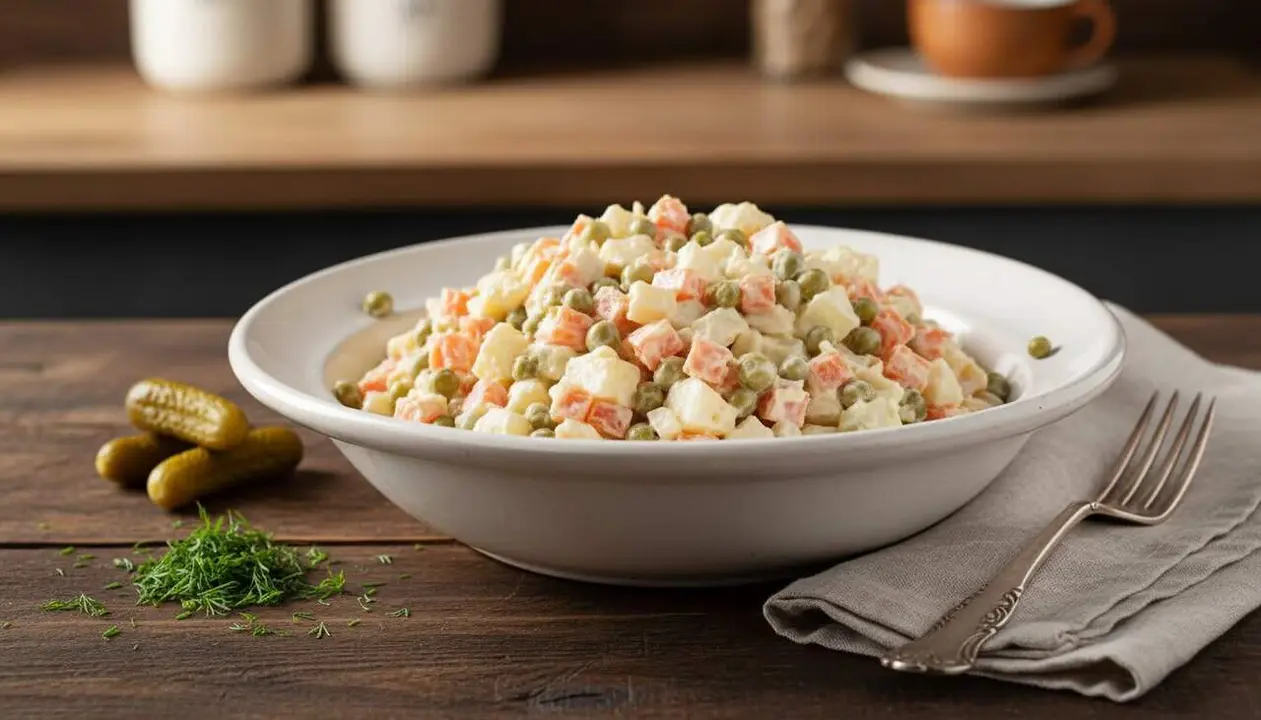

Russian chefs insist that the key to a good Russian salad is to cut all the ingredients to the same size and add pickles to achieve the authentic flavor. This technique, often overlooked, makes the difference between an ordinary dish and a traditional delicacy.
It may seem like a minor detail, but the homogeneous texture and the just-right acidity of the pickles are the secrets that have kept the essence of this culinary icon alive since 1860.
The original ingredients of Lucien Olivier’s recipe
Why is this of interest to the reader? Because understanding the origin reveals why certain ingredients, like tuna, have no place in the traditional Russian version. The original recipe for Russian salad, or Olivier salad, created by Belgian chef Lucien Olivier in 1860 at the Ermitage restaurant in Moscow, was a luxury dish very different from what we know today.
Which ingredients were part of the initial recipe?
According to Vladislav Piskunov, culinary writer and chef at Moscow’s Matreshka restaurant, the original appetizer included capercaillie, crab necks, pickles, and truffles, accompanied by a secret sauce created by Olivier himself. The Soviet version simplified this formula, replacing exclusive products with more affordable ingredients such as potato, carrot, peas, eggs, and meats like chicken, beef, or sausages.
Why is tuna not used in Russia?
In Spain, tuna is a classic in the salad, but in Russia it has never been part of the recipe. Russian chefs prefer meats like quail, chicken, or even shrimp and crab, staying true to the tradition that values richness and texture over the addition of canned fish.
Pickles: the indispensable acidic touch
For lovers of the salad, understanding the role of pickles is essential because they provide the freshness and acidity that balance the creaminess of the mayonnaise, an element that often goes unnoticed.
Why are pickles so important?
Russian chefs agree that pickles provide an unmistakable flavor and are the modern substitute for the olives and capers originally in the recipe. Konstantin Ivlev, a renowned chef, highlights that neither fresh cucumbers nor pickles can be missing to give that essential hint of acidity in the mix.
Are there alternatives to pickles?
Although some add other pickled vegetables, legumes, or even apple to give crunch and flavor, the Russian consensus is that no substitute achieves the authenticity that pickles bring. Their balance of sweetness and acidity is what makes the salad unique.
The cutting technique and homogeneous texture
The importance of this aspect lies in how it affects the texture and sensation on the palate, elevating the recipe beyond a simple mixed dish. Poor cutting can ruin the texture and gastronomic experience.
How to cut the ingredients properly?
Russian chefs recommend cutting all the ingredients exactly the same size, taking the diameter of the peas as a measure, neither larger nor smaller. This ensures that each bite is balanced and homogeneous, with no ingredient dominating by size or texture.
What tool is best for cutting?
A very sharp knife is key for achieving clean cuts that avoid smashing or crushing the ingredients. This keeps the integrity of each component, making the texture crunchy and pleasant.
Mayonnaise: a companion, not a protagonist
Russian chefs emphasize the need to use mayonnaise sparingly so that the original flavors of the other ingredients are not lost.
How should mayonnaise be used?
Moderate use of mayonnaise allows each ingredient to maintain its identity and flavor, creating a harmonious blend. Konstantin Ivlev personalizes his with a spicy touch, but always respecting the rule of not overwhelming the dish.
Why shouldn’t mayonnaise be the dominant flavor?
If mayonnaise predominates, the freshness and complexity of the dish are lost. Letting the salad rest helps the mayonnaise gently impregnate each part, respecting the original flavors and textures.
How to adjust the flavor according to personal taste
Trusting the palate is fundamental to finishing a good Russian salad. Chefs recommend tasting it before serving to correct balances and textures.
What adjustments can be made?
If acidity is lacking, add more pickles; to intensify flavor, a little salt; and to increase crunch, more vegetables or pickles. This last detail is key to adapting the recipe to individual tastes without losing its essence.
What importance does resting have?
Allowing the dish to rest lets the flavors integrate better. The mayonnaise settles and impregnates each ingredient, achieving a more flavorful and balanced salad that improves over days.
The recipe is not just a collection of ingredients but a play of textures and flavors that demands respect for technique and tradition. That is why Russian chefs insist on details like uniform cutting and the use of pickles to preserve the identity of this iconic dish, while other chefs from different culinary traditions also seek perfection in classic dishes through technical details.
If we want a Russian salad that does not stray from authenticity, attention must be paid to ingredient selection, cutting, and mayonnaise dosage. The reality is that these small great secrets are what transform an everyday dish into a classic that endures and delights palate after palate.
Frequently Asked Questions
- Which ingredients are not part of the original Russian salad recipe?
- Tuna and olives are not part of the original Russian recipe, which favors meats such as chicken, beef, or quail and pickles like gherkins.
- Why is it important to cut the ingredients the same size?
- Because this achieves a homogeneous and balanced texture in every bite, preventing some ingredients from dominating in size.
- How should mayonnaise be used in Russian salad?
- In moderation, to accompany and not cover the other flavors. Mayonnaise should respect the identity of the ingredients.