The new vision that reveals the Roman heritage of Tarraco and its surroundings
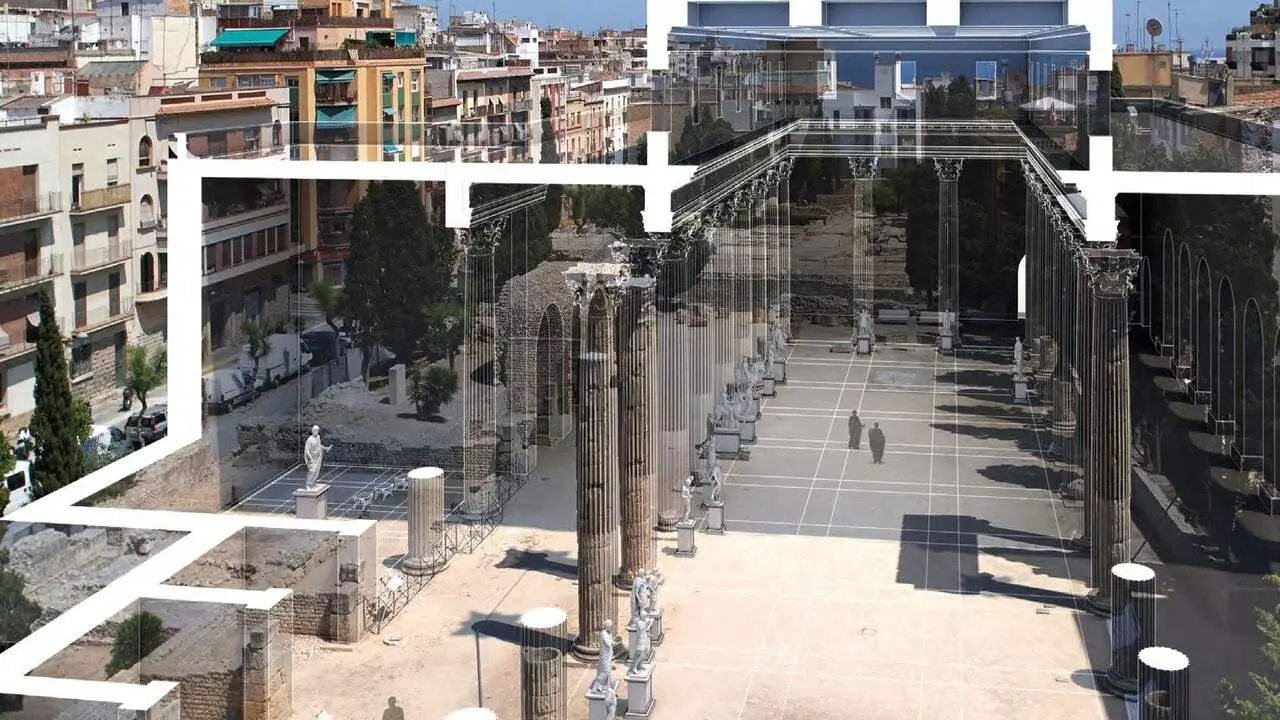

Tàrraco, World Heritage is not just a nice title: it is proof that our Roman legacy still hides secrets that we are only now beginning to understand. This new vision changes the way we see the monuments we have close by, opening the door to a more vivid and understandable experience.
The Rovira i Virgili University (URV) has published the second edition of a book that overturns the traditional perspective, extending its scope beyond the city of Tarragona and broadening the focus to Constantí, Altafulla, and Roda de Berà, spaces that form a heritage that is, in fact, an inseparable whole.
A Renewed Look at the Roman Monuments of the Camp de Tarragona
From Rigor to Accessibility
The book Tàrraco, World Heritage. A New Vision is the work of a research team led by Professor Joaquín Ruiz de Arbulo, who has accumulated years of study on Roman architecture and urbanism. But it is not just for experts; it manages to make the complexity understandable with clear and engaging language.
Thus, this volume makes decades of research available to the general public, balancing scientific rigor and outreach that is not always easy to find.
Reconstructing to Understand
One of the keys that makes this new edition unique are the digital reconstructions based on three-dimensional photogrammetric restitutions. These images help to see the monuments beyond the plans and sections that until now were little understood by non-specialists.
Low-altitude aerial photographs provide a new visual dimension that allows grasping the grandeur of the heritage and its integration into the territory.
A Shared Heritage Beyond the City of Tarragona
Integrated Territory
It is easy to fall into the temptation to limit Tàrraco to the city of Tarragona, but this work breaks that reductionist view. Spaces such as Constantí, Altafulla, and Roda de Berà are part of a coherent and essential whole to understand Roman Tàrraco.
This approach broadens the perspective and reinforces the idea that heritage is a collective good that transcends municipal borders and must be explained in an integrated way.
Identity and Cultural Projection
The authors’ work not only serves to better interpret the monuments but also to strengthen the cultural identity of the Camp de Tarragona. Thus, it contributes to placing the region on the tourist and cultural map with a discourse that combines rigor and visual appeal.
The new vision helps convey the importance of this heritage to inhabitants and visitors alike, beyond the obviousness of a World Heritage designation.
The Team and the URV Publishing Project
The Team Behind the Book
Professor Joaquín Ruiz de Arbulo coordinates a team also composed of José Alejandro Beltrán-Caballero, Ferran Gris, Ricardo Mar, and David Vivó, with collaboration from José Javier Guidi and Àngel Rifà.
Together, they have managed to combine rigorous research with an attractive and didactic presentation, making the content accessible without losing seriousness.
Dissemination and Access
The book was presented through the Compaginades podcast, promoted by Publicacions URV, where Ruiz de Arbulo and Jaume Llambrich explain the new vision of Tàrraco in an outreach tone.
Anyone wishing to obtain a copy can purchase it through the Publicacions URV catalog, which offers this unique work combining photography, digital reconstruction, and understandable text.
Ultimately, this project reveals how university research can change the way we look at the heritage closest to us, making it more alive and comprehensible.
If until now Roman Tàrraco seemed like something of plans and ruins, we can now see it with entirely new eyes. And that is no small thing.
Source of the article: Rovira i Virgili University