Manolo Ripollès exhibits in Amposta the footprint of wars and the environmental crisis in Trees and Clay
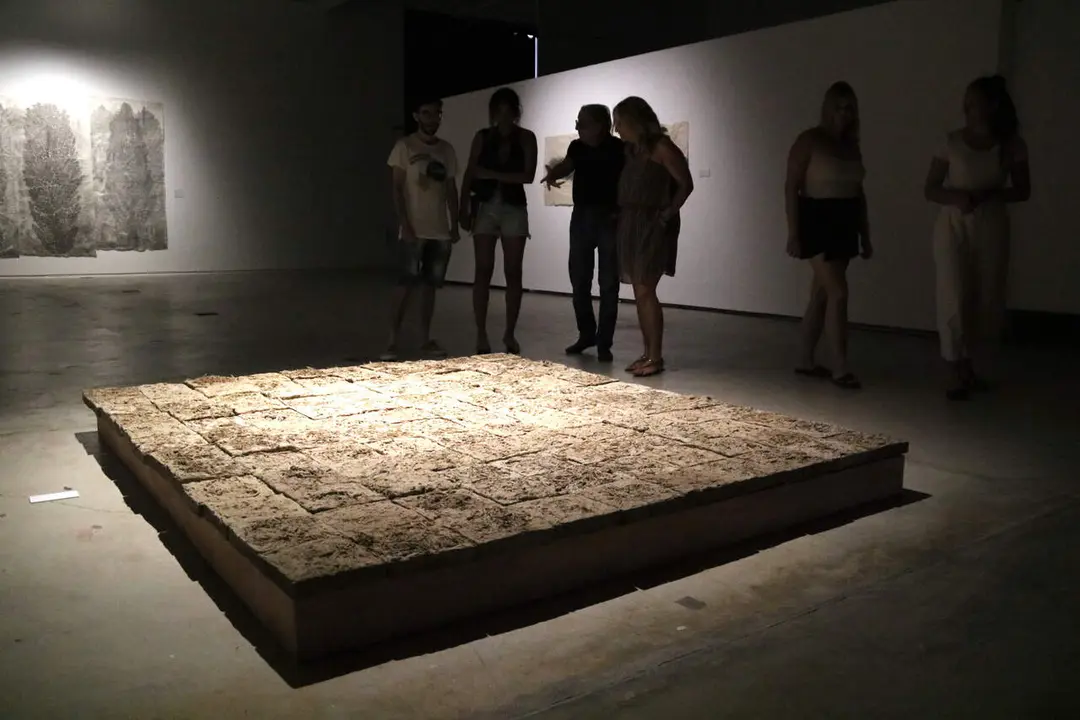

Manolo Ripollès uses art to show how wars and the environmental crisis leave visible scars on nature. His new exhibition 'Trees', at Lo Pati in Amposta, transforms paper and natural materials into a visual cry that connects the local with the global.
If you look closely at the trees Ripollès painted, you will see much more than bark: there are stories of pandemics, conflicts, and the impact of the surrounding climate crisis. This artistic experience is not only aesthetic, but also a living testimony of turbulent times.
The 'Trees' exhibition and its critique of the territory
How does Ripollès reflect the environmental crisis through art?
The artist from Amposta transforms sheets of handmade paper manipulated with graphite powder to mimic the bark of poplars, emblematic trees of the Terres de l’Ebre. This technique creates textures that evoke the fragility and resilience of nature in the face of human and environmental catastrophes. Additionally, a large installation of clay and straw postcards warns about the possible disappearance of the natural elements surrounding us.
Why is this proposal relevant for the residents of Amposta?
Because Ripollès focuses on the territorial tensions that have affected the Terres de l’Ebre, such as the retreat of the Delta beaches or the sea advancing into the cultivated fields. This makes the exhibition not only an artistic display but also a sensitive document that connects what is happening locally with global phenomena like the pandemic or wars.
Wars and the pandemic as imprints on nature
What relationship does Ripollès establish between human conflicts and the landscape?
Ripollès explains that the landscape reflects the violence and changes caused by wars, the pandemic, and geopolitics. These catastrophes leave a visible mark on nature, as if it were an archive of the tensions we live through. The artist criticizes how powerful leaders appropriate not only people but also the territory and its vegetation.
How is this critique expressed in the exhibited works?
Through a visual narrative that begins with painting the trees and evolves toward a more explicit denunciation. Ripollès uses the symbolism of poplars and other natural elements to warn that, like many other things, this vegetation could disappear if current dynamics are not changed.
The value of local contemporary art in Amposta
Why does Amposta support artists like Ripollès?
Lo Pati establishes itself as an art center that connects local perspectives with global debates. Supporting exhibitions like Ripollès’s reaffirms the city’s commitment to quality contemporary art that originates from the territory itself, bringing relevant artistic and social values.
What impact can this exhibition have on the public?
The exhibition invites visitors to reflect on the interdependence between nature and human events that we often overlook. Thus, it creates a space where artistic sensitivity acts as a vehicle to raise awareness and provoke debate about the fragility of our environment and the need to preserve it.
The exhibition 'Trees' by Manolo Ripollès can be visited at Lo Pati in Amposta until August 28, a space where local art becomes a visual cry against destruction and oblivion. This show not only portrays the footprint of wars and the environmental crisis, but also makes visible the urgency to protect our landscape and, with it, our history and future. Ripollès transforms nature into a warning and reminder.
Frequently Asked Questions
- What is Manolo Ripollès’s 'Trees' exhibition?
- 'Trees' is an artistic installation at Lo Pati in Amposta that shows the impact of wars and the environmental crisis on nature through paintings and installations of paper, clay, and straw.
- What themes does the artist address in this show?
- Ripollès addresses the visible imprint of pandemics, armed conflicts, and climate changes on the natural landscape, especially on the trees of the Terres de l’Ebre.
- Until when can the exhibition be visited?
- The exhibition can be seen at Lo Pati in Amposta until August 28, 2026.
Source of the article: Catalan News Agency