Why does the quality of sardine and seafood cans change
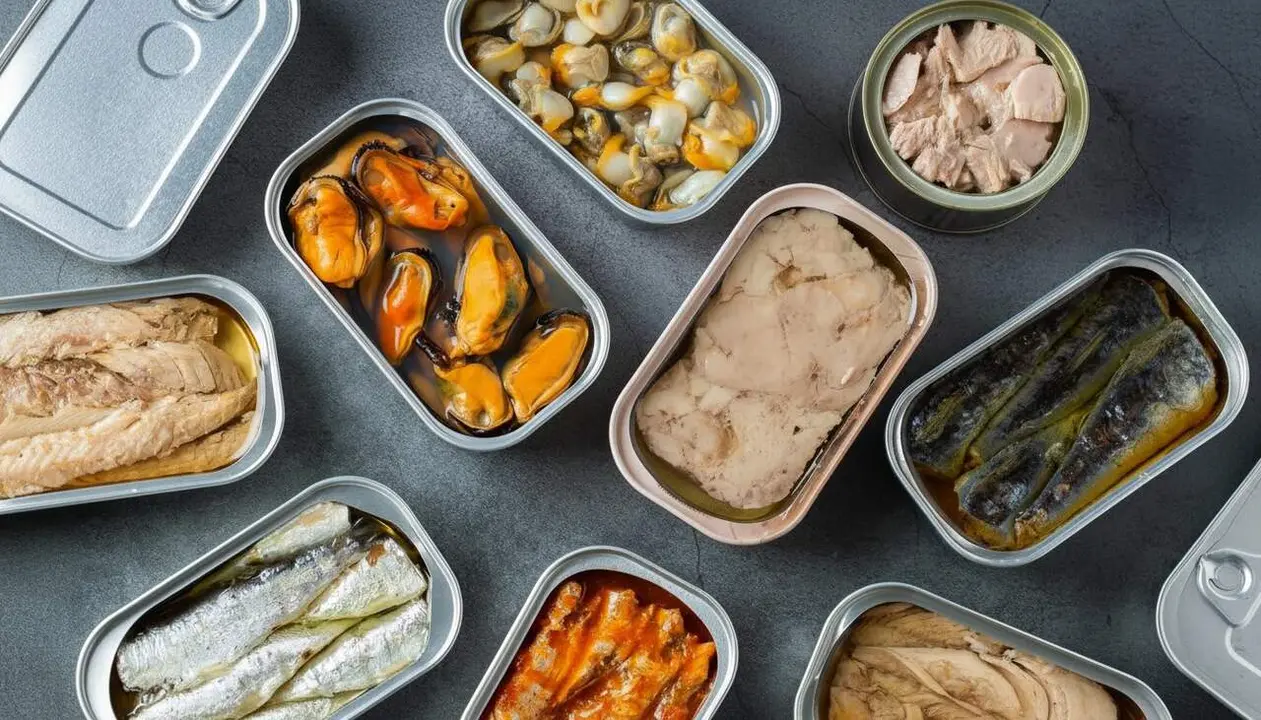

Opening a can of sardines to solve a quick dinner is such a common gesture as it is unknown in many details. But have you ever stopped to read exactly what the label says on this everyday product? It is not always easy to know what hides behind terms like "sardinilla" or "mussel in escabeche."
From January 1, 2026, a new regulation has come into force to precisely regulate the quality and denomination of canned fish and seafood products. This will directly affect the cans of sardines, mussels, clams, and cockles that we buy in supermarkets.
The new regulation that changes the rules of the game
The Royal Decree 1082/2025, published on December 6, 2025, and effective since the beginning of the year, establishes strict criteria on how these marine products can be named and labeled. Thus, terms that were previously confusing or open to interpretation now have very clear legal definitions.
What does each word mean?
Until now, labels like "eviscerated," "ultra-frozen," "pasteurized," or "in escabeche" could vary depending on the manufacturer. The new regulation sets exact and unchangeable definitions that must be respected. The same goes for parts of the fish: "belly," "loin," "fillet," or "rings" cease to be open concepts and become categories with concrete requirements.
The scientific name that does not deceive
Moreover, the scientific name of each species must always match the ASFIS database of the FAO. This closes the door to confusing labels such as cans that advertise "zamburiñas" but contain highly different species.
Key changes in sardines, mussels, clams, and cockles
Sardinillas with exact size
Until now, a "sardinilla" was simply a small sardine. Finally, the regulation precisely establishes the size and weight that sardinillas of the species Sardina pilchardus must have. Those from the Mediterranean must measure between 11 and 15 cm, while those from the Atlantic are limited between 11 and 13.7 cm, with weights between 10.7 and 25 grams depending on origin.
Update of rules for mussels, clams, and cockles
The rules governing these preserves had been frozen since 1985. The new regulation repeals those old orders and creates a modern and flexible system managed by the General Secretariat of Fisheries, with annual reviews to adapt to new market realities.
How they will be controlled and what we will gain
Annual reviews and flexibility
The official lists of denominations will be reviewed every year, and any operator or community can request changes. If the administration does not respond within six months, the modification is considered approved by administrative silence.
Sanctions and responsibilities
The decree does not create its own sanctioning regime, but refers to other existing laws such as the Maritime Fisheries Law or the Food Chain Law, and communities maintain their powers to sanction non-compliance. Thus, responsibility falls on manufacturers to ensure everything is faithful to the reality of what is labeled.
In practice, this means that consumers will be able to compare with more guarantees and fewer tricks the cans of sardines, mussels, clams, and cockles we consume. That can that looked the same as the one on the shelf next to it will now have much clearer and more reliable information.
By the way, if you have cans with old labels, companies have one year to withdraw them from the market, except for fresh products where the new regulation is already immediate.
Finally, you can find more interesting information about preserves and regulations, such as the request to return cans to analyze mercury or other novelties in the sector.
The reality is that this regulatory change marks a before and after in the food quality of such everyday products as cans of sardines, mussels, clams, and cockles, a step that will benefit everyone but especially the final consumer.