What to cook first: garlic or onion? The order that changes the dish

Everyone has sautéed garlic and onion at some point, but few have thought about the order. Interestingly, this small detail can be the difference between a disaster or a masterpiece on the palate. A well-made sauté is the base of thousands of recipes, from stews to rice dishes, and the secret lies in the balance of flavors we extract from these two ingredients that seem simple but are quite tricky.
True cooks know that garlic burns with insulting ease. On the other hand, onion needs time to caramelize and add sweetness. That’s why it’s not the same to add the garlic first as it is to leave it for last. The difference is a nuance that can change the entire dish.
Why the sauté changes depending on the order
⏱️ Cooking time: 15-20 minutes
🔥 Aroma: Caramelized sweetness or burnt touch
👨🍳 Difficulty: Easy but requires attention
Garlic: an ingredient to control
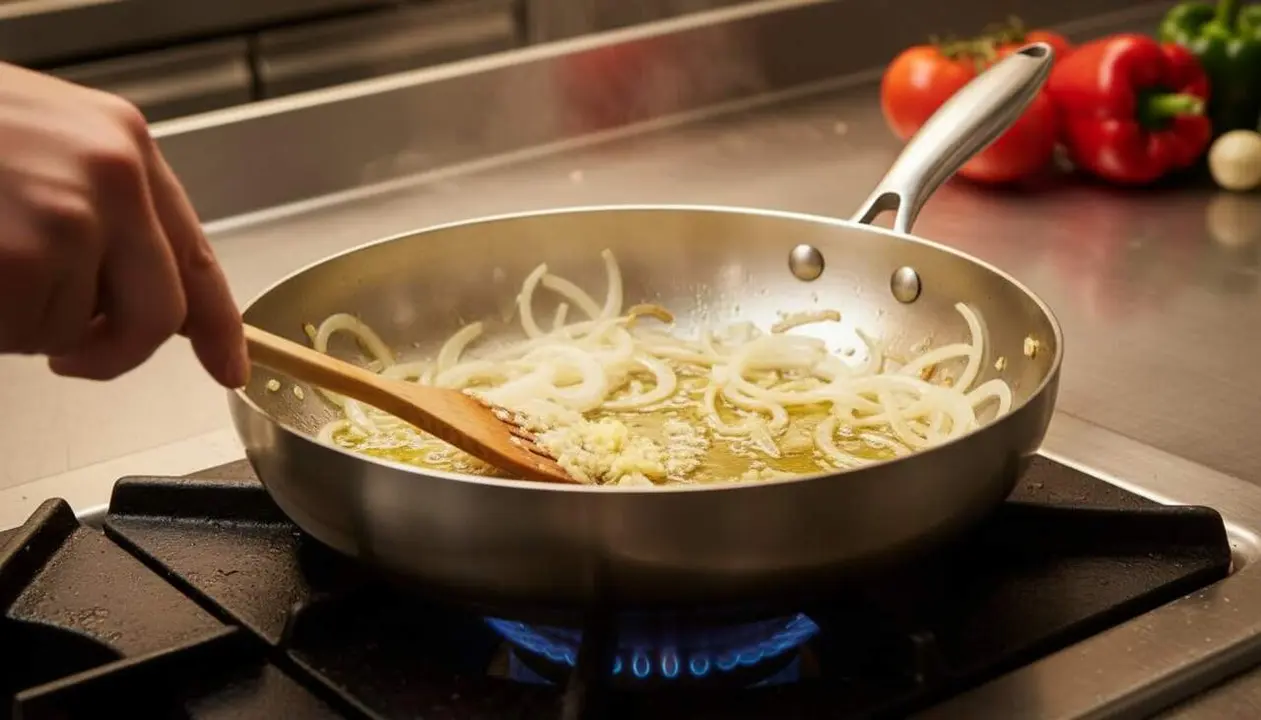
Garlic will burn if you don’t give it the attention it deserves. It’s best to start with cold oil in the pan and add the knife-cut garlic, not too chopped or crushed, to prevent it from sticking and turning bitter quickly. Garlic should be gently browned, as this is when it releases its most intense and pleasant aromas without going too far.
Source: Source: Cooking, Chef Joan Font insists that controlling the heat and the order are fundamental to avoid garlic becoming a nuisance in a dish.
Onion: patience and character
Onion needs more time to lose its hardness and transform into a sweet and mellow base. Cooking onion first over medium-low heat allows it to caramelize slowly and provide a warm background to stews or rice dishes. If you add garlic too early, it will burn and end up bittering the entire sauté.
But if you want the garlic to leave its mark, the solution is to brown it alone first, as is done in Indian cuisine, where garlic and spices are lightly toasted before adding the rest of the ingredients.
How to adjust the order in the recipe
Want garlic to stand out? Brown it first
If the dish calls for an intense garlic flavor, start frying the garlic over medium-low heat with cold oil. Watch the pan closely because garlic can burn in seconds. Once browned, add the onion and let it caramelize. This gives a special touch with toasted nuances not achieved when cooking them together.
Prefer a sweeter, more balanced flavor? Start with the onion
If you’re looking for a smoother base, put the onion in to sauté first until translucent and tender. When it’s almost done, add the garlic and stir quickly. This way, garlic adds aroma without dominating the final taste.
Practical tips for the perfect sauté
Temperature and cut make the difference
Never heat the oil too much before adding garlic. The ideal is medium or medium-low heat to avoid burning it. Also, cutting garlic with a knife into regular pieces helps control cooking and avoid bitterness.
Combine ingredients and textures
If the recipe includes other vegetables like celery, bell pepper, or leek, you can add them together with the onion to make the sauté richer and more complex. For example, to cook spinach a similar logic applies, where time and order affect the final flavor. Stirring well and controlling the heat are key to not ruining anything.
The truth is that sautéing is more than just a simple step in cooking: it’s the first shout of personality of the dish. There’s no room for improvisation.
If you like experimenting in the kitchen, remember that the order of adding garlic or onion can make the same dish have very different personalities. And that, dear reader, is what makes cooking an act full of magic and also small mistakes that help you learn.